Atlantic Southwest Europe (316–327 CE): Provincial Stability,…
316 CE to 327 CE
Atlantic Southwest Europe (316–327 CE): Provincial Stability, Imperial Consolidation, and Expanding Christian Influence
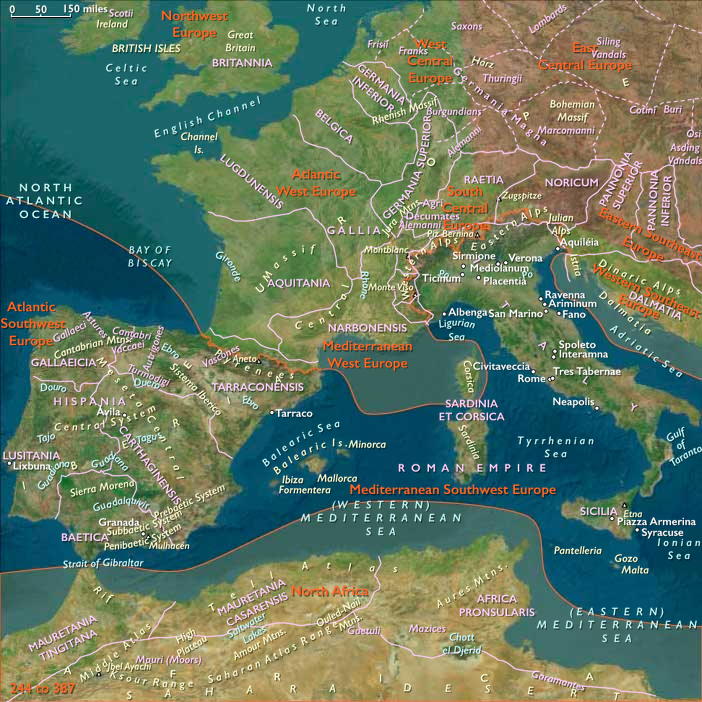
Between 316 and 327 CE, Atlantic Southwest Europe—encompassing northern and central Portugal, Galicia, Asturias, Cantabria, and northern Spain south of the Franco-Spanish border (43.05548° N, 1.22924° W)—experienced continued provincial stability and increased imperial coherence under Emperor Constantine the Great (306–337 CE). Constantine’s victory over his rival Licinius in 324 CE reunited the empire, enhancing central authority and stability. Locally, the period was marked by economic resilience, continued cultural vitality, and the steady growth of Christianity, significantly reshaping the region’s religious and cultural landscape.
Political and Military Developments
Enhanced Imperial Stability under Constantine
-
Constantine’s decisive defeat of Licinius in 324 CE and subsequent reunification of the Roman Empire increased central imperial stability, positively affecting Atlantic Southwest Europe. The region benefited from strengthened administrative cohesion, clearer imperial directives, and improved provincial governance, supported by effective local civic elites.
-
Provincial administration continued relying upon municipal councils, fortified towns, local bureaucracies, and stable military garrisons, which maintained internal peace and efficient regional management.
Continued Stability and Integration of Northern Tribes
-
Northern tribes, including the Gallaeci, Astures, and Cantabri, remained peaceful, stable, and fully integrated within provincial governance. Cooperation between tribal leaders and provincial authorities continued reinforcing internal cohesion and effective local governance.
-
The Vascones preserved their longstanding territorial autonomy, cultural distinctiveness, diplomatic neutrality, and internal stability, contributing significantly to regional resilience.
Economic and Technological Developments
Economic Stability and Regional Prosperity
-
Atlantic Southwest Europe maintained economic stability, increasingly benefiting from restored Mediterranean trade under Constantine’s unified rule. Local production—agriculture, livestock, metals (silver, copper, tin), textiles, pottery, and timber—remained robust, complemented by improved external commercial interactions and trade networks.
-
Provincial elites managed economic resources and imperial taxation effectively, ensuring regional prosperity and strengthened internal economic ties.
Declining Reliance on Slavery and Expanded Local Labor Systems
-
Continued economic transformations further reduced traditional reliance on widespread slavery. Regional economies increasingly depended on tenant farmers, semi-free laborers (coloni), free artisans, and locally organized labor systems, reflecting broader shifts throughout the Roman Empire.
Infrastructure Consolidation and Local Technological Innovations
-
Infrastructure—roads, urban fortifications, aqueducts, public amenities, bridges—continued receiving maintenance and limited expansion, significantly enhancing provincial connectivity, administrative effectiveness, and urban amenities.
-
Technological innovations persisted locally, particularly in agriculture, metallurgy, and construction, boosting productivity, economic sustainability, and regional prosperity.
Cultural and Religious Developments
Persistent Cultural Vitality and Growing Christianization
-
Indigenous cultural traditions remained vibrant, dynamically integrating Iberian, Celtic, and Roman elements. Material culture, including intricate metalwork, jewelry, fine pottery, and ceremonial artifacts, continued reflecting strong regional identities and cultural resilience.
-
Christianity expanded significantly during this period, especially within urban areas and among provincial elites. Churches and early Christian communities began emerging more prominently, gradually reshaping regional religious identities and cultural expressions.
Continued Indigenous Ritual Practices and Religious Adaptation
-
Traditional Iberian, Celtic, and Roman religious practices persisted actively, especially in rural and tribal areas. Sacred landscapes, temples, and communal ceremonies continued reinforcing cultural continuity and regional identity.
-
Traditional ancestral rites, warrior rituals, and local festivals remained strong, though increasingly influenced and gradually supplemented by emerging Christian rituals and religious observances.
Civic Identity and Enhanced Imperial Integration
-
Under Constantine’s increasingly centralized imperial rule, civic identity in Atlantic Southwest Europe balanced local traditions with strengthened integration into imperial administrative and religious frameworks. Universal citizenship continued as a foundational identity, reinforced by expanding Christian affiliations.
Notable Tribal Groups and Settlements
-
Lusitanians: Maintained economic prosperity and cultural vitality, effectively navigating imperial transitions and increasingly adopting Christian practices, especially within urban communities.
-
Vettones and Vaccaei: Preserved regional stability, prosperity, and autonomy, engaging actively with emerging Christian influences alongside traditional practices.
-
Gallaeci, Astures, Cantabri: Continued prosperous, culturally resilient, and closely integrated governance, preserving local identities amidst ongoing religious and administrative transitions.
-
Vascones: Successfully maintained diplomatic neutrality, territorial autonomy, and cultural distinctiveness, reinforcing regional stability.
Long-Term Significance and Legacy
Between 316 and 327 CE, Atlantic Southwest Europe:
-
Benefited significantly from Constantine’s reunification and enhanced imperial stability, sustaining effective provincial governance and regional prosperity.
-
Experienced continued economic adaptation, increasingly integrating restored Mediterranean trade networks while shifting further away from traditional slavery toward local labor systems.
-
Saw marked growth in Christianity, beginning a profound religious and cultural shift, complementing and gradually reshaping traditional indigenous identities and practices.
This era significantly advanced Atlantic Southwest Europe's integration within a re-stabilized Roman Empire, strengthening local resilience, economic stability, and initiating long-term religious and cultural transformations crucial to the region’s historical trajectory.
Groups
Commodities
Subjects
Regions
Southwest Europe
View →Subregions