
The region of present-day Lisbon was inhabited…
1197 BCE to 1054 BCE
The region of present-day Lisbon was inhabited during Neolithic times by Iberian-related peoples, who also settled across Atlantic Europe. These early inhabitants left behind megalithic religious monuments, including dolmens and menhirs, many of which still survive in the countryside around the city.
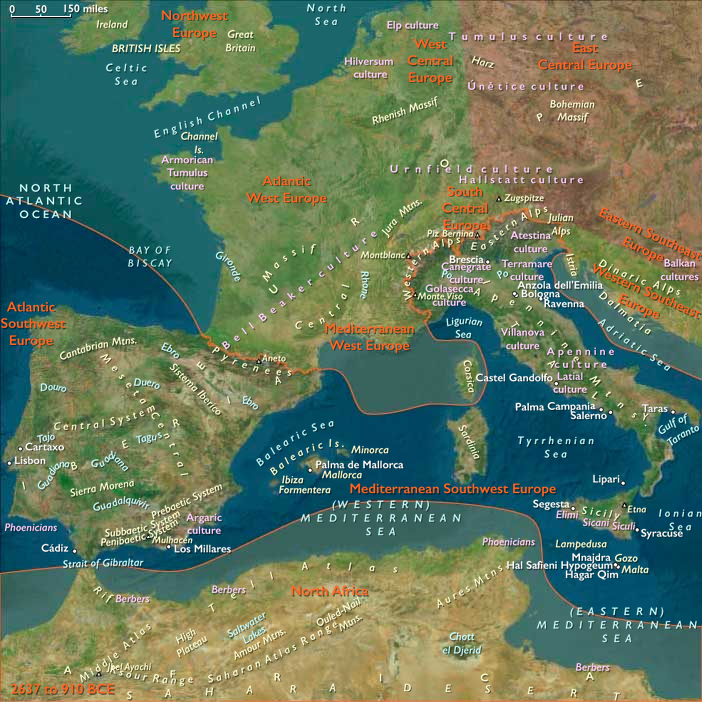
By 1200 BCE, the Phoenicians had begun establishing trading colonies across the western Mediterranean. The founding of Lisbon itself has been attributed to various legendary figures, including Odysseus, the Cretan warrior-king of Homer’s Odyssey, and Elisha, grandson of the Hebrew patriarch Abraham. However, a more credible theory suggests that Phoenician traders played a role in the city’s early development.
Phoenician Influence and Trade
Archaeological evidence suggests that Phoenician influence existed in the area as early as 1200 BCE, leading some historians to propose that a Phoenician trading post may have occupied what is now Lisbon’s historic center, on the southern slope of Castle Hill.
The city’s strategic location at the mouth of the Tagus River provided a natural harbor, making it an ideal supply hub for Phoenician ships traveling to the Tin Islands (modern Isles of Scilly) and Cornwall. Additionally, the Phoenicians may have used this settlement as a base for trading with inland Iberian tribes, exchanging valuable metals, salt, salted fish, and Lusitanian horses, which were renowned in antiquity.
Origins of Lisbon’s Name
Lisbon’s ancient name, Olisipo, is thought to derive from the Phoenician Alis Ubbo (meaning "safe harbor") or, alternatively, from the legend of Ulysses, who was said to have founded the city after leaving Troy and escaping the Greek coalition.
In Latin sources, geographer Pomponius Mela, a native of Hispania, refers to the city as Ulyssippo, while Pliny the Elder and later Greek writers call it Olisippo, Olissipo, or Olissipona.
However, most modern historians reject the theory of a Phoenician-founded Lisbon, instead suggesting that the city originated as an indigenous Iberian oppidum (a fortified settlement) that merely maintained trade relations with Phoenicians—a theory supported by the discovery of Phoenician pottery and other artifacts in the region.
Another theory suggests that Lisbon’s name derives from the pre-Roman name of the Tagus River, possibly Lisso or Lucio.
Locations
Groups
Commodities
Subjects
Regions
Southwest Europe
View →Subregions
