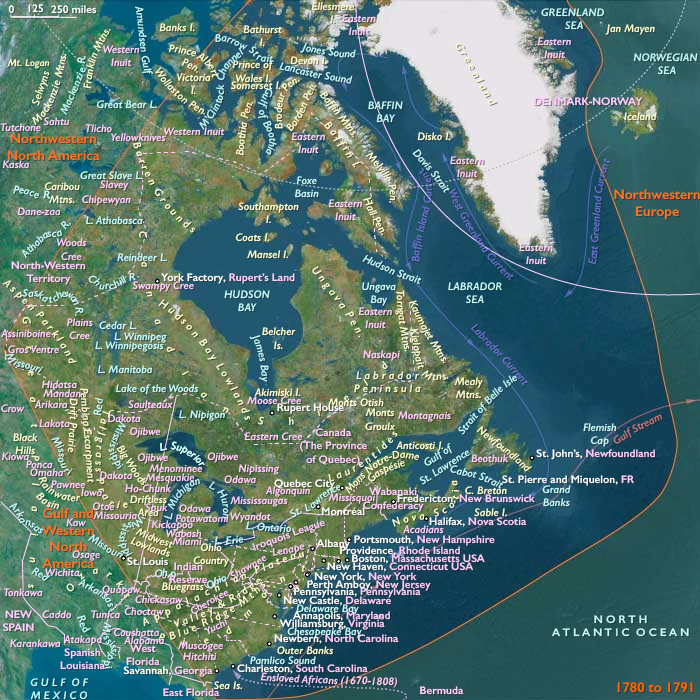
The war, after finally ending in 1783,…
1786 CE
The national government is still operating under the Articles of Confederation and is able to settle the issue of the western territories, which are ceded by the states to Congress.
American settlers move rapidly into those areas; Vermont, Kentucky, and Tennessee will become states in the 1790s.
However, the national government has no money to pay either the war debts owed to European nations and the private banks, or to pay Americans who had been given millions of dollars of promissory notes for supplies during the war.
Nationalists led by Washington, Alexander Hamilton, and other veterans fear that the new nation is too fragile to withstand an international war, or even internal revolts such as the Shays' Rebellion of 1786 in Massachusetts.
Groups
Topics
Commodities
Regions
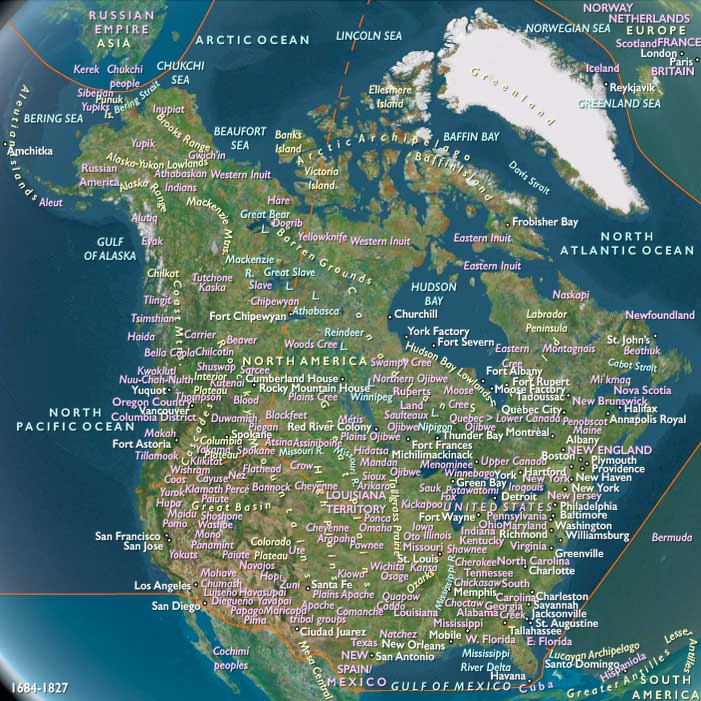
Northern North America
View →Subregions