France, (Valois) Kingdom of
State | Defunct
1328 CE to 1589 CE
France in the Middle Ages is a decentralized, feudal monarchy.
In Brittany and Catalonia (now a part of Spain) the authority of the French king is barely felt.
Lorraine and Provence are states of the Holy Roman Empire and not yet a part of France.
Initially, West Frankish kings are elected by the secular and ecclesiastic magnates, but the regular coronation of the eldest son of the reigning king during his father's lifetime establishea the principle of male primogeniture, which became codified in the Salic law.
During the late Middle Ages, the Kings of England lay claim to the French throne, resulting in a series of conflicts known as the Hundred Years' War (1337–1453).
Subsequently France seeks to extend its influence into Italy, but is defeated by Spain in the ensuing Italian Wars (1494–1559).France in the early modern era is increasingly centralized, the French language begins to displace other languages from official use, and the monarch expandshis absolute power, albeit in an administrative system (the Ancien Régime) complicated by historic and regional irregularities in taxation, legal, judicial, and ecclesiastic divisions, and local prerogatives.
Religiously France becomes divided between the Catholic majority and a Protestant minority, the Huguenots.
After a series of civil wars, the Wars of Religion (1562–1598), tolerance is granted to the Huguenots in the Edict of Nantes.
Worlds
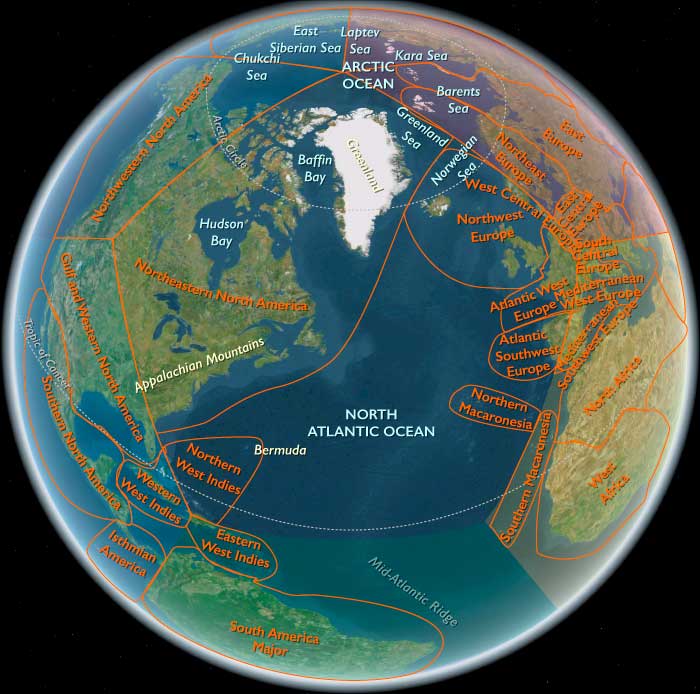
The Atlantic Lands
View →Related Events
Showing 10 events out of 1674 total
The Near East (1252–1395 CE): Mamluk Dominance and Cultural Integration
From the Nile’s fertile floodplains to the sandstone escarpments of Arabia and the ancient valleys of Nubia, the Near East in the Lower Late Medieval Age stood as the strategic and spiritual heart of the Islamic world. It was a region where power flowed through the twin arteries of the Nile and the Red Sea, where pilgrimage and trade converged, and where a dynamic synthesis of cultures, faiths, and technologies gave the region a renewed unity after the turmoil of Mongol and Crusader invasions.
Following the fall of Baghdad to the Mongols in 1258, Egypt emerged as the new center of Islamic authority under the Mamluks, a military aristocracy of Turkic, Circassian, and Kurdish slave origins who rose from regimental ranks to the sultan’s throne. The Mamluks decisively halted Mongol expansion at the Battle of ʿAyn Jālūt in 1260, securing Syria and Egypt under their protection. Sultan Baybars I (r. 1260–1277) fortified desert roads, reorganized the postal network, and absorbed the remaining Crusader territories. The final Latin strongholds—Antioch, Tripoli, and Acre—fell by 1291, restoring full Muslim control over the eastern Mediterranean for the first time since the early Abbasid centuries.
Under Qalawun (r. 1279–1290) and his successors, Cairo became the empire’s beating heart. The Qalawun complex, with its mosque, hospital, and madrasa, stood among many new foundations that transformed the city’s silhouette. Al-Nasir Muhammad’s long rule (1293–1341) brought stability and wealth through the restoration of irrigation canals and expansion of the Nile Delta’s estates. Alexandria’s port revived as Mediterranean merchants—Genoese, Venetian, and Catalan—returned for pepper, sugar, and textiles. In Damascus and Aleppo, artisans of glass, brass, and silk created luxury goods exported across the Islamic world. The Mamluk system of waqf endowments sustained these urban economies, while networks of Sufi hospices, madrasas, and caravanserais provided spiritual and social infrastructure for travelers and the poor.
Across Palestine and Syria, the Mamluks rebuilt cities devastated by war. In Jerusalem, new mosques, schools, and fountains framed the Ḥaram al-Sharīf, affirming the city’s sacred status within the rejuvenated Sunni order. Pilgrimage flourished once more: caravans from Cairo and Damascus converged annually toward Mecca and Medina along fortified desert routes. ʿAyn Jālūt, once a battlefield, now marked the secure border between Egypt’s dominions and the Mongol successor states of the Middle East.
The Mamluk administrative system, a fusion of military discipline and bureaucratic oversight, endured despite plague and political intrigue. The Black Death (1347–1351) struck heavily—killing perhaps a third of Egypt’s population—but the state’s granaries, irrigation, and guild networks hastened recovery. Plague memorials and endowments became acts of piety; scholarship at al-Azhar, long dormant under earlier dynasties, revived into one of the leading intellectual centers of Islam.
Beyond the Nile’s southern cataracts, the Nubian kingdoms underwent transformation. Arab tribes migrating from the north and east intermarried with Beja and Nubian peoples, fostering a slow and voluntary Islamization. When the Mamluks intervened in 1276, they installed a Muslim ruler in Dongola, reducing the ancient Christian kingdom to a vassal. By the fourteenth century, the Jaʿalin and Juhayna tribes dominated the middle Nile, the former settling as cultivators, the latter roaming the steppes between the river and the Red Sea. Conversion offered tax advantages and social mobility, and the resulting Arab–Nubian synthesis laid the foundation of modern Sudanese identity.
The disintegration of the medieval Nubian Christian states also set in motion a long southward demographic ripple. As Arabization and Islamization advanced along the Nile, communities displaced from Nubia and the surrounding savannas moved into the upper reaches of the White Nile and the Great Lakes region. This process, often described as the Nilotic expansion, included the gradual migration of the Luo and related groups, whose movement fostered extensive ethnic, linguistic, and cultural diversification across eastern and central Sub-Saharan Africa.
To the east, the Red Sea connected Egypt and Arabia with Yemen, Aden, and India. Qus and Qift in Upper Egypt supplied caravans that crossed the Eastern Desert to ʿAydhāb and Suakin, where goods from the Indian Ocean—pepper, spices, cottons, and pearls—were unloaded for the Nile convoys to Cairo. Southward, Aden and Jiddahbecame twin portals for pilgrims and commerce. From the harbors of Yanbuʿ and Jiddah, ships sailed to East Africa, while the overland pilgrimage roads converged on Mecca and Medina, maintained by the Mamluks as both religious trust and geopolitical necessity. The flow of pilgrims sustained markets for leather, grain, and livestock along the route; wells and forts dotted the Hijaz, inscribed with the names of sultans who had endowed them.
On Cyprus, the Lusignan monarchy survived the Crusader collapse, its ports of Famagusta and Kyrenia becoming commercial waystations between Latin Europe and Mamluk Syria. Venetian and Genoese merchants established sugar plantations that drew enslaved labor from the Black Sea and Africa—an early prototype of the plantation economies that would later expand across the Atlantic world. Religious tension accompanied this economic vigor: the papal Bulla Cypria (1260) sought to impose Latin rites on Orthodox Cypriots, but Greek Christianity endured, shaping a resilient island culture under Latin rule.
Through all these transformations, the region remained an integrated crossroads of belief. In Cairo, Damascus, and Jerusalem, jurists of the four Sunni schools codified law; Sufi saints and philosophers interpreted divine unity through poetry and ritual; Jewish and Christian communities contributed to scholarship, finance, and trade. Cairo’s synagogues and Aleppo’s Armenian quarters stood within sight of mosques and madrasas, the product of a long coexistence that survived even epidemic and invasion.
By the late fourteenth century, Mamluk Egypt and Syria stood as the strongest Sunni power between the Maghrib and the Oxus. To their east, the Jalayirids and Muzaffarids inherited Ilkhanid traditions until Timur’s conquests reshaped Iran. To their south, Arab–Nubian and Nilotic societies prospered along the Nile; to their west, Cypriot and Venetian traders sustained Mediterranean exchange; and to their east and south, the Red Sea and Indian Ocean routes ensured that the spice and pilgrimage trades continued to flow through Cairo’s customs houses.
Thus by 1395 CE, the Near East had re-emerged from a century of turbulence as a unified religious and economic sphere—Sunni in its orthodoxy, cosmopolitan in its cities, and global in its maritime reach. Cairo’s minarets, Jerusalem’s sanctuaries, and Mecca’s shrines anchored a civilization that, even in the shadow of plague and invasion, continued to harmonize faith, learning, and commerce across the meeting point of Africa and Asia.
West Europe (1252–1395 CE): Papal Provence, Commercial Flanders, and the Anglo-French Warlands
From the vineyards of the Rhône to the harbors of Bordeaux and the markets of Bruges, West Europe in the Lower Late Medieval Age combined papal finance, mercantile ingenuity, and dynastic rivalry. It was a region where the Mediterranean’s papal courts met the Atlantic’s trading republics, and where the long struggle between Capetians, Plantagenets, and Angevins reshaped the political map of France and the Low Countries.
In the south, the Avignon Papacy (1309–1377) transformed the Rhône Valley into the financial and spiritual capital of Latin Christendom. The popes, resident at Avignon, presided over a clerical bureaucracy rivaling any royal court, collecting tithes from across Europe and dispersing them through the counting houses of Lombard and Provençal bankers. The walls of the Papal Palace rose above the Rhône, its treasury vaults serving as Europe’s most secure depository of the age. Around it, Lyon, Arles, and Marseille became financial arteries: Lyon’s fairs and money markets linked Italian credit to northern merchants, while Marseille’s shipyards carried papal and Provençal goods across the Mediterranean.
The Angevin dynasty ruled Provence as counts and kings of Naples, blending French administration with Italian commercial culture. Their patronage fostered Gothic cathedrals and urban universities. Montpellier, Narbonne, and Toulouse revived from crusade-era devastation, cultivating a learned bourgeoisie of jurists, physicians, and notaries. To the west, Roussillon and Perpignan tied the Provençal plain to the Crown of Aragon, serving as gateways between Occitania and Catalonia. Along the coast, Monaco, seized by the Grimaldi family in 1297, became a fortified port wedged between Genoese power and Provençal trade. Offshore, Corsica remained under Genoese control but contested by Aragon, a strategic way-station on the western Mediterranean routes.
The climate’s cooling after 1300 shortened harvests, yet vineyards and olive groves endured. Even plague could not fully halt economic life: though the Black Death (1348–1352) devastated Marseille and Montpellier, Lyon recovered quickly, its inland fairs diversifying the regional economy. Avignon’s clergy endowed hospitals and confraternities, fostering both spiritual and social recovery. When the Great Schism (1378) divided papal allegiance between Avignon and Rome, Provençal towns found themselves on opposing sides of Christendom’s authority, but commerce and piety continued side by side—wine, wool, and grain flowing north, while alum, silks, and spices arrived from the Italian and Levantine markets.
Farther north, along the Atlantic rim, the legacy of the Angevin Empire and the rise of the Hundred Years’ War(1337–1453) defined the political landscape. The duchy of Aquitaine (Guyenne) remained England’s continental stronghold, its ports—Bordeaux, La Rochelle, an Bayonne—thriving on the wine trade. Every vintage of Bordeaux claret sailed up the Channel to England, enriching Gascon merchants and English customs alike. Salt from the marshes of Saintonge and Poitou filled barrels bound for London, while wool and cloth came south in return.
The northern plains and river basins of the Loire and Seine remained the Capetian and later Valois heartlands. Paris, though scarred by plague and intermittent warfare, retained its status as the intellectual and administrative center of France. Gothic art reached its high refinement in the Ile-de-France, while Chartres, Amiens, and Reims stood as architectural witnesses to enduring faith amid crisis.
To the north and east, the counties of Flanders, Artois, and Hainaut, together with the Low Countries, formed the engine of Western Europe’s urban economy. Cloth-making cities—Bruges, Ghent, and Ypres—wove English wool into the fabrics that dressed the courts of Europe. The Champagne fairs of an earlier era gave way to the great markets of Flanders and the credit systems of Italian bankers. Bruges became Europe’s first true commercial metropolis, where merchants from Venice, Genoa, Lübeck, and London exchanged goods, currency, and news. In the nearby Hanseatic towns of the North Sea, German traders joined the same networks that stretched south through Paris, Lyon, and Avignon to the Mediterranean.
Meanwhile, along the Rhône’s northern reaches, Lyon and the southern Jura served as continental pivots. Goods from the Swiss Confederation and Burgundy met Provençal wine, salt, and silk there before moving downriver to Marseille or across Alpine passes to Milan and Genoa. Despite wars and epidemics, this integration of riverine, overland, and maritime circuits made Western Europe’s economy remarkably resilient.
Religiously and artistically, the region mirrored its contrasts. The papal splendor of Avignon stood beside the mendicant austerity of Franciscan and Dominican houses in Toulouse and Narbonne. Across France’s northern cathedrals, devotion to the Virgin and plague saints deepened communal piety, while the Schism’s rival obediences multiplied rituals of allegiance. In Flanders, urban confraternities sponsored altarpieces and civic processions that expressed both faith and prosperity; in Provence, illuminated manuscripts and early vernacular poetry echoed the lingering troubadour tradition.
By 1395 CE, West Europe remained a tapestry of overlapping sovereignties but shared economies. Avignon symbolized papal grandeur and conflict; Lyon mediated between northern fairs and Mediterranean ports; Marseille and Montpellier linked Europe to the wider sea. Bordeaux and La Rochelle bound England to the continent through wine and salt, while Flanders and the Low Countries emerged as Europe’s richest manufacturing and banking zones.
Amid plague, schism, and war, the Rhône, Loire, and Seine valleys, together with the coasts of Aquitaine and Flanders, continued to pulse with life and exchange. From papal Provence to the Atlantic ports, Western Europe’s cities formed an unbroken chain of commerce and culture that united the Mediterranean and northern seas, laying the foundations for the mercantile revolutions of the coming age.
Mediterranean West Europe (1252 – 1395 CE): Avignon Papacy, Angevin Provence, and Rhone–Mediterranean Finance
Geographic and Environmental Context
Mediterranean West Europe includes southern France (from the Rhône valley to the Pyrenees, plus Languedoc, Provence, and Roussillon), Monaco, and the island of Corsica.
-
Anchors: the Rhône Valley (Avignon Papal Palace, Lyon fairs, Arles/Marseille trade), the southern Jura corridors toward Burgundy and Swiss Confederation, the Provençal littoral (Marseille, Toulon, Nice, Monaco), the Languedoc plain (Narbonne, Montpellier, Carcassonne, Toulouse’s southern marches), the Roussillon/Catalan marches (Perpignan, Pyrenean passes to Aragon/Andorra), and Corsica under Genoese authority but contested by Aragon.
Climate and Environmental Shifts
-
Little Ice Age onset (~1300): cooler winters, wetter harvests; viticulture resilient, cereals stressed.
-
Black Death (1348–1352): devastated ports like Marseille and Montpellier; Lyon recovered faster due to inland trade.
Societies and Political Developments
-
Avignon Papacy (1309–1377): Popes resided in Avignon, transforming the Rhône valley into Christendom’s financial center.
-
Great Schism (1378): divided allegiance between Avignon and Rome, politicizing Provençal towns.
-
Provence: Angevin dynasty (counts also kings of Naples) ruled.
-
Roussillon integrated with Crown of Aragon.
-
Lyon hosted church councils, grew as financial hub, controlling fairs and credit.
-
Southern Jura linked Rhône corridor to Swiss Confederation and Burgundy.
-
Corsica: Genoese control consolidated, though Aragonese claimed suzerainty.
-
Monaco: seized by Grimaldi family (1297), developing as fortress–port under Genoese shadow.
Economy and Trade
-
Rhone trade: Lyon’s fairs tied north Europe to Mediterranean goods.
-
Ports (Marseille, Montpellier, Narbonne, Nice): exported wine, salt, wool; imported Levantine silks, spices, alum.
-
Agriculture: vineyards, olives, cereals in Provence/Languedoc; Jura dairying.
-
Finance: Papal Avignon drew Lombard and Provençal bankers; Marseille shipyards thrived.
Belief and Symbolism
-
Catholic orthodoxy: Avignon Papacy emphasized papal authority.
-
Mendicant friars: Franciscans and Dominicans flourished in towns.
-
Schism: divided local piety; civic cults of saints anchored resilience during plague.
Long-Term Significance
By 1395, Mediterranean West Europe was a papal and mercantile hinge:
-
Avignon symbolized papal finance and conflict.
-
Lyon controlled Rhône trade and fairs.
-
Marseille, Montpellier, Narbonne remained Mediterranean entrepôts.
-
Corsica tied to Genoa, Roussillon to Aragon, and Provence to Angevin Naples.
Despite plague and war, the region bound northern Europe, Iberia, and Italy into a shared economic system.
Southwest Europe (1252 – 1395 CE): Mediterranean Thalassocracies and the Atlantic Turn
From the lagoons of Venice to the harbors of Lisbon, the southwest rim of Europe entered the Late Middle Ages as one of the world’s most dynamic maritime zones. The period between 1252 and 1395 witnessed the zenith of the Crown of Aragon’s thalassocracy, the consolidation of Castile and Portugal, and the financial and naval dominance of the Italian city-republics. Across the Mediterranean and Atlantic, fleets, fairs, and fortresses bound Europe’s southern peninsulas into an interlinked economy whose rhythms were set by wind, grain, and gold.
Geography and Climate
The subregion encompassed the Iberian Peninsula, the Italian peninsula and islands, and the surrounding seas—from the Guadalquivir and Tagus basins to the Venetian Adriatic and the Tyrrhenian and Balearic waters.
The onset of the Little Ice Age after 1300 brought cooler, wetter variability: Andalusian and Sicilian irrigation maintained productivity, while drier cycles in La Mancha and Alentejo encouraged sheep and transhumant herding. Maritime provisioning stabilized populations through famine years, even as the Black Death (1348–1352) devastated the great ports—Barcelona, Valencia, Genoa, Venice, and Naples—with partial demographic recovery by the century’s end.
Mediterranean Crowns and City-Republics
The Crown of Aragon, forged by the thirteenth-century conquests of James I, reached its maritime zenith. Catalan and Valencian fleets dominated the western Mediterranean; Sardinia was taken in the 1320s, and Sicily, freed from Angevin control after the Sicilian Vespers (1282), entered Aragon’s orbit. Barcelona’s merchants financed convoys to Tunis, Alexandria, and Constantinople, while Majorcan cartographers drew the most precise sea charts of the age.
To the west, Castile completed the reconquest of Andalusia, leaving Granada as the last Muslim emirate. The Guadalquivir valley’s cereals and Seville’s shipyards enriched the Castilian crown, while Madrid and La Mancha evolved into the agrarian-sheep core of the realm. Portugal, meanwhile, under Afonso III and Dinis I, stabilized its southern frontier in the Algarve and built the maritime forests of Leiria for ship timber. After dynastic crisis (1383–1385), João I’s victory at Aljubarrota and the Treaty of Windsor (1386) with England secured independence and inaugurated the Anglo-Portuguese alliance that would anchor the next century’s explorations.
Across the sea, Italy’s mercantile powers contested every horizon. Venice, from its lagoon capital, extended a maritime empire through the Adriatic and Aegean; its Arsenal mass-produced galleys and its patriciate ruled an empire of grain and spice. Genoa, facing west, financed expeditions and monopolized Tyrrhenian trade from Corsica to Tunis. In Florence, textile wealth and banking consolidated under the merchant guilds, while the Angevin kingdom of Naples and the Aragonese Sicily contended for southern Italy. Malta, Sardinia, and the Balearics served as naval stepping-stones, their harbors echoing with the languages of sailors from every sea.
Economy and Trade
Southwest Europe functioned as a dual maritime engine—Aragonese–Italian in the Mediterranean and Castilian–Portuguese in the Atlantic.
-
Mediterranean circuits: Venetian and Genoese fleets carried Levantine spices, silks, and sugar; in return, they exported grain from Sicily and Apulia, wine and oil from Iberia, and salt from Ibiza and Trapani.
-
Western basins: Barcelona, Valencia, and Majorca knit the western Mediterranean to Atlantic routes through Gibraltar.
-
Atlantic façade: Castilian and Portuguese merchants exported wool, iron, wine, and salted fish; Castile’s Mesta(chartered 1273) organized transhumant flocks whose wool fed Flemish and Italian looms. Basque forgessupplied anchors, nails, and artillery; shipyards at Bilbao, Lisbon, and Porto produced cogs and caravels.
-
Banking and cartography: Genoese and Venetian financiers underwrote commerce, while Catalan and Majorcan mapmakers synthesized Mediterranean and Atlantic knowledge into the new portolan charts.
Mixed agriculture—grains, vines, olives—and irrigation in the Valencia and Murcia huertas sustained populations; the Algarve, Sicily, and Crete pioneered sugar cultivation, a foretaste of the colonial plantations to come.
Movement and Interaction Corridors
Sea routes defined the region’s geography.
The Strait of Gibraltar linked Lisbon, Seville, and Barcelona to Tunis and Alexandria; the Messina and Otranto Straits funneled Sicilian and Adriatic convoys; the Venetian–Aegean corridor joined Constantinople to the Po valley.
Overland arteries—Ebro–Pyrenees, Tagus–Guadiana, Po–Alps—fed the ports, while the Douro road connected the Castilian plateau to Porto’s wine markets. The pilgrim routes to Santiago de Compostela continued to channel people and goods across northern Iberia, even amid war and plague.
Belief and Symbolism
Faith framed identity in a region of plural crowns.
The mendicant orders—Franciscans and Dominicans—flourished in Barcelona, Valencia, Venice, and Naples, preaching reform and mercy during plague years.
Cathedrals such as Seville’s, Valencia’s, and Florence’s Duomo, and civic loggias in Italian and Catalan cities expressed both religious devotion and urban pride.
The lingering influence of the Avignon Papacy tied Provençal, Aragonese, and Italian politics to papal diplomacy, while the Reconquista and frontier crusades gave Iberian warfare a sanctified rhetoric that foreshadowed later overseas expansion.
Adaptation and Resilience
Despite climatic uncertainty and epidemic loss, Southwest Europe remained remarkably adaptive.
-
Irrigation, terrace agriculture, and maritime provisioning cushioned drought.
-
Polycentric power—Venice, Genoa, Aragon, Castile, Portugal—allowed commerce to shift ports and flags as crises arose.
-
Guild statutes and municipal charters stabilized labor and credit after the Black Death.
-
The recovery of the 1380s–1390s re-energized trade, strengthened dynasties, and renewed shipbuilding, positioning the region for its fifteenth-century ascent.
Long-Term Significance
By 1395 CE, Southwest Europe stood as the beating heart of the late-medieval maritime world.
In the Mediterranean, Venice ruled the Adriatic lanes, Genoa and Florence financed the wider economy, and Aragon’s Catalan fleets mastered the western sea.
Across the Iberian Peninsula, Castile and Portugal unified their realms and turned outward to the Atlantic, where Lisbon’s and Bilbao’s shipwrights were already experimenting with ocean-going hulls.
From the Rialto to Lisbon, from Barcelona to Seville, merchants, mapmakers, and mariners laid the logistical and intellectual foundations of Europe’s global age.
The dual maritime systems of the Mediterranean thalassocracies and the Atlantic wool-iron networks formed a single economic engine—one that would propel Iberia and Italy beyond their seas and into the wider world of the fifteenth century.
Mediterranean Southwest Europe (1252 – 1395 CE): Aragonese Thalassocracy, Venetian Hegemony, and Castilian–Portuguese Consolidation
Geographic and Environmental Context
Mediterranean Southwest Europe includes Portugal’s Algarve and Alentejo, Spain’s Extremadura, Andalusia, Murcia, Valencia, Castile/La Mancha, southeastern Castile and León, Madrid, southeastern Rioja, southeastern Navarra, Aragon, Catalonia, the Balearic Islands, Andorra, and all of Italy (peninsula, Sicily, Sardinia, Venice), plus Malta.
-
Anchors: the Guadalquivir Valley (Seville–Granada frontier), the Tagus–Alentejo/Algarve under Portugal, Madrid–La Mancha–Extremadura consolidated in Castile, the Valencia/Murcia huertas, the Ebro–Barcelona–Aragon–Andorra corridor, the Balearics under Aragon, Venice as Adriatic hegemon, Genoa and Florence as rivals in Liguria and Tuscany, the Kingdom of Naples/Angevin South, Sicily in Aragonese orbit, Sardinia, and Malta as naval outposts.
Climate and Environmental Shifts
-
Little Ice Age onset (~1300) brought cooler, wetter variability; irrigation kept Valencia, Murcia, Andalusia, Sicily productive.
-
Black Death (1348–1352) devastated Barcelona, Valencia, Genoa, Venice, Naples, with partial demographic recovery by the 1390s.
Societies and Political Developments
-
Crown of Aragon: James I’s conquests of Valencia (1238) and Balearics (1229–35) were integrated; Sardinia conquered (from 1320s); Sicily entered Aragonese orbit after the Sicilian Vespers (1282); Catalonia projected power across the western Med.
-
Castile consolidated Andalusia; Granada survived as the last Nasrid emirate; Madrid matured under Castilian administration; La Mancha became a grain–sheep heartland.
-
Portugal stabilized Alentejo/Algarve and built Atlantic–Med linkages.
-
Italy: Venice dominated Adriatic–Aegean routes; Genoa contested Tyrrhenian and western lanes; the Angevin Kingdom of Naples and Aragonese Sicily rivaled in the south; Sardinia held by Aragon; Malta under Sicilian–Aragonese control.
-
Andorra remained a Pyrenean co-principality (Counts of Foix/Bishop of Urgell).
Economy and Trade
-
Venetian hegemony in the Adriatic–Aegean; Genoese finance and Ligurian shipping; Barcelona–Valencia–Majorca fleets knit the western basin.
-
Exports: grain (Sicily/Apulia), olive oil/wine (Iberia/Italy), sugar/citrus (Sicily/Valencia), salt (Ibiza, Trapani);
-
Imports: spices/silks via Levant; wool from La Mancha and Aragon fed Italian and Catalan looms.
-
Banking: Venetian and Genoese firms, Catalan–Majorcan cartography and credit.
Subsistence and Technology
-
Canal estates and huertas in Valencia/Murcia/Andalusia; Venetian Arsenal mass-produced galleys; Rialto and Piazza San Marco symbolized mercantile power.
Movement and Interaction Corridors
-
Strait of Gibraltar linked Atlantic–Med flows; Messina straits managed Sicily transit; Po–Venetian lagoon fed Adriatic convoys; Ebro–Pyrenees, Tajo–Guadiana corridors fed Iberian ports.
Belief and Symbolism
-
Avignon Papacy (outside region yet influential) shaped Provençal–Italian–Aragonese politics;
-
Mendicant orders (Franciscans, Dominicans) in Barcelona, Valencia, Venice, Naples;
-
Cathedrals and civic loggias embodied urban identities.
Adaptation and Resilience
-
Irrigation + maritime redundancy cushioned climatic stress;
-
Plural city-republics and crowns allowed merchants to shift flags, ports, and credit;
-
Guilds and statutes stabilized labor and prices post-plague.
Long-Term Significance
By 1395, Mediterranean Southwest Europe was a dual maritime engine—Venice in the east, Crown of Aragon in the west—nested with Castile–Portugal consolidation on land. The subregion underwrote the late-medieval Mediterranean economy, setting the stage for 15th-century imperial and commercial expansion.
Atlantic Southwest Europe (1252 – 1395 CE): Wool, Iron, Wine, and the Atlantic Turn
Geographic and Environmental Context
Atlantic Southwest Europe includes Portugal’s Lisbon, Beira, Minho, Trás-os-Montes, and Spain’s Galicia, Asturias, Cantabria, Basque Country, Castile and León, northern Rioja, and northern Navarra.
-
Anchors: the Cantabrian coast (A Coruña–Gijón–Santander–Bilbao–San Sebastián), the Douro/Minho estuaries, and the Meseta–Cantabrian passes binding the plateau to Atlantic ports.
Climate and Environmental Shifts
-
Little Ice Age onset (~1300) brought cooler, wetter weather; stormier Bay of Biscay; good fisheries persisted.
-
Black Death (1348–1352) hit towns hard; ports recovered quickest via maritime trade.
Societies and Political Developments
-
Castile and León unified under Alfonso X (r. 1252–1284), then fractured and reconsolidated amid the Trastámara coup (Pedro I vs Enrique II, 1366–1369).
-
Portugal strengthened under Afonso III and Dinis (reforestation of Leiria for ship timber; University of Coimbra 1290), then defended independence in the Crisis of 1383–1385; João I and Aljubarrota (1385) sealed the Anglo-Portuguese alliance (Treaty of Windsor, 1386).
-
Navarre navigated between France and Castile; Basque towns (Bilbao, charter 1300; San Sebastián) grew as maritime communes.
Economy and Trade
-
Wool complex: Castilian wool—organized by the Mesta (founded 1273)—flowed through Burgos, León, and Cantabrian ports to Flanders and England.
-
Basque iron & shipbuilding: forges supplied anchors, nails, artillery shot; yards built cogs and naos for Atlantic service and whaling.
-
Wine & salt fish: Douro/Minho wines, Galician/Portuguese salt fish (cod, sardine) and tuna moved north; Lisbon/Porto emerged as major entrepôts.
-
Finance & law: municipal fueros, urban consulates, and English–Portuguese treaties stabilized credit, convoys, and tariffs.
Subsistence and Technology
-
Mixed Atlantic polyculture (rye/wheat, vines, chestnuts, cattle); stern-rudder hulls, improved rigging, magnetic compass and portolan practice diffused into Iberian waters.
Movement and Interaction Corridors
-
Sea: Lisbon ⇄ London/Bristol; Cantabria ⇄ Flanders; Galicia ⇄ Brittany; pilgrim sailings to Santiago.
-
Land: Meseta passes fed Burgos, León, Salamanca; Douro road/river linked Castile to Porto.
Belief and Symbolism
-
Cathedrals and monasteries in Santiago, León, Burgos, Salamanca; confraternities of sailors and merchants venerating St. James and St. Nicholas kept social cohesion in plague decades.
Adaptation and Resilience
-
Route redundancy (many ports, multiple passes), portfolio exports (wool–iron–wine–fish–salt), and crown–town compacts hedged risk from war, weather, and plague.
Long-Term Significance
By 1395, the Atlantic façade from Lisbon to San Sebastián had become a maritime-industrial platform: wool, iron, wine, and shipbuilding—backed by Portugal’s English alliance—set the stage for the 15th-century Atlantic turn and overseas exploration.
Atlantic West Europe (1108 – 1251 CE): The Angevin Empire, Champagne–Flanders Circuits, and Aquitaine under the English Crown
Geographic and Environmental Context
Atlantic West Europe spans northern France and the Low Countries.
-
Anchors: Paris–Seine–Reims, Upper Loire (Orléans–Blois–Tours), Anjou/Angers–Maine–Le Mans, Poitou/Poitiers–La Rochelle–Saintes, Bordeaux–Gironde–Bayonne, Flanders/Bruges–Ghent–Ypres, Low Countries delta.
Climate and Environmental Shifts
-
High-medieval peak supported population and urbanization; river improvements eased up-country grain and wine traffic.
Societies and Political Developments
-
Eleanor of Aquitaine married Louis VII (1137), annulled (1152), then married Henry II Plantagenet (1152)—creating the Angevin Empire (from Anjou/Normandy to Aquitaine).
-
Capetian–Angevin rivalry dominated: Philip II conquered Normandy (1204), but Aquitaine/Guyenne largely remained under English suzerainty; La Rochelle and Bordeaux became Angevin pillars.
-
Flanders and Champagne fairs integrated Mediterranean–northern circuits; communes of Bruges, Ghent, Ypres asserted charters.
-
Brittany navigated between Plantagenets and Capetians.
Economy and Trade
-
Bordeaux claret exports to England boomed; La Rochelle shipped salt and wine; Nantes handled salt fish and grain.
-
Flanders/Champagne fairs: Italian capital met northern cloth; Bruges emerged as a banking mart.
-
Upper Loire and Anjou–Touraine supplied wine/grain to Paris and ports.
Belief and Symbolism
-
Gothic beginnings in Chartres, Paris; pilgrimage roads of Poitou–Bordeaux remained crowded.
Long-Term Significance
By 1251, Aquitaine was England’s continental anchor; Flanders the cloth workshop; Paris–Loire the Capetian core—poised for 13th–14th-century contests.
Northwest Europe (1252 – 1395 CE): Hundred Years’ War, Scottish Independence, and North Sea Commerce
Geographic and Environmental Context
Northwest Europe includes Iceland, Ireland, the United Kingdom, the Faroe, Shetland, and Orkney Islands, the Channel Islands, and the western coastal zones of Norway and Denmark (west of 10°E).
-
Anchors: London–Westminster, Dublin–Cork–Waterford, Edinburgh–Stirling, Bergen, Reykjavík–Thingvellir, Channel ports (Dover, Southampton, Bristol), and North Sea ports (Hull, King’s Lynn).
Climate and Environmental Shifts
-
Little Ice Age onset (~1300): cooler, wetter conditions reduced yields; Great Famine (1315–1317) struck Britain and Ireland.
-
Black Death (1348–1350): decimated urban populations (London, Dublin, York, Edinburgh, Bergen).
-
Fisheries (herring, cod) thrived in colder seas.
Societies and Political Developments
-
England: Edward I’s conquest of Wales (1282); Wars of Scottish Independence (1296–1328, 1332–1357); Hundred Years’ War against France (from 1337).
-
Scotland: William Wallace, Robert the Bruce, and victory at Bannockburn (1314) secured independence, recognized in the Treaty of Edinburgh–Northampton (1328).
-
Ireland: Anglo-Norman lordship declined; Gaelic resurgence after 14th-century crises.
-
Norway: waning influence; Orkney, Shetland, Hebrides slipped toward Scottish control.
-
Iceland: under Norwegian crown (1262–64); Althing continued local governance.
Economy and Trade
-
English wool: critical for Flemish cloth industry; Calais staple (post-1347 English conquest) reorganized trade.
-
North Sea ports: Hull, King’s Lynn, Bristol handled wine, cloth, fish.
-
Hanseatic merchants entered London (Steelyard).
-
Norwegian stockfish trade (Bergen to Lübeck, London) flourished; Iceland supplied wool and fish.
Belief and Symbolism
-
Gothic architecture: Westminster Abbey, York Minster; Scottish abbeys; Norwegian stave churches persisted.
-
Saint cults: St. Thomas Becket in Canterbury, St. Magnus in Orkney.
-
Mysticism: English and Irish vernacular devotion expanded (Julian of Norwich).
Adaptation and Resilience
-
Maritime redundancy: trade shifted among ports during war or plague.
-
England’s parliamentary institutions matured (Model Parliament, 1295).
-
Scotland consolidated monarchy; Ireland fragmented between Gaelic and Anglo-Norman spheres.
Long-Term Significance
By 1395, Northwest Europe was a fractured but dynamic region: England locked in war with France, Scotland independent, Ireland divided, and the North Sea–North Atlantic fisheries increasingly central. It was a crucible for the late-medieval state and maritime economy.
At age seventeen he leads a successful coup against Mortimer, the de facto ruler of the country, and begins his personal reign.
Edward III (reigned 1327–1377) restores royal authority and goes on to transform the Kingdom of England into the most efficient military power in Europe.
His reign sees vital developments in legislature and government—in particular the evolution of the English parliament—as well as the ravages of the Black Death.
After defeating, but not subjugating, the Kingdom of Scotland, he declares himself rightful heir to the French throne in 1338, but his claim is denied due to the Salic law.
This starts what will become known as the Hundred Years' War.
Following some initial setbacks the war goes exceptionally well for England; victories at Crécy and Poitiers lead to the highly favorable Treaty of Brétigny.
Edward's later years, however, are marked by international failure and domestic strife, largely as a result of his inactivity and poor health.
The Succession Crisis of 1328 and the Rise of the House of Valois
The Salic Law, which governed the French succession, strictly prohibited the crown from passing to a woman or through the female line. This principle became decisive in 1328, when King Charles IV the Fair died without a male heir, ending the direct Capetian line.
With no direct male descendant, the question of succession arose. The closest male claimant by blood was Edward III of England, the son of Isabella of France, Charles IV’s sister. However, the French nobility, adhering to Salic tradition, rejected Edward’s claim on the basis that kingship could not be transmitted through a woman. Instead, the crown passed to Philip of Valois, Charles IV’s cousin, who ascended the throne as Philip VI.
The Peak of Medieval French Monarchy
Philip VI’s reign (1328–1350) marked the height of medieval French power, as he inherited a kingdom that had been strengthened by his Capetian predecessors. France was the largest, wealthiest, and most populous kingdom in Western Europe, with a strong centralized monarchy and a formidable military. However, Philip’s rule was soon challenged by Edward III, who, resentful of his exclusion, revived his claim to the French throne in 1337, thus initiating the Hundred Years’ War.
While Philip initially secured French dominance at sea and maintained control over Flanders and Gascony, the early stages of the war would ultimately test and weaken the monarchy. His reign, though significant in consolidating Valois rule, marked the beginning of a prolonged struggle between England and France, which would shape the political and military landscape of Europe for the next century.
