
Five hundred thousand workers have been put …
Years: 1864 - 1864
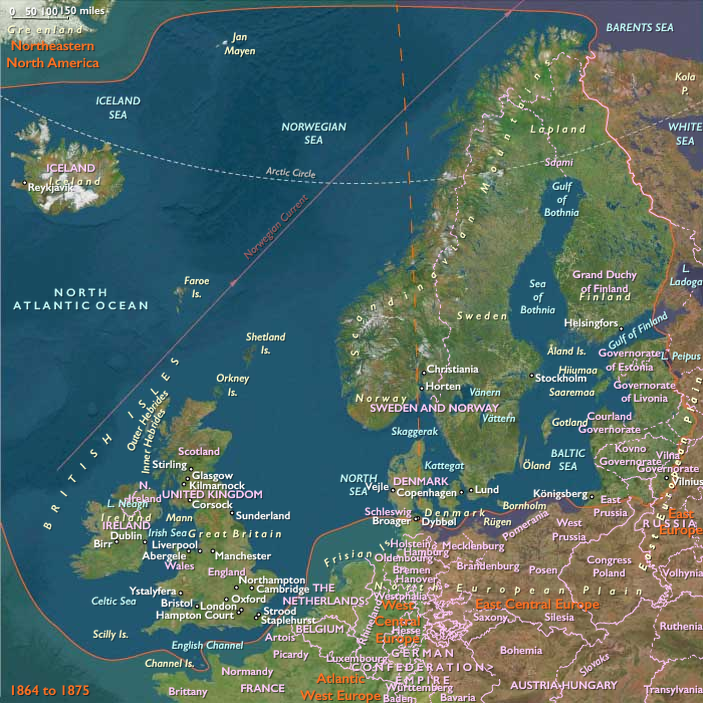
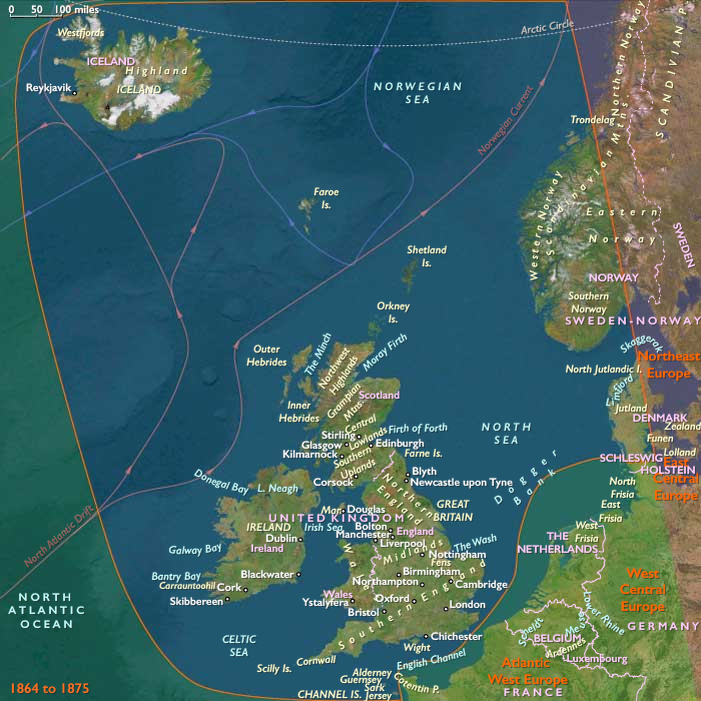
Five hundred thousand workers have been put out of work in British cotton mills due to the blockade of Southern-grown cotton during the American Civil War, in which Britain is officially neutral, British leaders personally dislike American republicanism and favor the more aristocratic Confederacy, as it had been a major source of cotton for textile mills.
Prince Albert had been effective in defusing a war scare in late 1861.
The British people, who depend heavily on American food imports, generally favor the United States.
What little cotton is available comes from New York, as the blockade by the U.S. Navy had shut down ninety-five percent of Southern exports to Britain.
In September 1862, during the Confederate invasion of Maryland, Britain (along with France) had contemplated stepping in and negotiating a peace settlement, which could only mean war with the United States.
But in the same month, U.S. president Abraham Lincoln had announced the Emancipation Proclamation.
Since support of the Confederacy now meant support for slavery, there was no longer any possibility of European intervention.
Meanwhile, the British sell arms to both sides, build blockade runners for a lucrative trade with the Confederacy, and surreptitiously allow warships to be built for the Confederacy.
The warships had caused a major diplomatic row (it will be resolved in the Alabama Claims in 1872, in the Americans' favor.)
Locations
People
Groups
- New York State (U.S.A.)
- United States of America (US, USA) (Washington DC)
- Britain (United Kingdom of Great Britain and Ireland)
- Confederate States of America (C.S.A.)
Topics
- American Civil War (War between the States, War of the Rebellion, War of Secession, War for Southern Independence)
- American Civil War & Reconstruction; 1864 through 1875
Commodoties
Subjects
Regions
Subregions
Years: 1864 - 1864
Locations
People
Groups
- New York State (U.S.A.)
- United States of America (US, USA) (Washington DC)
- Britain (United Kingdom of Great Britain and Ireland)
- Confederate States of America (C.S.A.)
Topics
- American Civil War (War between the States, War of the Rebellion, War of Secession, War for Southern Independence)
- American Civil War & Reconstruction; 1864 through 1875
Commodoties
Subjects
Regions
Subregions