
The extremist Zealots occasionally resort to violence …
Years: 31 - 31
The extremist Zealots occasionally resort to violence and assassination against the Romans and their Jewish supporters, according to the historian Josephus; hence, they are called Sicarii (from the Greek for "dagger men").
The surname of Judas Iscariot, one of Jesus’ twelve disciples, may indicate that he was a member.
Another of the Twelve, Simon (called the Zealot by Luke and called the Cananaean—Aramaic for "zealot"—by Matthew and Mark), may originally have belonged to the Zealots or still be a member.
Jesus is often depicted in modern imagery, with red (or, at least, “auburn”) hair, but since there are no contemporary descriptions of him, no one can say.
It is possible that his erstwhile disciple, Judas, may have been red-haired, if there is any basis to the the nineteenth-century term “Judas-haired”, an epithet directed against redheads.
The Apostles, as the disciples become known after Jesus’ crucifixion, had reportedly witnessed Jesus’ ascension into heaven and the outpouring of the Holy Spirit on the faithful community at Pentecost.
The Gospels assert that Jesus had challenged and commissioned the men to spread the message about Jesus as Messiah and to continue the work he has begun.
The devoted but skeptical Thomas—called Didymus ("twin")—refuses to believe in the testimony of the other apostles concerning the resurrection of Jesus until he sees the wounds of the resurrected Christ himself (according to John 20:24, 25, 26-29).
Thomas (according to early fourth century writer Eusebius of Caesarea) becomes a missionary to Parthia and later (according to the third century "Acts of Thomas,") founds the church of the Malabar Christians in Madras.
Jesus’ brother James was not (according to the later Gospels of Matthew and John) a follower of Jesus during his early ministry. (The New Testament lists James—later identified as Saint James the Lesser—as first among the "brothers of Jesus," a relationship often posited as that of stepbrothers or cousins.)
James had become a believer after the resurrected Christ appeared to him (according to Paul, in I Corinthians 15:7), and is regarded as an apostle (according to Paul, in Galatians 1:19).
John (whom many people believe is the "beloved disciple" referred to in the fourth Gospel, attributed to John) plays (according to Acts 1:13, 8:14) a prominent role in the early church.
Bartholomew, whose name means "son of Tolmai" and is frequently identified (John 1) with Nathanael, is (according to tradition) martyred in Armenia.
Matthew, the tax collector called by Jesus (Mark and Luke give his name as Levi) goes on to write (according to tradition) the Gospel of Matthew.
John’s brother James, (later known as Saint James the Greater) is (according to Acts 12) martyred under Herod Agrippa I; his bones are taken to Spain (according to legend) and interred at a shrine at Santiago de Compostela.
Little is recorded of another disciple, Thaddeus (mentioned in Mark and Matthew and often identified with the Jude, or Judas, son of James, in Luke 6:16).
Matthias (according to Acts 1:15-26) is the apostle chosen by lot to replace Judas; he later preaches, according to one tradition, in Ethiopia.
Locations
People
Groups
- Red-haired people
- Jews
- Judea (Roman province)
- Zealots
- Christians, Jewish
- Pirates of the Korea Strait
Topics
Commodoties
Subjects
Regions
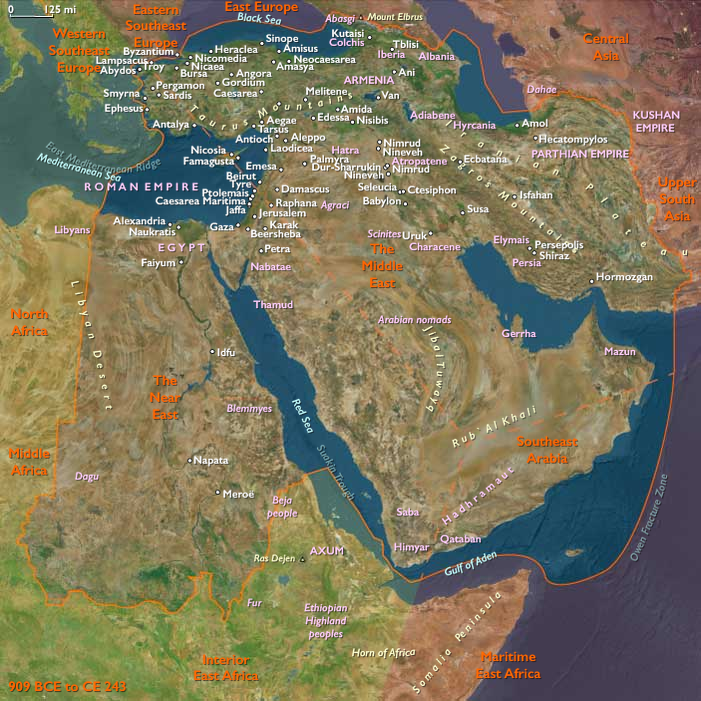
Subregions
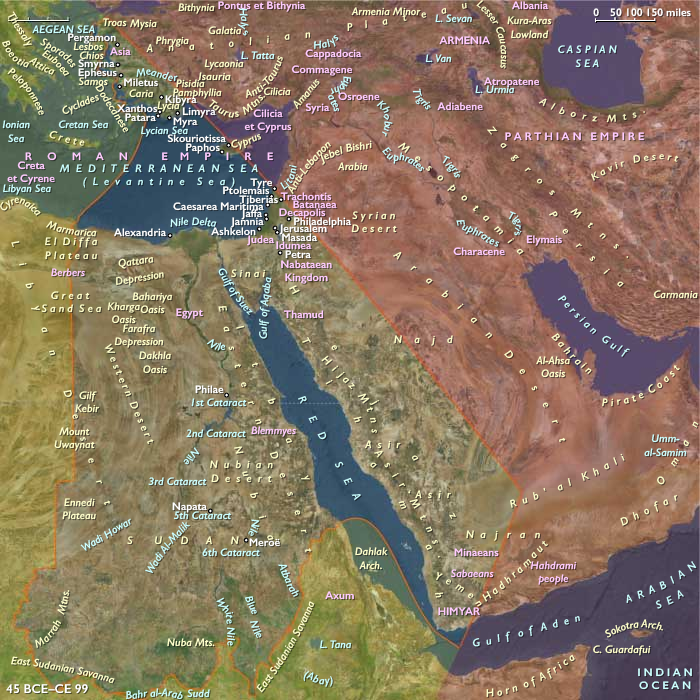
Years: 31 - 31
Locations
People
Groups
- Red-haired people
- Jews
- Judea (Roman province)
- Zealots
- Christians, Jewish
- Pirates of the Korea Strait
Topics
Commodoties
Subjects
Regions
Subregions