
Kublai Khan, the conqueror of China, founder …
Years: 1276 - 1287
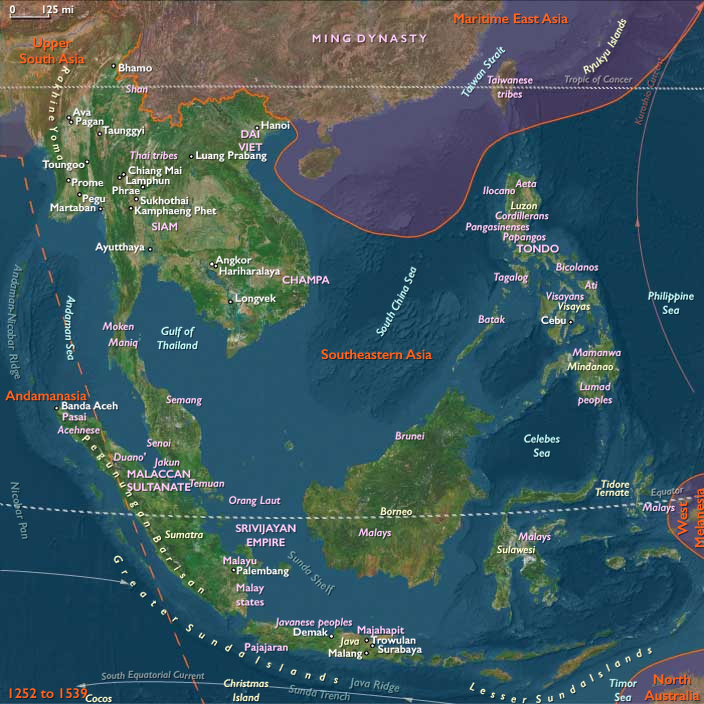
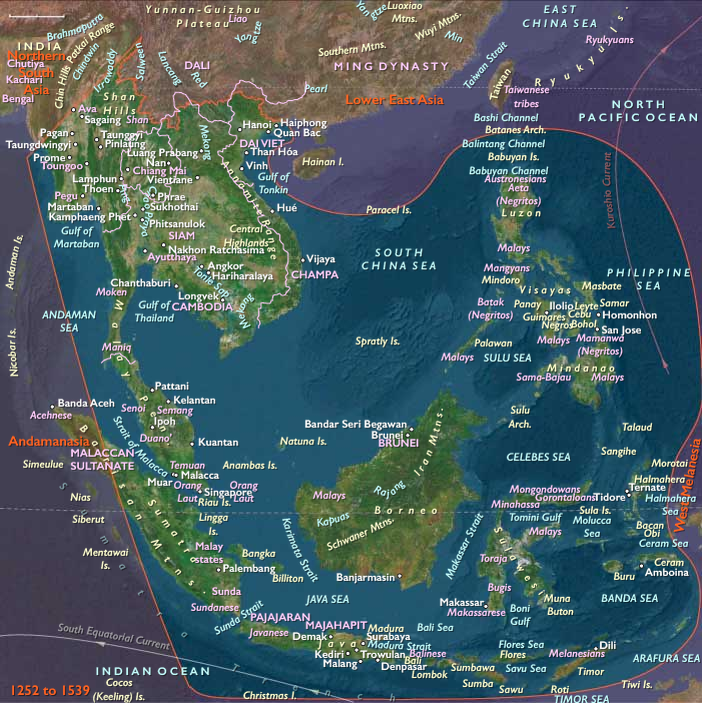
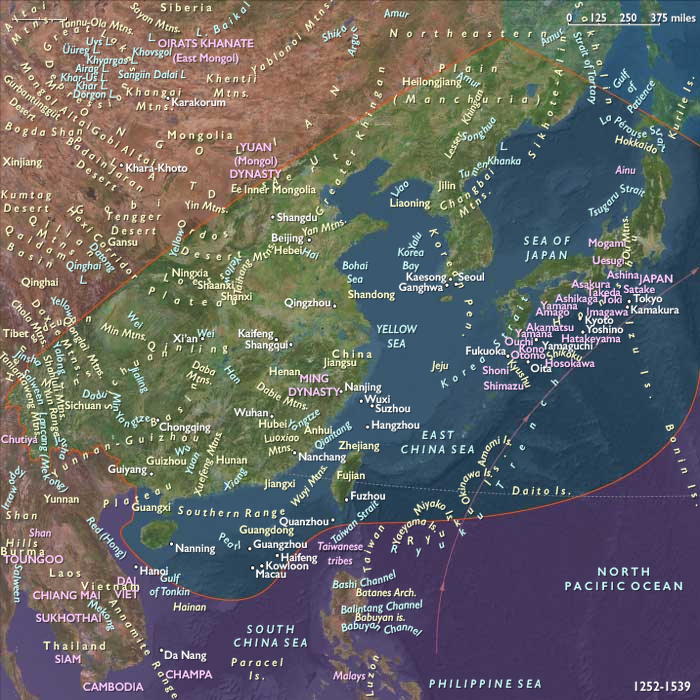
Kublai Khan, the conqueror of China, founder of the Yuan Dynasty and the Great Khan of the Mongol Empire, in 1277 and 1283 invades the Pagan Kingdom of Burma.
People
Groups
- Bamar or Burmans
- Pagan (Bagan), Kingdom of
- Mongols
- Mongol Empire
- Chinese Empire, Yüan, or Mongol, Dynasty
Topics
Subjects
Regions

Subregions
Related Events
Filter results
Showing 10 events out of 35 total
The Breton Succession Crisis (1341) and the War of the Breton Succession
The death of Duke John III of Brittany in April 1341 triggered a succession dispute between his half-brother, John of Montfort, and his preferred heir, Joan of Penthièvre, who was married to Charles of Blois, a nephew of King Philip VI of France. This conflict marked the beginning of the War of the Breton Succession (1341–1365), a key theater in the Hundred Years' War.
The House of Dreux and the Inheritance Dispute
-
Duke Arthur II of Brittany had married twice:
- First to Mary of Limoges, with whom he had:
- John III (his heir, Duke of Brittany from 1312).
- Guy, Count of Penthièvre (father of Joan of Penthièvre).
- Second to Yolande of Dreux, with whom he had:
- John of Montfort, Count of Montfort-l'Amaury.
- First to Mary of Limoges, with whom he had:
-
John III strongly disliked the children of his father’s second marriage and spent much of his reign trying to annul the marriage and bastardize John of Montfort.
-
Failing to disinherit his half-brother, he designated his niece, Joan of Penthièvre, as his successor.
-
In 1337, Joan married Charles of Blois, linking her claim to the powerful House of Blois and the French Crown.
John III’s Death and the Immediate Crisis (April 1341)
- In 1340, John III unexpectedly reconciled with his half-brother, John of Montfort, and made a will appointing him as his heir.
- On his deathbed in April 1341, however, John III made no final, clear statement on the succession, saying only:
- "For God's sake leave me alone and do not trouble my spirit with such things."
- With no unambiguous decision, a succession crisis erupted immediately.
John of Montfort’s Swift Seizure of Power (1341)
-
John of Montfort knew that most of the Breton nobility supported Charles of Blois, largely because of his French royal connections.
-
To strengthen his claim, Montfort acted decisively:
- He took control of Nantes, the ducal capital.
- He seized the ducal treasury at Limoges, ensuring he had the financial resources for war.
-
Montfort’s quick actions gave him an early advantage, but his claim relied on English support, setting the stage for a protracted conflict between pro-French and pro-English factions in Brittany.
...Nantes. Initially, the conflict had been an internal Breton dispute, but it soon became entangled in the larger Anglo-French conflict of the Hundred Years’ War (1337–1453).
The Truce Between England and France and the Looming Renewal of War
- The Hundred Years’ War had begun in 1337, but in 1341, a temporary truce between England and France delayed open hostilities.
- However, both sides expected the war to resume in June 1342, when the truce was set to expire.
- This political climate made Brittany’s internal war even more consequential, as both France and England had an interest in controlling the duchy.
Philip VI Intervenes: Charles of Blois Becomes the French Candidate
- When rumors reached Philip VI that John of Montfort had received English envoys, the French king quickly took direct action.
- Charles of Blois—already the preferred heir of the late Duke John III—was officially designated as the French-backed claimant.
- This turned the Breton Succession Crisis into a proxy war, making Brittany a key battleground in the wider Anglo-French struggle.
John of Montfort Aligns with Edward III of England
- Whatever Montfort’s initial intentions, Philip VI’s intervention forced him into an alliance with Edward III.
- By 1341, John of Montfort had little choice but to support Edward III’s claim to the French throne, aligning himself with the English cause.
- This alliance guaranteed English military support, setting the stage for an English-backed intervention in Brittany.
Implications for the War
- The Breton War of Succession (1341–1365) was now part of the larger Hundred Years’ War, with:
- Charles of Blois backed by France.
- John of Montfort supported by England.
- As the truce between England and France neared its expiration, both sides prepared for renewed hostilities, with Brittany as a key theater of conflict.
John of Montfort’s rapid conquest of Brittany in 1341 ensured that the Breton Succession Crisis would become a proxy war, further entangling France and England in one of the most protracted conflicts of medieval Europe.
The Siege of Nantes (October 1341): John of Montfort’s Failing Resistance
Following his failed relief attempt at Champtoceaux, John of Montfort arrived in Nantes only to find the townsmen hostile, frustrated by the defeat and heavy losses suffered in the previous battle. His position in the city became precarious, and he was soon forced to agree to surrender if no relief arrived within a month.
Early Skirmishes and Growing Discontent
- In an effort to bolster morale, Montfort’s forces launched a series of sallies against the French besiegers in the days following his arrival.
- In response, the French army escalated its attacks on outlying forts, systematically tightening the noose around Nantes.
- Captured defenders were executed within sight of the city walls, a psychological tactic that further eroded Montfort’s support.
- The townsmen grew increasingly resentful, refusing to commit more men to Montfort’s attacks.
Final Defeat and the Collapse of Morale
- By the end of October 1341, a final Montfortist sally ended in disaster when John’s mercenaries deserted mid-battle, leaving the townsmen’s militia exposed to the superior French forces.
- The French army decisively annihilated the remaining Montfortist troops, marking a crushing blow to the city’s defenders.
- In an act of psychological warfare, the French executed some captured Montfortist soldiers, beheading them and hurling their heads into the town via catapult to intimidate the defenders.
Consequences of the Disaster at Nantes
- Montfort’s position had become untenable—his support among the townsmen was eroding, and his ability to resist the siege was collapsing.
- The morale in Nantes was shattered, making its eventual surrender inevitable.
- This defeat marked the final stage of Montfort’s early campaign, leaving him isolated and vulnerable to capture in the coming months.
The disastrous final sally at Nantes in late October 1341 sealed Montfort’s fate, pushing him closer to defeat and imprisonment, and allowing Charles of Blois to further consolidate his hold on Brittany.
The Surrender of Nantes and the Imprisonment of John of Montfort (November 2, 1341)
Following the disastrous defeat at Nantes, John of Montfort lost the last vestiges of support within the city. The irate city council, frustrated by his failures and unwilling to endure further losses, forced him to surrender on November 2, 1341.
John of Montfort’s Forced Capitulation
- After suffering multiple military setbacks, including the loss of Champtoceaux and the failed defense of Nantes, Montfort’s position was untenable.
- The Nantes city council, exhausted by the siege and angry at his leadership, compelled him to surrender.
- Recognizing the futility of further resistance, Montfort accepted the terms of surrender.
Safe Conduct and Betrayal
- Montfort was offered safe conduct to negotiate a settlement with Charles of Blois, his rival for the Duchy of Brittany.
- However, these negotiations proved fruitless, as neither side was willing to compromise on their claims.
- With no diplomatic resolution in sight, Montfort was arrested and imprisoned in the Louvre in Paris, under orders from Philip VI of France.
Consequences and Impact
- With Montfort imprisoned, his cause seemed lost, and Charles of Blois strengthened his control over Brittany.
- However, Montfort’s wife, Joan of Flanders, refused to accept defeat. She would later lead the resistance in his name, securing English military aid to continue the war.
- Montfort’s imprisonment did not end the Breton War of Succession (1341–1365), as England’s eventual involvement would transform Brittany into a key battleground in the Hundred Years’ War.
The fall of Nantes and the capture of John of Montfort in November 1341 marked a major turning point in the Breton War of Succession, but it was far from the end of the conflict, as Joan of Flanders and English intervention would soon shift the balance.
Jeanne de Clisson’s Revenge and War Against the French Crown (1343–1345)
Following the execution of her husband, Olivier IV de Clisson, in August 1343, Jeanne de Clisson swore vengeance against King Philip VI of France and Charles of Blois, believing their actions constituted a cowardly and unjust murder. She took up arms against the French monarchy, launching a personal war of retribution, which would earn her the title of the “Lioness of Brittany.”
Jeanne’s Oath of Vengeance and Initial Campaign
- After Olivier IV’s execution, Jeanne took her two young sons, Olivier and Guillaume, to Nantes, where she showed them their father’s severed head, still displayed on a pike at the Sauvetout Gate.
- Determined to exact revenge, she:
- Sold off the de Clisson estates to raise funds.
- Gathered a force of loyal men from among her husband’s supporters.
- Began targeting French strongholds and military outposts in Brittany.
Key Attacks by Jeanne de Clisson
Jeanne’s forces struck against French garrisons and noble supporters of Charles of Blois, engaging in brutal raids and massacres:
- Touffou Castle (near Bonnes) – One of the first fortifications she attacked.
- A castle occupied by Galois de la Heuse, a French officer serving Charles of Blois – Jeanne and her men massacred the entire garrison, sparing only one survivor as a warning.
- Château-Thébaud, located 20 km southeast of Nantes – This garrison, once controlled by her husband, was recaptured by Jeanne and her forces.
Her merciless tactics, especially the massacres of French soldiers, earned her a fearsome reputation and made her a legendary figure in Breton resistance against France.
Conviction and Confiscation of the de Clisson Estates (1343)
- In 1343, a French court convicted Jeanne de Clisson of treason, officially stripping her of all remaining lands and titles.
- This effectively made her an outlaw, but she continued her campaign against the French monarchy.
English Support and Funding
- English records from 1343 show that King Edward III granted Jeanne an income from lands controlled by the English in Brittany.
- This indicates that her anti-French activities aligned with English interests, making her a valuable ally in the ongoing conflict.
Legacy and Continued Resistance
- Jeanne’s revenge campaign did not end with land-based raids—she would soon turn to piracy, attacking French ships in the English Channel with a fleet of black-painted ships.
- Her relentless campaign against France ensured that she remained one of the most formidable figures in the Breton War of Succession.
The execution of Olivier IV de Clisson in 1343 had unintended consequences for the French monarchy, as it created one of the most determined and ruthless enemies of the Capetian cause in Brittany—a woman who would not rest until she had avenged her husband’s death.
Olivier de Clisson’s Return to France and the Treaty of Brétigny-Calais (1360)
After spending ten years in England, Olivier de Clisson returned to Brittany in 1359, leading a Breton-English force alongside King Edward III and John IV de Montfort in a guerrilla campaign near Poitou. However, as diplomatic shifts reshaped the balance of power, Olivier was reconciled with the French Crown in 1360 as part of the Treaty of Brétigny, later renamed the Treaty of Calais.
The Treaty of Brétigny-Calais: Ending Hostilities (1360)
- Drafted on May 8, 1360, and officially ratified on October 24, the Treaty of Brétigny sought to defuse tensions between England and France, marking the start of a nine-year truce in the Hundred Years’ War.
- One of the treaty’s provisions aimed at rectifying past grievances and securing loyalty from former enemies:
- Olivier de Clisson was officially reconciled with the French Crown under King John II ("the Good").
- His father, Olivier IV de Clisson, executed in 1343 on charges of treason, was posthumously reinstatedwith full noble honors.
- The Clisson family regained its confiscated lands, rights, and privileges, restoring their place among the Breton and French aristocracy.
Marriage to Catherine of Laval and Political Alliances
- In 1360, Olivier married Catherine of Laval and Châteaubriant, a powerful heiress and granddaughter of Duke Arthur II of Brittany.
- This marriage strengthened his political standing, making him first cousin to both claimants to the Duchy of Brittany:
- John IV de Montfort, leader of the pro-English Montfortist faction.
- Joan, Duchess of Brittany, wife of Charles de Blois, leader of the pro-French faction.
- Additionally, this marriage connected Olivier to the French royal family, opening new political and military opportunities.
Impact and Legacy
- Olivier’s return to French service marked the beginning of his gradual rise in power, eventually leading to his appointment as Constable of France (1380).
- His marriage strengthened his ties to Brittany’s ruling houses, making him a key figure in the ongoing struggle for the duchy.
- The rehabilitation of the Clisson family restored their noble prestige, setting the stage for Olivier’s future influence in both French and Breton politics.
The Treaty of Brétigny-Calais (1360) not only secured peace between England and France but also reintegrated former enemies like Olivier de Clisson into the French nobility, allowing him to rebuild his family’s legacy and expand his influence.
John IV de Montfort’s Return to Brittany and the Fragile Peace (1362)
By 1362, under pressure from Pope Innocent VI, the English, French, and Breton factions negotiated a tenuous peace in the War of the Breton Succession (1341–1365). However, while both the House of Blois and the House of Montfort maintained an uneasy balance of power, tensions remained unresolved within Brittany.
John IV de Montfort’s Return to Brittany (1362)
- The younger John de Montfort, son of the late John III, had been raised at the court of Edward III of England after his father’s death in 1345.
- In 1362, at the age of 22, he was permitted by Edward III to return to Brittany, but under strict conditions:
- He was forbidden to marry without Edward’s permission.
- He had to pledge several fortresses as a guarantee of his loyalty to England.
An Attempt at Peace with Charles of Blois
- Upon his arrival in Brittany, John IV sought to negotiate peace with his rival, Charles of Blois, in an attempt to reach a settlement and share power within the duchy.
- His proposal to divide Brittany was meant to end the decades-long conflict and stabilize the region.
Joan of Penthièvre’s Opposition to Peace
- Charles of Blois' wife, Joan of Penthièvre, vehemently opposed any settlement with the Montforts.
- She urged Charles to reject John’s offer and instead push for his total destruction, viewing him as a threat to her family’s claim to the duchy.
- Encouraged by Joan, Charles continued to resist Montfortist claims, ensuring that the war would not end peacefully.
Consequences: A Renewed Conflict
- John IV’s return to Brittany rekindled tensions, as the fragile peace crumbled under the pressure of political rivalries.
- The failure of negotiations set the stage for the final phase of the War of the Breton Succession, culminating in the Battle of Auray (1364), where Charles of Blois would meet his end.
John IV’s return to Brittany in 1362, though an effort toward reconciliation, ultimately led to renewed conflict, as Joan of Penthièvre’s insistence on continuing the fight ensured that the Montfort-Blois struggle would persist until a final military resolution.
The French Seizure of Brittany and the Exile of Duke John IV (1373)
By 1373, Brittany had become heavily indebted to King Edward III of England, further entrenching English influence in the duchy. Duke John IV’s administration was largely controlled by English advisors, including Thomas Melbourne, the Treasurer and Receiver General of the Duchy. This foreign domination, combined with widespread discontent over the implementation of a permanent ducal tax (the hearth tax), led to growing opposition from the Breton nobility, particularly from Olivier de Clisson.
Duke John IV’s Continued Alliance with England
- Facing increasing pressure from French-backed factions in Brittany, John IV chose to reaffirm his alliance with England, signing a new treaty with Edward III.
- To justify this to France, John IV claimed he had no choice but to host English troops in order to counter Olivier de Clisson’s growing influence in Brittany.
- English garrisons were stationed in key strategic locations, including:
- Derval
- Rougé
- Brest
- Saint-Mathieu
Charles V’s Response: The French Invasion of Brittany (March 1373)
- In response to John IV’s continued English alliance, King Charles V of France ordered his Constable, Bertrand du Guesclin, to seize the Duchy of Brittany on March 1, 1373.
- To ensure the support of Olivier de Clisson, Charles granted him the lordship of Guillac, further securing Clisson’s loyalty to the French Crown.
- Du Guesclin and Clisson launched a propaganda campaign, seeking to discredit John IV and turn the Breton nobility against him.
Duke John IV’s Fall and Exile (April 28, 1373)
- The French offensive was swift and effective, with much of the Breton nobility turning against John IV due to:
- Opposition to English rule in Brittany.
- Discontent over excessive taxation.
- With his support collapsing, John IV was forced to flee the duchy.
- On April 28, 1373, he crossed the English Channel into exile, taking refuge in England under Edward III’s protection.
Impact of the French Takeover
- With John IV in exile, Brittany was effectively under French control, with du Guesclin and Clisson consolidating power.
- The defeat of John IV marked a significant shift in Breton politics, strengthening French authority in the duchy.
- However, John IV’s exile did not end the conflict, as he would later attempt to reclaim his duchy with English support.
The French invasion of Brittany in 1373 and the exile of Duke John IV marked a major turning point, as Charles V’s military strategy continued to weaken English influence in France, setting the stage for further conflicts over Breton sovereignty.
The French Annexation of Brittany and the Struggle Between John IV and Olivier de Clisson (1378)
On December 18, 1378, King Charles V of France formally annexed Brittany to the French Crown, reversing the autonomy of the Breton nobility and violating the Treaty of Guérande (1365). This act triggered a power struggle, as Duke John IV, returning from exile, sought to reclaim his duchy, while Olivier de Clisson maneuvered for greater power.
Charles V’s Petition to the Breton Nobility
To justify the annexation, Charles V consulted four leading Breton lords, seeking their stance on the matter:
- Guy XII de Laval – Refused to fight against Duke John IV, showing loyalty to the Montfortist cause.
- Viscount John I of Rohan – Hesitantly promised support but was noncommittal.
- Olivier de Clisson and Bertrand du Guesclin – Fully backed the Valois king, reaffirming their loyalty to France.
The Return of John IV and the Breton Provisional Government
- Duke John IV, returning from exile, found significant support in Brittany, as the nobility rejected French annexation.
- A Breton provisional government was formed to negotiate with the French king, attempting to restore John IV’s rule while maintaining autonomy.
- Despite this, Olivier de Clisson saw an opportunity to claim the title of Duke of Brittany, positioning himself as a loyal Valois vassal.
The Failure of Clisson’s Bid for the Duchy
- Once again, Clisson failed to convince Charles V to grant him the title of Duke, despite his unwavering loyalty to the French Crown.
- This was largely due to John IV’s secret negotiations with King Richard II of England, securing English support to reclaim Brittany.
- With backing from English allies and Breton nobility, John IV successfully reestablished his rule.
- However, he was unable to reclaim all of Brittany, as Olivier de Clisson retained control over key territories, including Nantes.
Olivier de Clisson’s Second Marriage (1378) and Noble Alliances
- In 1378, Olivier, now widowed, married Marguerite de Rohan (1330–1406), daughter of Alain VII, Viscount of Rohan.
- Marguerite was the widow of Jean de Beaumanoir, a hero of the Breton nobility who had fought the English at the Battle of the Thirty (1351).
- Through this marriage, Clisson strengthened his alliances with Brittany’s most powerful noble families.
- Additionally, his sister Isabeau de Clisson was married to Jean de Rieux in 1338, further linking him to key aristocratic factions in the duchy.
Impact and Consequences
- John IV reclaimed the Duchy of Brittany, but the duchy remained divided, with Olivier de Clisson retaining significant power.
- The French annexation attempt ultimately failed, but it deepened tensions between pro-French and pro-English factions in Brittany.
- Clisson’s noble alliances solidified his influence, setting the stage for his future role as Constable of France (1380).
The annexation crisis of 1378 and the power struggle between John IV and Olivier de Clisson shaped the political future of Brittany, keeping the region entangled in the ongoing conflict between France and England during the Hundred Years’ War.
The Second Treaty of Guérande (April 4, 1381) and the Reconciliation of John IV and Olivier de Clisson
The Second Treaty of Guérande, signed on April 4, 1381, formally normalized relations between the Duchy of Brittany and the Kingdom of France, following years of conflict and shifting allegiances during the Hundred Years’ War. This agreement marked the end of open hostilities between Duke John IV of Brittany and the French Crown, re-establishing a tenuous peace in the region.
Terms of the Treaty
- John IV was officially recognized as Duke of Brittany by the French king, Charles VI.
- The treaty restored Brittany’s semi-autonomous status, allowing John IV to rule as a vassal of the French Crown, while maintaining internal independence.
- In return, John IV pledged allegiance to the King of France, promising not to ally with England against France.
- The agreement protected Breton sovereignty, preventing direct French intervention in the duchy’s affairs.
The Alliance Between John IV and Olivier de Clisson (May 30, 1381)
- A month after the Second Treaty of Guérande, Duke John IV and Olivier de Clisson, who had been appointed Constable of France in 1380, signed a treaty of "good allies" on May 30, 1381.
- This agreement sought to end the long-standing personal and political rivalry between John IV and Clisson, who had been one of the main architects of French intervention in Brittany.
- The treaty was reaffirmed on February 27, 1382, strengthening relations between the pro-French faction in Brittany and the Duke’s supporters.
Impact and Legacy
- The Second Treaty of Guérande and the subsequent alliance between John IV and Clisson helped to stabilize Brittany, though tensions between French and English influences remained.
- Clisson’s role as Constable of France ensured that Brittany would remain closely aligned with the Valois monarchy, despite its historical ties to England.
- The treaty allowed John IV to rule without direct interference from France, though his position remained fragile, especially as he continued to navigate between English and French interests.
The Treaty of Guérande (1381) and the alliance between John IV and Clisson helped restore a fragile peace in Brittany, securing French recognition of the Montfortist rule while maintaining the duchy’s autonomy.
Years: 1276 - 1287
People
Groups
- Bamar or Burmans
- Pagan (Bagan), Kingdom of
- Mongols
- Mongol Empire
- Chinese Empire, Yüan, or Mongol, Dynasty
Topics
Subjects
Regions
Subregions