
Washington Irving had arrived in England in …
Years: 1820 - 1820
October
Washington Irving had arrived in England in mid-1815 and spent the next two years trying to bail out the family firm financially, but he had eventually been forced to declare bankruptcy.
With no job prospects, Irving had continued writing throughout 1817 and 1818.
He had visited the home of novelist Walter Scott in the summer of 1817, marking the beginning of a lifelong personal and professional friendship for both men.
Irving had continued writing prolifically—the short story "Rip Van Winkle" had been written overnight while staying with his sister Sarah and her husband, Henry van Wart in Birmingham, England, a place that also inspired some of his other works.
Irving's brother William had secured for Irving a post as chief clerk to the United States Navy in October 1818, and had urged him to return home.
Irving, however, had turned the offer down, opting to stay in England to pursue a writing career.
In the spring of 1819, Irving had sent to his brother Ebenezer in New York a set of playful, sentimental assortment of pieces that he asked be published as The Sketch Book of Geoffrey Crayon, Gent.
Featuring essays and sketches about the folk customs of the English countryside and two essays about the American Indian, the first installment, also containing "Rip Van Winkle", was an enormous success, and the rest of the lighthearted work is equally successful, published over the course of 1819–1820 in seven installments in New York and in two volumes in London ("The Legend of Sleepy Hollow" appears in the sixth issue of the New York edition and the second volume of the London edition).
Like many successful authors of this era, Irving struggles against literary bootleggers.
In England, some of his sketches are reprinted in periodicals without his permission, an entirely legal practice as there is no international copyright law at the time.
To prevent further piracy in Britain, Irving pays to have the first four American installments published as a single volume by John Miller in London.
Irving appeals to Walter Scott for help procuring a more reputable publisher for the remainder of the book.
Scott refers Irving to his own publisher, London powerhouse John Murray, who agrees to take on The Sketch Book.
From now on, Irving will publish concurrently in the United States and England to protect his copyright, with Murray being his English publisher of choice.
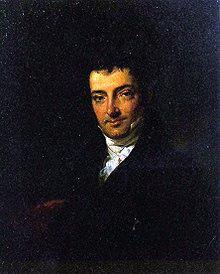
Portrait of Irving in about 1820, attributed to Charles Robert Leslie.
Locations
People
Topics
Subjects
Regions

Subregions
Years: 1820 - 1820
October
Portrait of Irving in about 1820, attributed to Charles Robert Leslie.
Locations
People
Topics
Subjects
Regions
Subregions