
Akbar, ruling over a society that is …
Years: 1579 - 1579
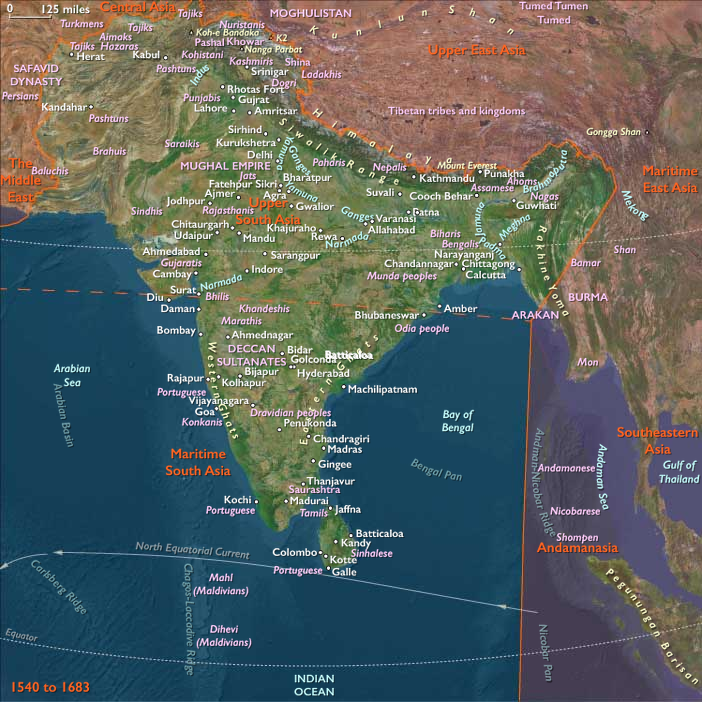
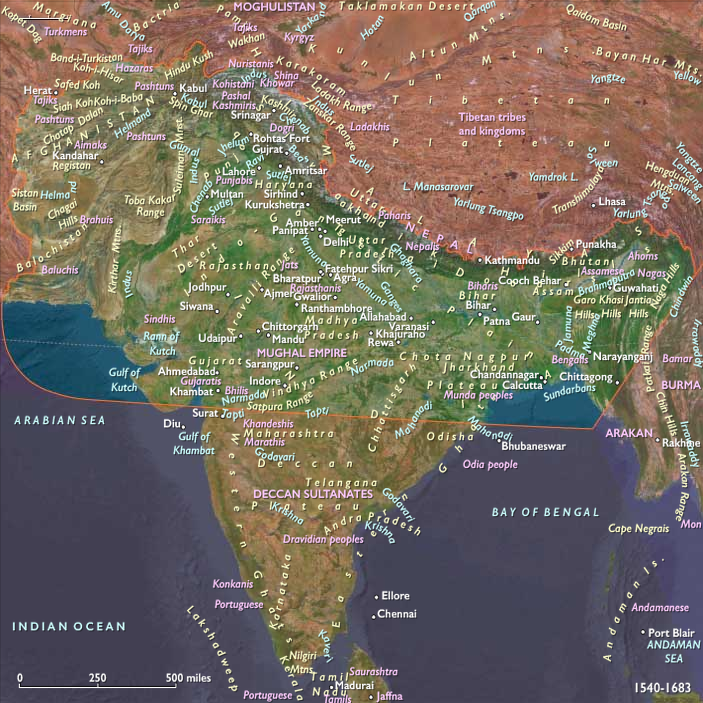
Akbar, ruling over a society that is predominantly non-Muslim, needs not simply to maintain his status as a Muslim ruler but also to be liberal enough to elicit active support from non-Muslims.
For this purpose, he must deal first with the Muslim theologians who, in the face of Brahmanic resilience, are rightly concerned with the community's identity and resist any effort that could encourage a broader notion of political participation.
Akbar begins his drive by abolishing both the jizya, the per capita tax imposed on free non-Muslim adult males who are neither old nor sick nor monks, and the practice of forcibly converting prisoners of war to Islam, and by encouraging Hindus as his principal confidants and policy makers.
To legitimize his nonsectarian policies, he issues in 1579 a public edict (mahzar) declaring his right to be the supreme arbiter in Muslim religious matters—above the body of religious scholars and jurists.
He has by now also undertaken a number of stern measures to reform the administration of religious grants, which are now available to learned and pious men of all religions, not just Islam.
Locations
People
Groups
Subjects
Regions
Subregions
Years: 1579 - 1579
Locations
People
Groups
Subjects
Regions
Subregions