
Albert of Habsburg has ruled as a …
Years: 1291 - 1291
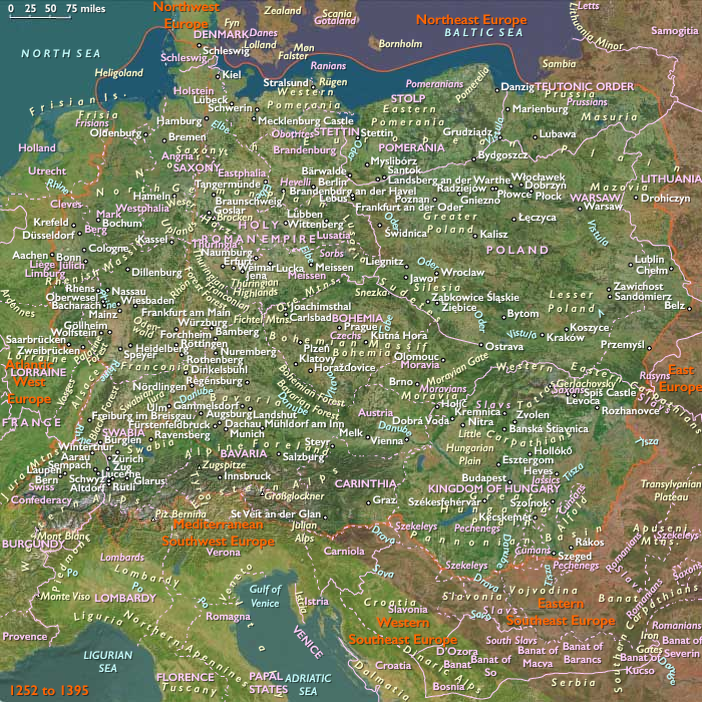
Albert of Habsburg has ruled as a landgrave from 1290 over his father's Swabian (Further Austrian) possessions in Alsace.
In 1282, his father, the first German monarch from the House of Habsburg, had invested him and his younger brother Rudolf II with the duchies of Austria and Styria, which he had seized from late King Ottokar II of Bohemia and defended in the 1278 Battle on the Marchfeld.
By the 1283 Treaty of Rheinfelden, Albert’s father had entrusted with their sole government, while Rudolf II ought to have been compensated by the Further Austrian Habsburg home territories—which, however, never happened until his death in 1290.
Albert and his Swabian ministeriales appear to have ruled the Austrian and Styrian duchies with conspicuous success, overcoming the resistance by local nobles.
King Rudolf I had been unable to secure the succession to the German throne for his son, especially due to the objections raised by Ottokar's son King Wenceslaus II of Bohemia, and the plans to install Albert as successor of the assassinated King Ladislaus IV of Hungary in 1290 had also failed.
Upon Rudolf's death in 1291, the Prince-electors, fearing Albert's power and the implementation of a hereditary monarchy, choose Count Adolf of Nassau-Weilburg as King of the Romans.
A rising among his Styrian dependents compels Albert to recognize the sovereignty of his rival and to confine himself for a time to the government of the Habsburg lands at Vienna.
Locations
People
Groups
Commodoties
Subjects
Regions
Subregions

Years: 1291 - 1291
Locations
People
Groups
Commodoties
Subjects
Regions
Subregions