
Albrecht Dürer and the Legacy of Martin …
Years: 1492 - 1492
March
Albrecht Dürer and the Legacy of Martin Schongauer (1490–1492)
Albrecht Dürer, whose transformative contributions to Renaissance art profoundly shaped Atlantic West Europe, departed his hometown of Nuremberg in 1490 to deepen his artistic training. His journey aimed primarily to learn engraving under Martin Schongauer, the era's preeminent printmaker, renowned for elevating engraving to an art form that rivaled painting in expressive power.
Journey and Missed Encounter with Schongauer
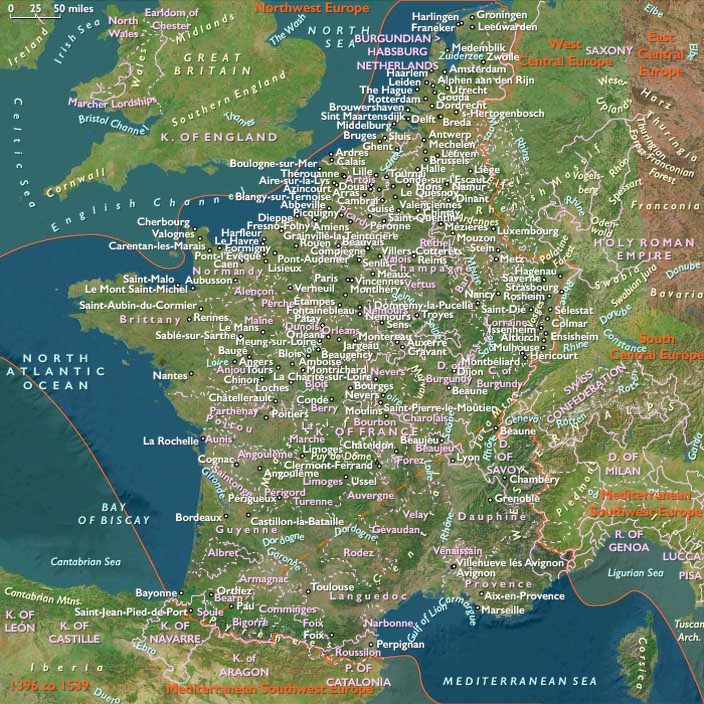
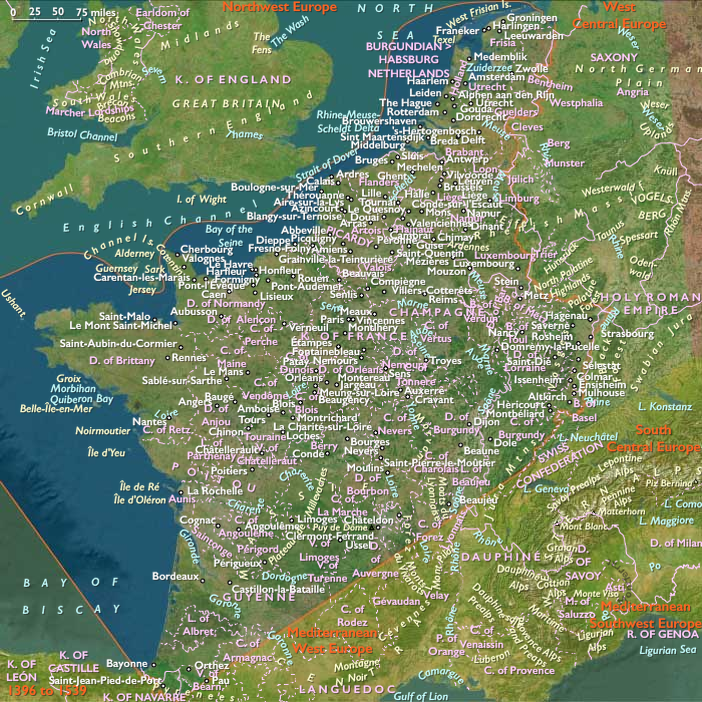
Dürer’s ambition to study directly with Martin Schongauer, the most influential Northern engraver of the late fifteenth century, led him first toward Colmar, where Schongauer had his workshop. Unfortunately, upon his arrival in early 1492, Dürer found that Schongauer had recently died (February 2, 1491), abruptly altering the course of his training. Though he never met the master personally, Schongauer’s engravings significantly influenced Dürer's subsequent artistic development.
Travels and Artistic Influences (1490–1492)
The exact path of Dürer’s travels after leaving Nuremberg remains uncertain. Historical records suggest that he likely visited artistic centers such as Frankfurt am Main, a major trading hub, and the Netherlands, renowned for its artistic innovation. These travels undoubtedly expanded his exposure to the richly detailed Flemish tradition, known for its precision, realism, and skillful handling of light and texture—qualities that strongly influenced his later engravings and paintings.
Artistic Development and Influence
Even though direct training under Schongauer was impossible, Dürer was profoundly impacted by Schongauer’s innovative graphic techniques, particularly the masterful use of refined, linear engraving strokes to convey depth, shadow, and emotional nuance. Schongauer’s hallmark approach—detailed narrative clarity, emotive representation, and meticulously rendered textures—resonated deeply with Dürer, who soon adopted and further developed these artistic principles.
Dürer in Colmar and Basel
In Colmar, despite Schongauer’s death, Dürer studied his surviving works, meticulously copying Schongauer's engravings to internalize his refined technique and intricate graphic style. He also traveled to Basel, a vibrant center of book printing and publishing, further acquainting himself with advances in the printed image. These experiences laid a foundation for his subsequent achievements in both engraving and printmaking, exemplified in his later masterworks, such as the famed series "The Apocalypse" (1498).
Long-term Consequences and Significance
The unexpected death of Schongauer, ironically, redirected Dürer’s career, compelling him to broaden his artistic horizons independently, exploring diverse techniques and regions. The legacy of Schongauer's techniques—careful lines, dramatic shading, and innovative storytelling—profoundly influenced Dürer’s early style and became integral to his own artistic identity. In turn, Dürer's achievements significantly shaped European art history, bridging Northern and Italian Renaissance traditions and laying foundations for artistic developments that would profoundly impact the Renaissance and beyond.
Thus, Dürer’s journey, initially to study under Schongauer, turned into a transformative period of artistic discovery that established him as the pivotal artistic figure of late medieval and early modern Europe, deeply influencing the evolution of printmaking and painting across the continent.
Locations
People
Groups
- Basel, Prince-Bishopric of
- Venice, (Most Serene) Republic of
- Nuremberg, Free Imperial City of
- Colmar, free imperial city of
- Frankfurt am Main, Imperial Free City of
- Holy Roman Empire
- Netherlands, Habsburg
Topics
Subjects
Regions
Subregions
Related Events
Showing 10 events out of 40412 total
Years: 1492 - 1492
March
Locations
People
Groups
- Basel, Prince-Bishopric of
- Venice, (Most Serene) Republic of
- Nuremberg, Free Imperial City of
- Colmar, free imperial city of
- Frankfurt am Main, Imperial Free City of
- Holy Roman Empire
- Netherlands, Habsburg
Topics
Subjects
Regions
Subregions