
The effort to graft Western technology onto …
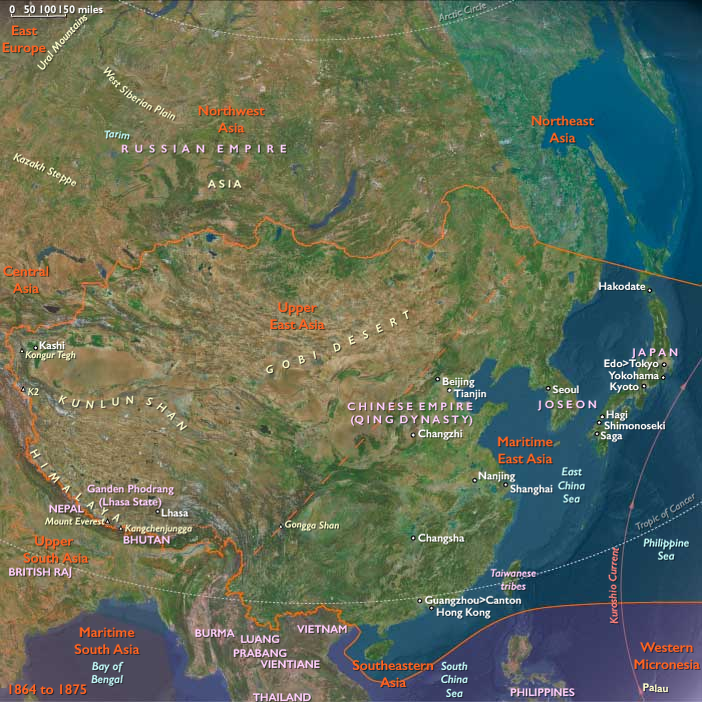
Years: 1864 - 1875
The effort to graft Western technology onto Chinese institutions becomes known as the Self-Strengthening Movement.
The movement is championed by scholar-generals like Li Hongzhang (1823-1901) and Zuo Zongtang (1812-85), who had fought with the government forces in the Taiping Rebellion.
From 1861 to 1894, leaders such as these, now turned scholar-administrators, will be responsible for establishing modern institutions, developing basic industries, communications, and transportation, and modernizing the military, but despite its leaders' accomplishments, the Self-Strengthening Movement does not recognize the significance of the political institutions and social theories that had fostered Western advances and innovations.
This weakness leads to the movement's failure.
Modernization during this period would have been difficult under the best of circumstances.
The bureaucracy is still deeply influenced by Neo-Confucian orthodoxy.
Chinese society is still reeling from the ravages of the Taiping and other rebellions, and foreign encroachments continue to threaten the integrity of China.
Locations
People
Groups
Topics
Subjects
Regions
Subregions

Years: 1864 - 1875
Locations
People
Groups
Topics
Subjects
Regions
Subregions