
Filters:
The Battle of Vlaardingen (1018): Dirk III’s …
Years: 1018 - 1018
The Battle of Vlaardingen (1018): Dirk III’s Defiance of Imperial Authority
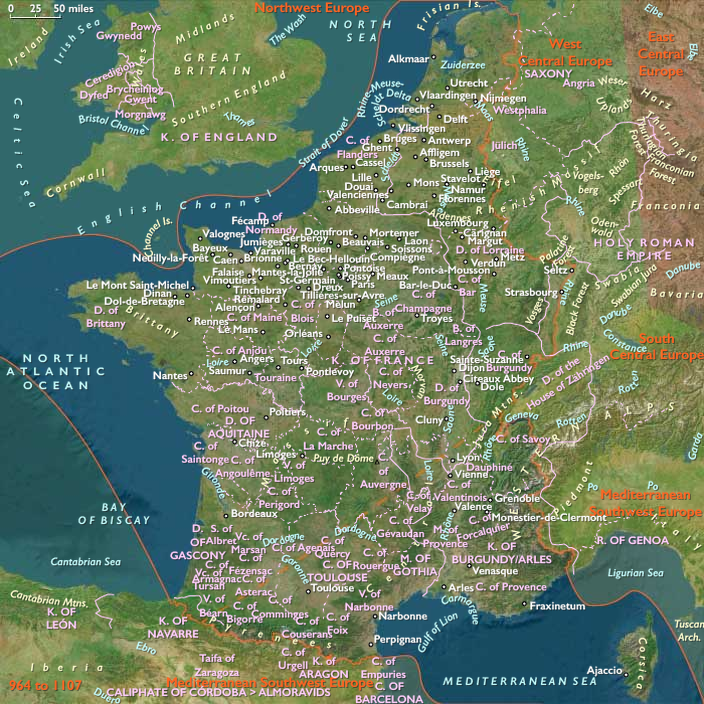
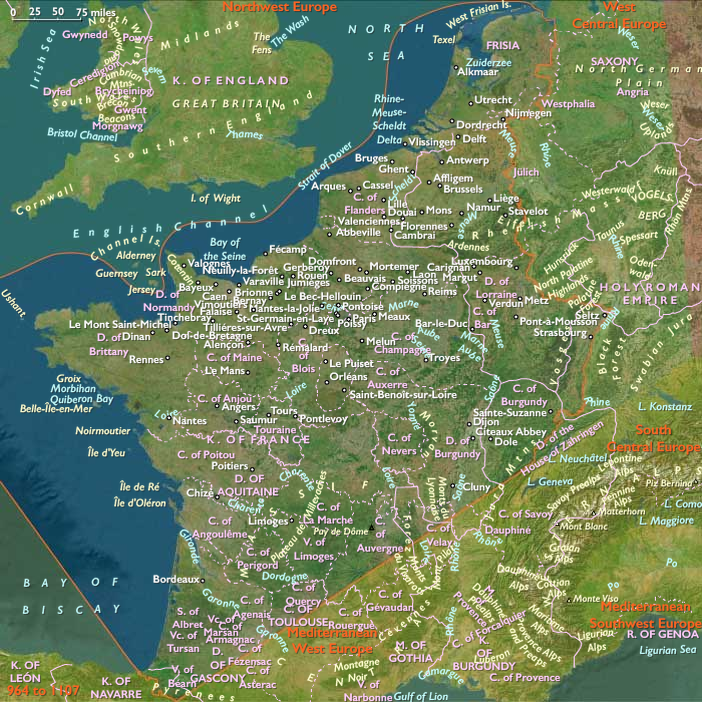
By the early 11th century, Count Dirk III of Friesland (later Holland) had established himself as a powerful and defiant vassal of the Holy Roman Empire. Though technically under imperial authority, he sought to increase his autonomy and expand his control over trade routes, bringing him into direct conflict with Emperor Henry II and the bishops of Utrecht. This culminated in the Battle of Vlaardingen (1018), one of the greatest feudal victories over an imperial army.
Dirk III and the Control of Trade Routes
- Tiel, a major mercantile hub on the Waal River, was a critical trade center connecting Flanders, England, and the Holy Roman Empire.
- A second important trade route passed through Dirk III’s lands, particularly along the Meuse and Rhine estuaries, where he built a stronghold at Vlaardingen.
- Vlaardingen, located in newly reclaimed land, was settled by Frisians at Dirk’s invitation, further strengthening his local power base.
- Dirk, despite imperial prohibitions, began levying tolls on passing ships in open defiance of imperial authority, disrupting commerce and provoking strong opposition from Tiel’s merchants and the Bishop of Utrecht.
Imperial Response: The Campaign Against Dirk III
- Merchants from Tiel and Bishop Adelbold of Utrecht reported Dirk’s "acts of violence" against passing traders to Emperor Henry II, demanding action.
- Henry II, seeking to reassert imperial control, declared Dirk III a rebel and decided to strip him of his lands, awarding them to Bishop Adelbold.
- A large imperial army, composed of troops from various bishops of the region, was assembled and placed under the command of Godfrey II, Duke of Lower Lorraine.
- Their objective was to crush Dirk’s rebellion, seize Vlaardingen, and restore order to the imperial trade routes.
The Battle of Vlaardingen (1018): Dirk III’s Decisive Victory
- As the imperial army advanced on Vlaardingen, they underestimated the terrain, finding themselves trapped in the swampy lowlands around the stronghold.
- Dirk III and his Frisian allies, familiar with the boggy and treacherous landscape, launched a surprise attack, cutting off the heavily armored imperial forces.
- The imperial troops, unable to maneuver, fell into chaos, with many drowning in the marshlands or being slaughtered by Dirk’s men.
- Godfrey II, Duke of Lower Lorraine, was captured, along with many imperial commanders, leaving the army leaderless and demoralized.
- The imperial army was decisively defeated, marking one of the most shocking upsets in medieval feudal warfare.
Aftermath and Dirk III’s Growing Power
- Following his unexpected victory, Dirk III secured imperial recognition of his rule, allowing him to retain control over Vlaardingen and continue collecting tolls.
- Rather than attempting a second military campaign, Henry II reluctantly accepted Dirk’s authority, unwilling to risk another costly and humiliating defeat.
- Over time, Dirk III further expanded his territory eastward, acquiring more land at the expense of the Bishop of Utrecht.
Legacy of the Battle of Vlaardingen
- The battle solidified the independence of Holland (then West Friesland), proving that a regional count could defy imperial power.
- It weakened the position of the bishops of Utrecht, who had long sought to control the region.
- The event strengthened Dirk III’s reputation, securing the foundation for what would later become the County of Holland.
- The battle set a precedent for the Low Countries’ resistance to central authority, foreshadowing later struggles for autonomy from both the Holy Roman Empire and France.
Dirk III’s victory at Vlaardingen in 1018 was not just a military triumph—it was a defining moment in the history of the Dutch-speaking world, paving the way for the rise of Holland as a dominant force in the Low Countries.
Locations
People
Groups
- Frisians
- Trier, Electorate of
- Cologne, Electorate of
- Lorraine (Lotharingia), Lower, (first) Duchy of
- German, or Ottonian (Roman) Empire
- Holland, County of
Topics
Commodoties
Subjects
Regions
Subregions
Years: 1018 - 1018
Locations
People
Groups
- Frisians
- Trier, Electorate of
- Cologne, Electorate of
- Lorraine (Lotharingia), Lower, (first) Duchy of
- German, or Ottonian (Roman) Empire
- Holland, County of
Topics
Commodoties
Subjects
Regions
Subregions