
Armand David, ordained in 1862 had shortly …
Years: 1866 - 1866
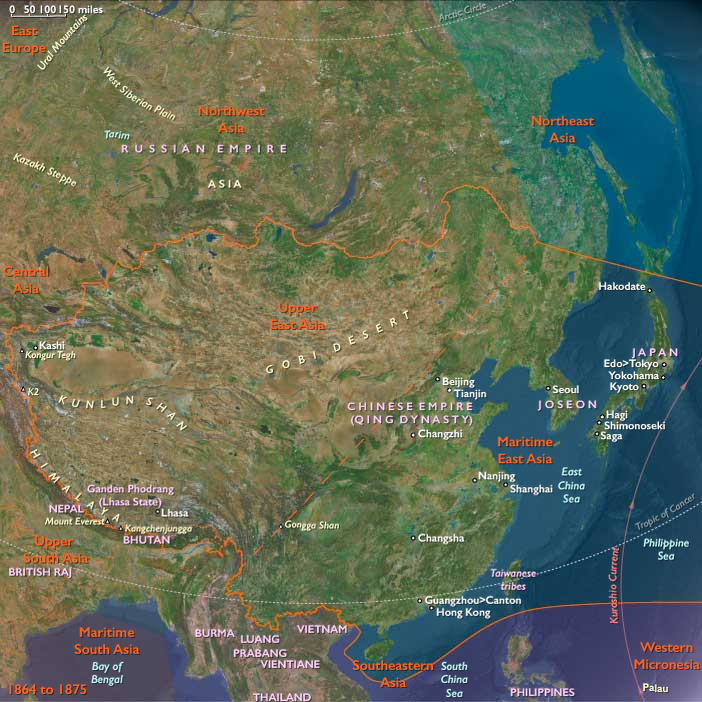
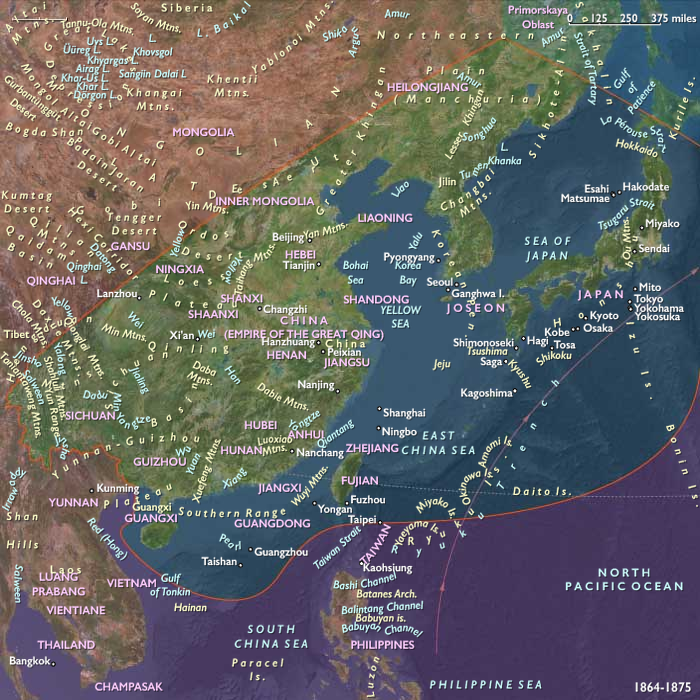
Armand David, ordained in 1862 had shortly afterwards been sent to Beijing, where he had begun a collection of material for a museum of natural history, mainly zoological, but in which botany, geology, and palaeontology are also well represented.
Born in Ezpeleta near Bayonne, in the north of Basque Country, David had entered the Congregation of the Mission in 1848, having already displayed great fondness for the natural sciences.
At the request of the French government, important specimens from his collection had been sent to Paris and had aroused the greatest interest.
The Jardin des Plantes has commissioned him to undertake scientific journeys through China to make further collections.
He succeeds in obtaining many specimens of hitherto unknown animals and plants, and the value of his comprehensive collections for the advance of systematic zoology and especially for the advancement of animal geography will receive universal recognition from the scientific world.
The most remarkable of the animals found by David that were hitherto unknown to Europe are the Giant Panda in Baoxing County and Père David's Deer.
The latter had disappeared with the exception of a few preserved in the gardens of the Emperor of China, but David had succeeded in securing the carcasses of an adult male, an adult female and a young male, and sent them to Paris, where the species is named Père David’s Deer by Alphonse Milne-Edwards, a French biologist.
Locations
Groups
Subjects
Regions
Subregions
Related Events
Filter results
Showing 10 events out of 18 total
Middle Africa (1948–1959 CE): Nationalist Mobilization, Colonial Reforms, and Prelude to Independence
Between 1948 and 1959 CE, Middle Africa—comprising modern Chad, Cameroon, Central African Republic, Equatorial Guinea, São Tomé and Príncipe, Gabon, Republic of the Congo, Democratic Republic of the Congo (DRC), and Angola (including the Cabinda enclave)—experiences profound transformations characterized by increased nationalist mobilization, hesitant colonial reforms, and escalating tensions paving the way toward eventual independence.
Rising Nationalist Movements in French Equatorial Africa
Cameroon and the UPC Rebellion
In French Cameroun, the nationalist movement significantly intensifies, spearheaded by the Union des Populations du Cameroun (UPC), founded by Ruben Um Nyobé in 1948. Advocating immediate independence and social justice, the UPC quickly gains widespread support, particularly among the Bamileke and Bassa ethnic groups.
The UPC’s escalating demands provoke fierce colonial repression. The French administration outlaws the UPC in 1955, driving it underground. A protracted guerrilla conflict—known as the UPC Rebellion or Cameroon War of Independence—begins, with French colonial forces conducting violent counterinsurgency campaigns. Ruben Um Nyobé is killed by French forces near Boumyebel in 1958, but the rebellion continues under successors such as Félix-Roland Moumié, marking Cameroon’s trajectory toward a turbulent independence.
Chad, Gabon, Ubangi-Shari, and Middle Congo: Moderate Reforms
In Chad, under leaders like Gabriel Lisette and François Tombalbaye, moderate nationalist organizations gain prominence, particularly the Chadian Progressive Party (PPT) founded in 1947. They focus initially on greater autonomy within the French Union rather than immediate independence, though nationalist sentiment steadily grows.
Similarly, Middle Congo, Gabon, and Ubangi-Shari (Central African Republic) witness the emergence of nationalist movements, though typically more moderate in tone. Leaders such as Barthélemy Boganda in Ubangi-Shari and Jean-Hilaire Aubame in Gabon advocate constitutional reform and eventual self-government through political engagement with French colonial authorities, achieving increased local political representation by the late 1950s.
Belgian Congo: Nationalist Awakening and Social Upheaval
Formation of Political Movements
In the Belgian Congo, profound social and political changes emerge in the 1950s as the colony’s urban population rapidly expands and becomes increasingly politicized. Educated Congolese leaders such as Patrice Lumumba, Joseph Kasa-Vubu, and Joseph-Désiré Mobutu begin organizing political parties and labor unions to demand political rights and reforms. Lumumba co-founds the influential Mouvement National Congolais (MNC) in 1958, rapidly gaining mass support.
The Léopoldville Riots (1959)
Tensions escalate dramatically when, in January 1959, large-scale riots erupt in Léopoldville (Kinshasa), triggered by colonial repression of nationalist demonstrations. The riots, a turning point in Congolese history, mark the colonial authority’s loss of control and force Belgium into accelerated political negotiations. Following this upheaval, Belgium begins hastily preparing the Congo for eventual independence.
Portuguese Colonies: Angola and São Tomé and Príncipe
Angola: Rising Resistance and Early Nationalist Organizations
In Portuguese Angola, political activity and anti-colonial resistance gain momentum. Early nationalist groups emerge clandestinely, most notably the Movement for the Liberation of Angola (MPLA), founded in 1956 by intellectuals such as Agostinho Neto and Mário Pinto de Andrade. These groups challenge Portugal’s authoritarian rule, demanding immediate independence, and facing brutal repression from Portuguese secret police (PIDE).
Forced labor conditions on plantations and infrastructural projects continue to fuel resentment and periodic rural rebellions, setting the stage for the later Angolan independence wars of the 1960s.
São Tomé and Príncipe: Persistent Labor Exploitation
In São Tomé and Príncipe, conditions on plantations remain harsh, marked by forced labor practices and ongoing exploitation despite mounting international condemnation. Limited nationalist activity begins discreetly among educated elites, who begin to question Portuguese rule and labor practices openly, setting the groundwork for future independence movements.
Spanish Guinea: Isolation and Early Signs of Nationalism
In Spanish Guinea (Equatorial Guinea), the Franco regime maintains tight political and economic control, severely limiting nationalist organization. Nevertheless, a small, educated elite influenced by external events and decolonization movements elsewhere in Africa quietly begins organizing nationalist circles by the late 1950s, challenging colonial rule in limited ways and preparing for future activism.
The Road to Decolonization: Constitutional Reforms and Political Evolution
Across French colonies in Middle Africa, the implementation of the French Loi-Cadre (Framework Law) of 1956 establishes limited local autonomy, enabling African political leaders to assume greater responsibility in government and administration. This legislation, though intended to preserve French influence, inadvertently accelerates demands for full independence.
By 1958, French territories—including Chad, Gabon, Ubangi-Shari, and Middle Congo—become autonomous republics within the new French Community, a step closer to independence.
Thus, the era of 1948–1959 CE in Middle Africa is characterized by escalating nationalist movements, uneven colonial responses, and intensifying tensions between colonial authorities and African populations. This transformative period sets the stage for imminent independence and profound political shifts across the region.
Two groups have formed in Angola to resist Portuguese rule: the Union of North African Peoples (UPA) and the Popular Movement for the Liberation of Angola (MPLA), centered in Luanda and consisting largely of Mbundu.
The Portuguese authorities in Angola release Agostinho Neto in 1957.
Middle Africa (1960–1971 CE): Independence, Turmoil, and Nation-Building
Between 1960 and 1971 CE, Middle Africa—comprising modern Chad, Cameroon, Central African Republic, Equatorial Guinea, São Tomé and Príncipe, Gabon, Republic of the Congo, Democratic Republic of the Congo (DRC), and Angola (including the Cabinda enclave)—experiences dramatic transitions marked by independence, violent conflicts, political upheaval, and profound struggles to build stable national institutions.
Independence Across French Equatorial Africa
Cameroon: Violent Decolonization and the Rise of Ahidjo
French-administered Cameroun gains independence on January 1, 1960, under President Ahmadou Ahidjo. However, the ongoing UPC Rebellion, led after Ruben Um Nyobé’s death by Félix Moumié and Ernest Ouandié, continues into the mid-1960s. Ahidjo responds with harsh military measures, violently suppressing the insurgency. In 1961, British-administered Southern Cameroons joins the Republic, forming the bilingual Federal Republic of Cameroon. Ahidjo centralizes power, establishing a single-party state under the Cameroon National Union (UNC) in 1966, effectively silencing opposition.
Chad: Instability and Civil War
Chad achieves independence on August 11, 1960, with François Tombalbaye as president. Tombalbaye’s increasingly authoritarian rule, ethnic favoritism, and southern bias quickly alienate northern populations, sparking insurgencies by the mid-1960s, notably from groups such as the Front de Libération Nationale du Tchad (FROLINAT), established in 1966. The resulting conflict plunges Chad into protracted civil war and destabilization.
Central African Republic: From Boganda to Bokassa
In the Central African Republic, independence arrives on August 13, 1960, under President David Dacko, following the death of nationalist leader Barthélemy Boganda in a plane crash (1959). In 1966, Army Chief Jean-Bédel Bokassa stages a coup, replacing Dacko. Bokassa’s regime quickly devolves into a repressive dictatorship characterized by lavish self-indulgence and violent suppression of dissent.
Gabon: Stability under Léon M’ba and Omar Bongo
Gabon attains independence on August 17, 1960, under Léon M’ba, who establishes an authoritarian but relatively stable regime. Following M’ba’s death in 1967, Vice President Albert-Bernard (Omar) Bongo assumes power, continuing the single-party rule and maintaining close political and economic ties with France, fostering relative stability and economic prosperity through petroleum revenues.
Republic of the Congo (Congo-Brazzaville): Political Volatility
The Republic of the Congo gains independence on August 15, 1960, with President Fulbert Youlou. Youlou’s government soon faces widespread unrest, leading to his ousting in the revolutionary "Trois Glorieuses" uprising of 1963. A socialist regime under Alphonse Massamba-Débat follows, introducing Marxist-Leninist policies. Another military coup occurs in 1968, bringing Major Marien Ngouabi to power, who establishes the People’s Republic of the Congo (1969), strengthening ties with the Soviet bloc.
Democratic Republic of the Congo: Crisis, Conflict, and Mobutu
The Congo Crisis (1960–1965)
The Belgian Congo becomes independent as the Republic of the Congo (later Democratic Republic of the Congo) on June 30, 1960, under President Joseph Kasa-Vubu and Prime Minister Patrice Lumumba. The immediate post-independence period, known as the Congo Crisis, erupts in political chaos, secessionist wars (notably in Katanga under Moïse Tshombe and in South Kasai), and international intervention involving the UN, Belgium, the United States, and the Soviet Union. Lumumba is assassinated (1961) amid Cold War intrigues.
Mobutu’s Rise and Consolidation (1965–1971)
In 1965, Army Chief of Staff Joseph-Désiré Mobutu seizes power through a coup, imposing strict order and suppressing rebellions. Mobutu establishes an authoritarian regime, renaming the country Zaire (1971), promoting the philosophy of "Authenticité", and cultivating a personality cult, becoming one of Africa’s most enduring dictators.
Portuguese Colonies: Angola and São Tomé and Príncipe
Angola: Intensifying Nationalist Struggle
In Angola, nationalist groups such as the MPLA (led by Agostinho Neto), the FNLA (Holden Roberto), and later UNITA (Jonas Savimbi) intensify guerrilla warfare against Portuguese colonial rule. In 1961, the Angolan War of Independence dramatically escalates, beginning with widespread uprisings and massacres by both colonial forces and rebel groups. Despite harsh repression, resistance persists throughout the decade, setting the stage for independence struggles and civil war in the 1970s.
São Tomé and Príncipe: Growing Nationalist Consciousness
In São Tomé and Príncipe, nationalist sentiment rises quietly, inspired by broader African liberation movements. The islands experience increasing agitation against the exploitative plantation economy and forced labor conditions, with educated locals forming small, clandestine nationalist groups by the late 1960s, laying groundwork for independence movements in subsequent years.
Equatorial Guinea: Harsh Spanish Rule and Independence
From Spanish Guinea to Independent Dictatorship
Spanish Guinea gains independence on October 12, 1968, as the Republic of Equatorial Guinea, under President Francisco Macías Nguema. Initially popular, Macías quickly becomes one of Africa’s most brutal dictators, abolishing opposition parties, violently persecuting political rivals, and plunging the country into isolation and severe repression, causing massive emigration and economic decline.
Economic Development, Foreign Intervention, and Legacies of Colonialism
Throughout 1960–1971, Middle African nations face immense difficulties in achieving stable governance and economic development. Former colonial powers, notably France, Belgium, and Portugal, as well as Cold War superpowers, intervene directly or indirectly, shaping political outcomes and contributing to persistent instability. Economic exploitation and lack of infrastructure, legacies of colonial rule, continue to hamper development efforts.
This period, 1960–1971 CE, thus sees Middle Africa transitioning from colonial rule into a tumultuous independence era, struggling with political crises, ethnic conflicts, and authoritarian regimes. Although some states achieve a degree of stability, most enter the subsequent decades burdened by unresolved conflicts and deep-seated political and economic challenges inherited from their colonial past.
Agostinho Neto is again imprisoned by the Portuguese authorities in Angola in 1960.
The exiled Angolan UPA joins with another nationalist group to become the National Front for the Liberation of Angola (FNLA).
Neto escapes from prison to Morocco in 1962.
Agostinho Neto, living in exile in Brazzaville, Congo, revives the banished MPLA.
Middle Africa (1972–1983 CE): Authoritarian Regimes, Resource Conflicts, and Regional Instability
Between 1972 and 1983 CE, Middle Africa—encompassing modern-day Chad, Cameroon, Central African Republic, Equatorial Guinea, São Tomé and Príncipe, Gabon, Republic of the Congo, Democratic Republic of the Congo (Zaire), and Angola (including the Cabinda enclave)—experiences a turbulent decade defined by authoritarian rule, resource-driven conflicts, Cold War geopolitics, and persistent regional instability.
Authoritarian Consolidation and Political Turmoil
Mobutu’s Zaire: Entrenched Kleptocracy
In the Democratic Republic of the Congo, renamed Zaire by President Mobutu Sese Seko (1971), the era witnesses the entrenchment of a corrupt and autocratic regime. Mobutu’s policy of Authenticité intensifies, aiming to erase colonial influences but simultaneously concentrating power, promoting a cult of personality, and facilitating immense corruption. Economic mismanagement and brutal political repression characterize Mobutu’s rule, provoking widespread poverty and discontent.
Angola: Civil War and Cold War Proxy Conflict
In Angola, independence from Portugal (1975) is quickly overshadowed by a violent civil war involving rival nationalist factions: the Soviet-backed MPLA under Agostinho Neto (succeeded by José Eduardo dos Santos in 1979), the US and South African-supported UNITA under Jonas Savimbi, and the FNLA initially supported by the West and Zaire. The war becomes a proxy Cold War battleground, deeply devastating Angolan society, infrastructure, and economy, and intensifying regional instability.
Chad: Escalating Civil War
In Chad, internal divisions erupt into open civil war, driven by ethnic tensions, competition over scarce resources, and political rivalries. President François Tombalbaye is overthrown and killed in a coup (1975). Subsequent instability brings various factions, such as the FROLINAT rebel group and leaders like Goukouni Oueddei and Hissène Habré, into prolonged and violent conflict, severely destabilizing the country.
Equatorial Guinea: The Macías Dictatorship
In Equatorial Guinea, President Francisco Macías Nguema presides over a regime of extreme brutality and repression, becoming one of Africa’s most notorious dictators. In 1979, his nephew Teodoro Obiang Nguema Mbasogo ousts Macías in a bloody coup, but continues authoritarian rule, albeit with marginally reduced brutality. The country remains isolated and economically devastated.
Economic Exploitation and Resource-Driven Conflicts
Gabon and Congo: Oil Wealth and Authoritarianism
In Gabon, President Omar Bongo consolidates power through patronage and repression, funded by burgeoning oil revenues. The country achieves relative economic stability but remains politically repressive. Similarly, in the Republic of the Congo, President Marien Ngouabi rules through a Marxist-Leninist regime until his assassination (1977), leading to a prolonged power struggle. Both countries’ political elites enrich themselves through extensive resource extraction, deepening social inequalities.
São Tomé and Príncipe: Post-Independence Challenges
The small island nation of São Tomé and Príncipe, independent from Portugal since 1975, faces substantial economic hardships, struggling to transition from a plantation economy dependent on cocoa. The early post-independence government under President Manuel Pinto da Costa pursues socialist policies but soon faces severe economic difficulties, forcing increased dependence on foreign aid.
Cameroon and Central African Republic: Relative Stability and Instability
Cameroon: Authoritarian Stability under Ahidjo
In Cameroon, President Ahmadou Ahidjo maintains relative political stability through a repressive one-party state. Economic growth, largely based on agricultural exports and oil revenues, ensures a degree of social stability. However, internal tensions simmer, exacerbated by regional disparities and authoritarian governance.
Central African Republic: Bokassa’s Brutal Empire
In the Central African Republic, President Jean-Bédel Bokassa declares himself emperor (Bokassa I) in 1976, presiding over a grotesquely oppressive and extravagant regime. His brutal rule and the infamous coronation ceremony (1977) symbolize the excesses of African authoritarianism. In 1979, France intervenes militarily, restoring former President David Dacko to power, though instability persists.
Regional and International Dynamics
Cold War Rivalries and International Intervention
Throughout the region, Cold War geopolitics heavily influence internal conflicts. In Angola, Soviet and Cuban support propels the MPLA, while the US and apartheid South Africa back UNITA, turning the civil war into a prolonged international proxy conflict. Similarly, French interventions shape outcomes in Chad and Central Africa, reflecting continuing neo-colonial interests.
Economic Dependence and Underdevelopment
Economic reliance on extractive industries—especially oil, diamonds, and timber—deepens dependency on foreign capital, exacerbating corruption and inequality. Infrastructure remains neglected, and widespread poverty contrasts starkly with the immense wealth accumulated by political elites.
Legacies of Conflict and Authoritarianism
By the end of the era (1983), Middle Africa remains profoundly marked by authoritarianism, deep-rooted poverty, and ongoing conflicts. The region’s considerable resource wealth fails to translate into widespread prosperity, with corrupt governance structures entrenching socio-economic inequalities. The enduring instability sets the stage for future political turbulence, social unrest, and continuous struggles for effective governance and sustainable development.
Angola’s three rival factions—the Agostinho Neto-led Popular Movement for the Liberation of Angola (MPLA), backed by the Soviet Union and Cuba; the Holden Roberto-led National Front (FNLA), based in Zaire and officially backed by China and the United States; and the Jonas Savimbi-led National Union for the Total Independence of Angola (UNITA), backed by South Africa—battle each other for control of the soon-to-be-independent nation.
The three-way Angolan conflict intensifies in 1975.
US Secretary of State Henry Kissinger, supposedly determined to show the world how tough America still is on the heels of the fall of Saigon, allegedly steps-up CIA’s involvement in the three-way struggle on the UNITA side (notwithstanding the fact that Zaire, a US ally, backs the rival FNLA, from which the US now withdraws support).
The MPLA, now in control of Angola’s oil, continues to sell oil to the West (undermining the US’s use of the oil issue as a rationale for intervention.)
A cursory knowledge of geography knocks down another excuse for intervention, the fact that Angola is close to “shipping lanes”—which of the scores of coastal nations are not?
The US, rather than pursue diplomatic avenues, begins to pour vast amounts of money into the war chest of the brutal, bloodthirsty, autocratic UNITA leader Savimbi.
US ally South Africa, as part of its ongoing program to destabilize its neighbors, sends troops to support UNITA; Cuba responds by sending troops to aid the MPLA.
Upon Portugal’s withdrawal and grant of Angolan independence on November 11, 1975, Savimbi and Roberto become co-presidents of the democratic Republic of Angola.
Full-scale civil war ensues between UNITA and the MPLA; the FNLA fades away.
Years: 1866 - 1866
Locations
Groups
Subjects
Regions
Subregions