
The feeble-minded Albert Frederick, Duke of Prussia, …
Years: 1623 - 1623
May
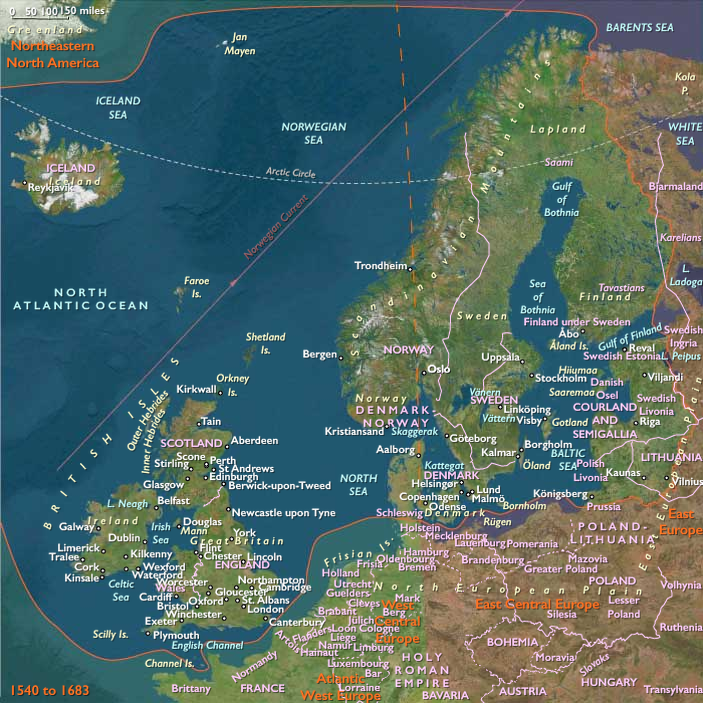
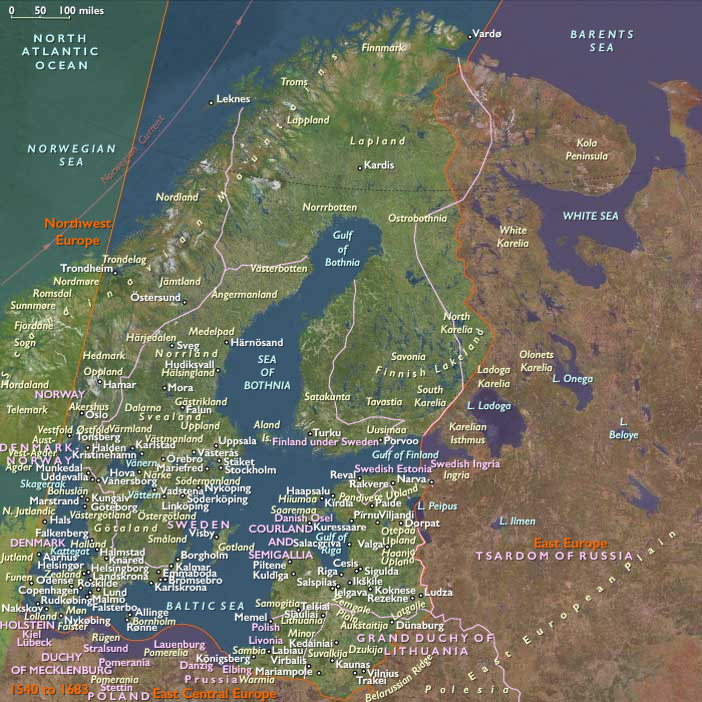
The feeble-minded Albert Frederick, Duke of Prussia, had had no surviving male heirs; therefore, the Treatise of Warsaw in 1611 had allowed his son-in-law, Elector John Sigismund of the Hohenzollern branch in Brandenburg, to become the duke's legal successor.
The Thirty Years' War had broken out in 1618 and Albert Frederick died, with the duchy passing to John Sigismund, who himself died the following year.
John Sigismund's son, George William, is successfully invested with the duchy in 1623 by the king of Poland, Sigismund III Vasa, thus the personal union Brandenburg-Prussia is confirmed.
Many of the Prussian Junkers (the landed nobility of Prussia and eastern Germany) are opposed to rule by the House of Hohenzollern of Berlin and appeals to Sigismund III Vasa for redress, or even incorporation of Ducal Prussia into the Polish kingdom, although without success.
Because Brandenburg is a fief of the Holy Roman Empire and Ducal Prussia is a Polish fief, a cross-border real union is legally impossible.
However, De facto Brandenburg and Ducal Prussia are to be increasingly ruled as one, and colloquially referred to as Brandenburg-Prussia.
Locations
People
Groups
- Brandenburg, (Hohenzollern) Margravate of
- Polish-Lithuanian Commonwealth (Commonwealth of the Two Nations)
- Prussia, Royal (Polish province)
- Habsburg Monarchy, or Empire
Topics
- Protestant Reformation
- Counter-Reformation (also Catholic Reformation or Catholic Revival)
- Thirty Years' War
Commodoties
Subjects
Regions
Subregions
Years: 1623 - 1623
May
Locations
People
Groups
- Brandenburg, (Hohenzollern) Margravate of
- Polish-Lithuanian Commonwealth (Commonwealth of the Two Nations)
- Prussia, Royal (Polish province)
- Habsburg Monarchy, or Empire
Topics
- Protestant Reformation
- Counter-Reformation (also Catholic Reformation or Catholic Revival)
- Thirty Years' War
Commodoties
Subjects
Regions
Subregions