
Assyria’s northern frontiers are pressed from the …
Years: 909BCE - 766BCE
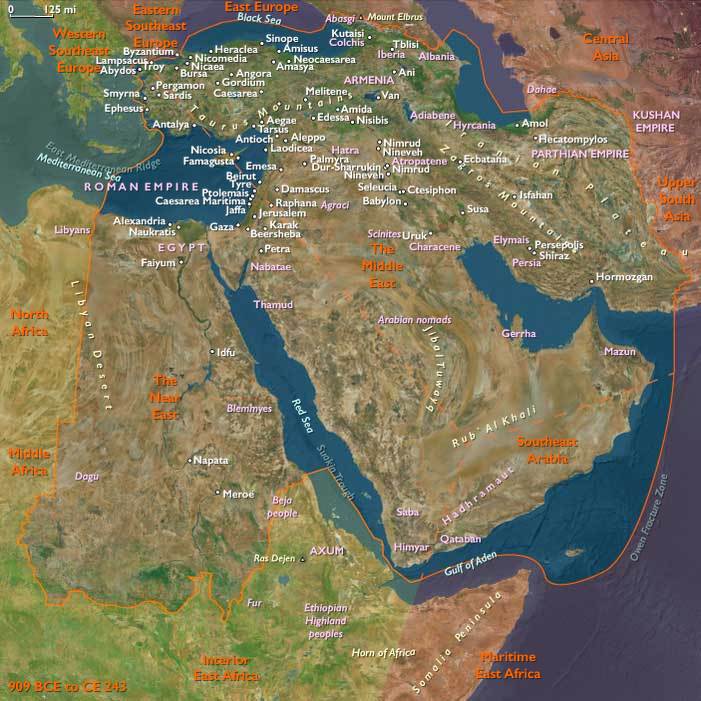
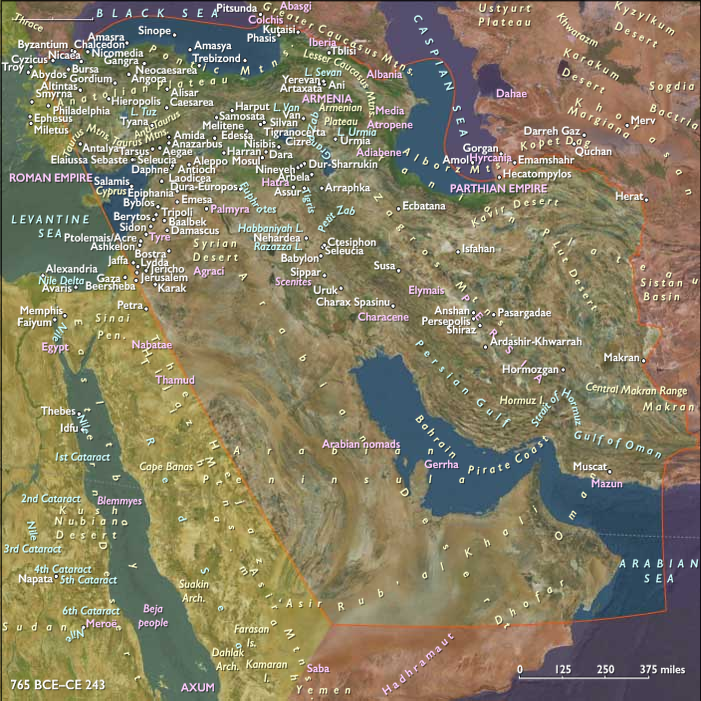
Assyria’s northern frontiers are pressed from the Caucasus by the Indo-European Scythians and from Western Iran by the Medes.
The Aramaean kingdoms are subjugated by Adad-nirari II, Ashurnasirpal II, and his son Shalmaneser III, who destroy many of the small tribes, and give control of Aramea and local trade and natural resources to the Assyrians.
The Aramaean populations in Assyria and Babylonia are gradually absorbed into the native populations.
The neo-Assyrian kings depict themselves as warlike heroes in their sculpted portraiture.
Man-headed winged bulls dominate Assyrian art and architecture, and elegant bas-reliefs in hard stone express the expanding Empire’s glories.
The power of mobility given by mounted units was recognized early on, but was offset by the difficulty of raising large forces and by the inability of horses (at this time mostly small) to carry heavy armor.
Cavalry techniques are an innovation of equestrian nomads of the Central Asian and Iranian steppe and pastoralist tribes such as the later Persian Parthians and Sarmatians.
The photograph at right shows Assyrian cavalry from reliefs of 865–860 BCE.
At this time, the men have no spurs, saddles, saddle cloths, or stirrups.
Fighting from the back of a horse is much more difficult than mere riding.
The cavalry acts in pairs; the reins of the mounted archer are controlled by his neighbor's hand.
Even at this early time, cavalry uses swords, shields, and bows.
The sculpture implies two types of cavalry, but this might be a simplification by the artist.
Later images of Assyrian cavalry show saddle cloths as primitive saddles, allowing each archer to control his own horse.
Locations
People
Groups
- Mesopotamia
- Aramaeans
- Medes
- Syro-Hittite states
- Babylon, Kingdom of
- Assyria, (New) Kingdom of (Neo-Assyrian Empire)
- Assyrian people
- Scythians, or Sakas
Topics
Commodoties
Subjects
- Commerce
- Symbols
- Sculpture
- Painting and Drawing
- Environment
- Labor and Service
- Conflict
- Faith
- Government
- Technology
Regions
Subregions
Years: 909BCE - 766BCE
Locations
People
Groups
- Mesopotamia
- Aramaeans
- Medes
- Syro-Hittite states
- Babylon, Kingdom of
- Assyria, (New) Kingdom of (Neo-Assyrian Empire)
- Assyrian people
- Scythians, or Sakas
Topics
Commodoties
Subjects
- Commerce
- Symbols
- Sculpture
- Painting and Drawing
- Environment
- Labor and Service
- Conflict
- Faith
- Government
- Technology
Regions
Subregions