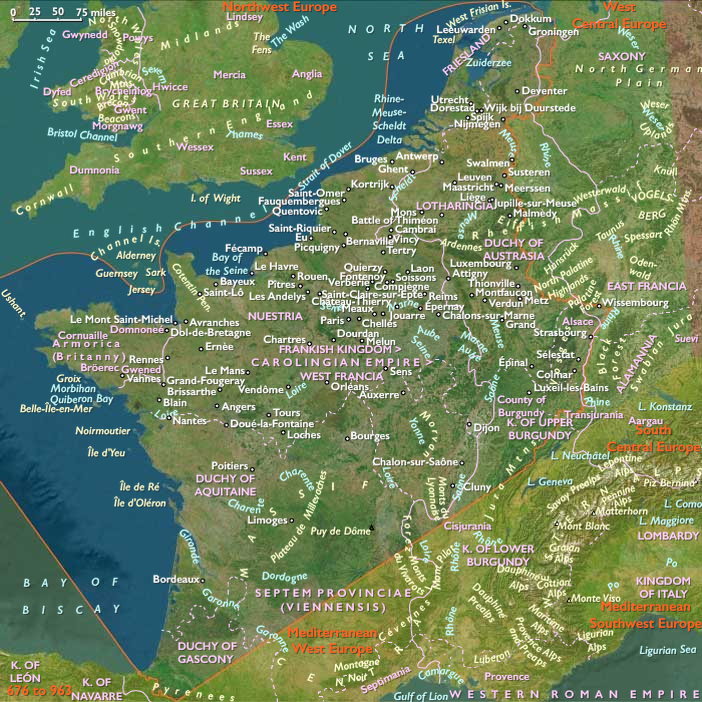
Atlantic West Europe, 844–855: Consolidation Amid Viking …
Years: 844 - 855
Atlantic West Europe, 844–855: Consolidation Amid Viking Incursions and Regional Autonomy
Between 844 and 855, Atlantic West Europe—encompassing West Francia, Aquitaine, Brittany, Burgundy, Normandy, and the Low Countries—faced intensifying Viking raids, regional autonomy movements, and initial steps toward political and military stabilization.
Political and Military Developments
-
Viking Incursions Intensify
- Viking attacks escalated, notably the sacking of Nantes (843) and repeated raids along the Loire Valley, Aquitaine, and into the Low Countries. Coastal regions, especially Normandy, began to see more permanent Viking presence.
-
Charles the Bald's Defensive Strategies
- Charles the Bald (King of West Francia, 843–877) struggled to organize effective resistance, relying heavily on fortified towns and localized defenses.
- His efforts marked the beginning of early medieval castle-building in the Loire and Seine valleys.
-
Rise of Breton Independence
- Nominoë of Brittany (r. 845–851) decisively defeated Charles the Bald's forces at the Battle of Ballon (845), securing Breton autonomy and establishing Brittany as an independent principality under his son, Erispoë (851–857).
Economic and Social Developments
-
Economic Disruption and Adaptation
- Viking attacks severely disrupted inland trade and agriculture, prompting towns and monasteries to enhance fortifications.
- Increased security needs accelerated development of local markets around fortified towns (castra), laying early foundations for medieval urbanization.
-
Emergence of Feudal Structures
- Local leaders and nobles gained increased prominence by providing protection and security, advancing the development of feudal relationships in West Francia and Aquitaine.
Religious and Cultural Developments
-
Monastic Vulnerability and Cultural Preservation
- Monasteries and religious centers, such as Tours and Saint-Benoît-sur-Loire, fortified themselves against Viking attacks, preserving important manuscripts and cultural continuity.
-
Bishops as Local Leaders
- Bishops in West Francia, notably at Rheims and Tours, assumed increased administrative and defensive responsibilities, reflecting growing secular authority.
Legacy
Between 844 and 855, persistent Viking incursions, the rise of local feudal powers, and Breton independence significantly reshaped Atlantic West Europe's political landscape, setting the stage for increased regionalism and feudalism in subsequent decades.
Related Events
Showing 10 events out of 54225 total
Years: 844 - 855
People
Groups
- Christianity, Chalcedonian
- Francia (Carolingians)
- Aquitaine, (Carolingian) Kingdom of
- Frankish, or Carolingian (Roman) Empire
- Brittany, Kingdom of
- Francia Occidentalis (West Francia, or France), Kingdom of
- Francia Media (Middle Francia), Kingdom of
Topics
Subjects
Regions
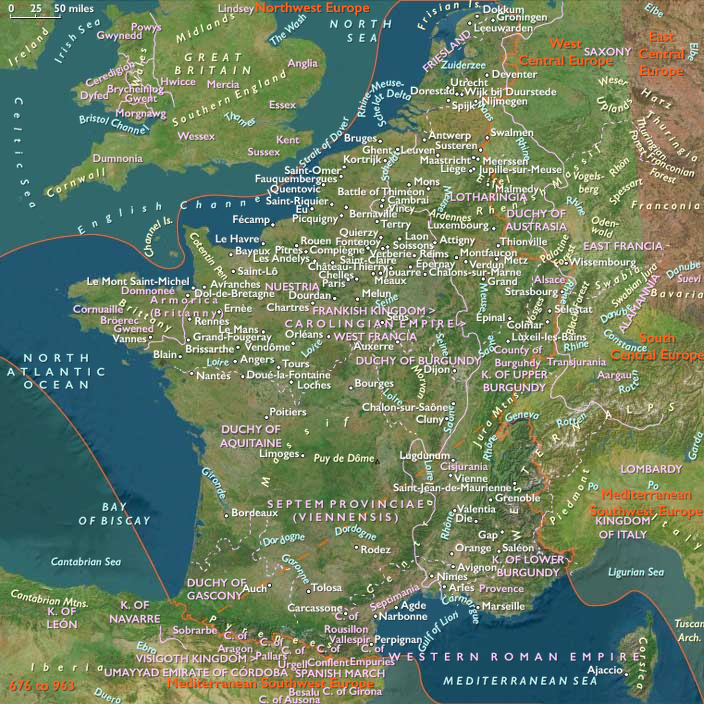
Subregions