Baldwin I of Flanders Expands His Power (864–867)
Following his marriage to Judith of West Francia, Baldwin I (Iron Arm), originally a low-ranking noble, rapidly rises in power under the reluctant approval of his father-in-law, Charles the Bald. Over the next few years, Baldwin secures new lands, reinforcing his status as a powerful Frankish magnate.
Territorial Gains and the Formation of Flanders
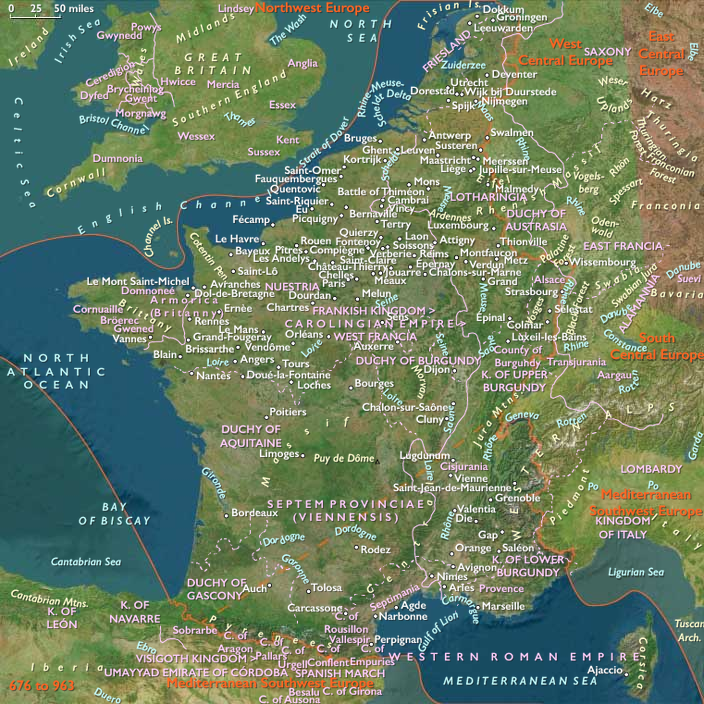
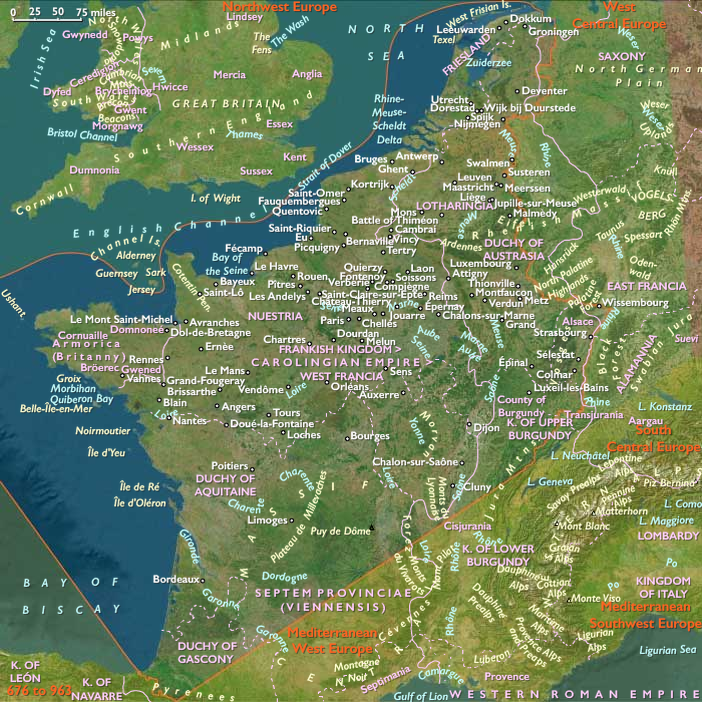
- In the years following his marriage, Baldwin receives the counties of Ternois and Flanders from Charles, further consolidating his control over northern Francia.
- These lands, located along the North Sea coast, are strategically significant because they:
- Serve as a buffer zone against Viking incursions.
- Provide Baldwin with rich trade routes and fertile lands.
- Establish what will later become the County of Flanders, one of medieval Europe’s most powerful principalities.
The Birth of Baldwin’s Heirs (864–865)
- By 867, Baldwin and Judith have two sons:
- Baldwin II, born in 864, who will later inherit Flanders and continue expanding its influence.
- Rudolf, born in 865, who will pursue an ecclesiastical career and later become Archbishop of Bourges.
The Legacy of Baldwin and Judith
- Baldwin’s alliance with Charles the Bald, though initially forged through Judith’s controversial elopement, solidifies his dynastic legitimacy.
- The territories granted to Baldwin lay the foundation for the County of Flanders, which will grow into one of the most wealthy and politically influential regions of medieval Europe.
- His son, Baldwin II, will face continued Viking threats and further strengthen Flanders as a major feudal power.
By 867, Baldwin I is no longer just Judith’s husband—he has become a key figure in West Francia, with land, heirs, and a growing political influence, marking the beginning of the powerful House of Flanders.