
Economic and administrative activity increases during the …
Years: 748 - 759
Economic and administrative activity increases during the Nara period.
Roads link Nara to provincial capitals and taxes are collected more efficiently and routinely.
Coins are minted, if not widely used.
Outside the Nara area, however, there is little commercial activity, and in the provinces the old Shotoku land reform systems decline.
By the mid-eighth century, shoen (landed estates), one of the most important economic institutions in medieval Japan, begin to rise as a result of the search for a more manageable form of landholding.
Local administration gradually becomes more self-sufficient while the breakdown of the old land distribution system and the rise of taxes lead to the loss or abandonment of land by many people who become the ''wave people," or ronin.
Some of these formerly "public people" are privately employed by large landholders, and "public lands" increasingly revert to the shoen.
Locations
Groups
- Confucianists
- Japanese people
- Buddhists, Zen or Chán
- Japan, Yamato Hakuho (Late Asuka) Period
- Japan, Nara Period
Subjects
Regions
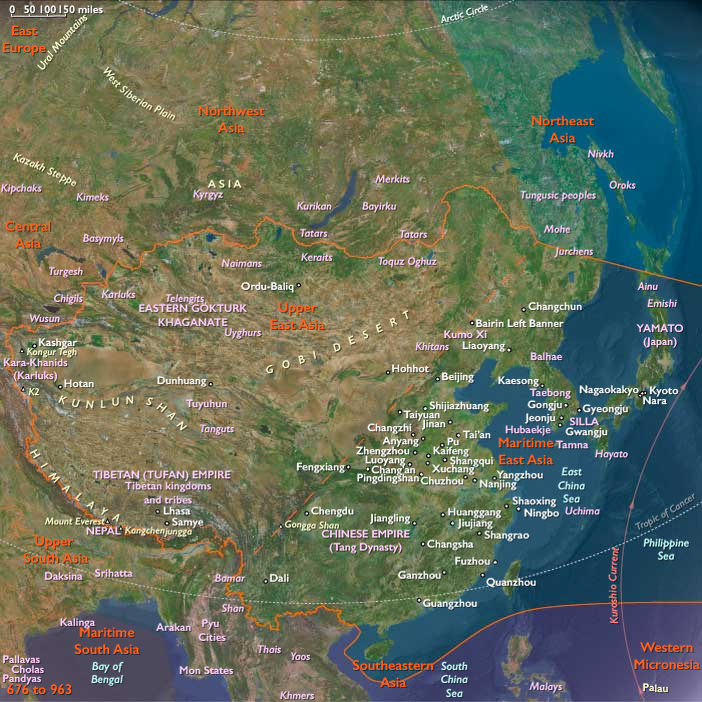
Subregions
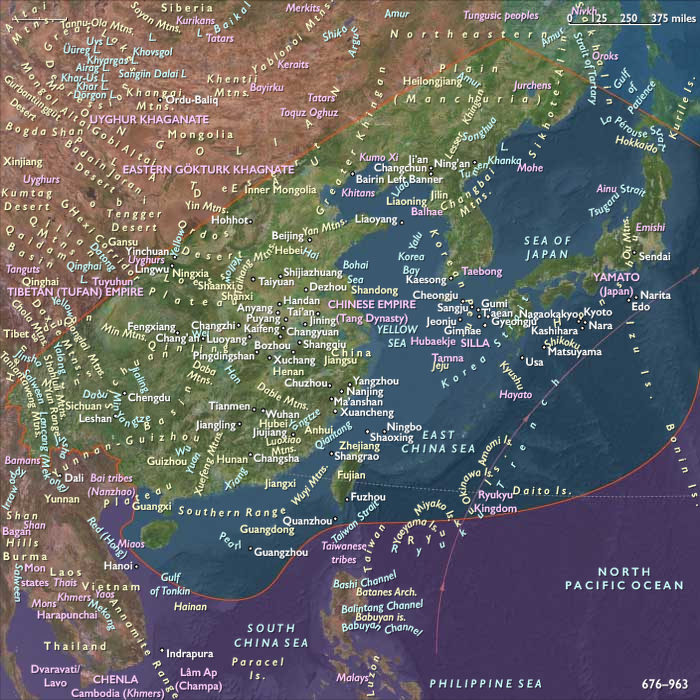
Years: 748 - 759
Locations
Groups
- Confucianists
- Japanese people
- Buddhists, Zen or Chán
- Japan, Yamato Hakuho (Late Asuka) Period
- Japan, Nara Period
Subjects
Regions
Subregions