
In addition to the ideological differences between …
Years: 1792 - 1792
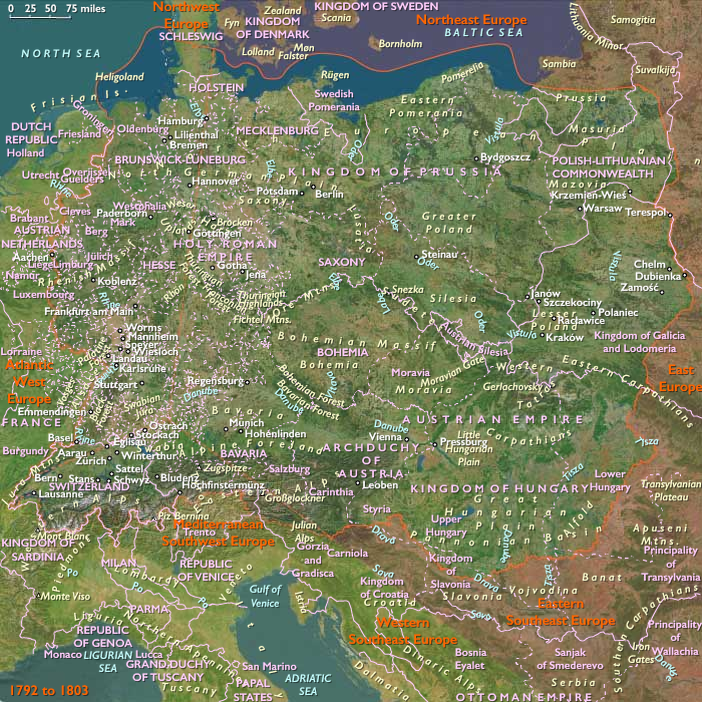
In addition to the ideological differences between revolutionary France and the monarchical powers of Europe, disputes have continued over the status of Imperial estates in Alsace, and the French authorities have become concerned about the agitation of émigré nobles abroad, especially in the Austrian Netherlands and in the minor states of Germany.
In the end, France declares war on Austria first, with the Assembly voting for war on April 20, 1792, after the presentation of a long list of grievances by the newly appointed foreign minister Dumouriez.
Dumouriez prepares an invasion of the Austrian Netherlands, where he expects the local population to rise against Austrian rule.
However, the revolution has thoroughly disorganized the French army, which has insufficient forces for the invasion.
Its soldiers flee at the first sign of battle, deserting en masse, in one case murdering General Théobald Dillon.
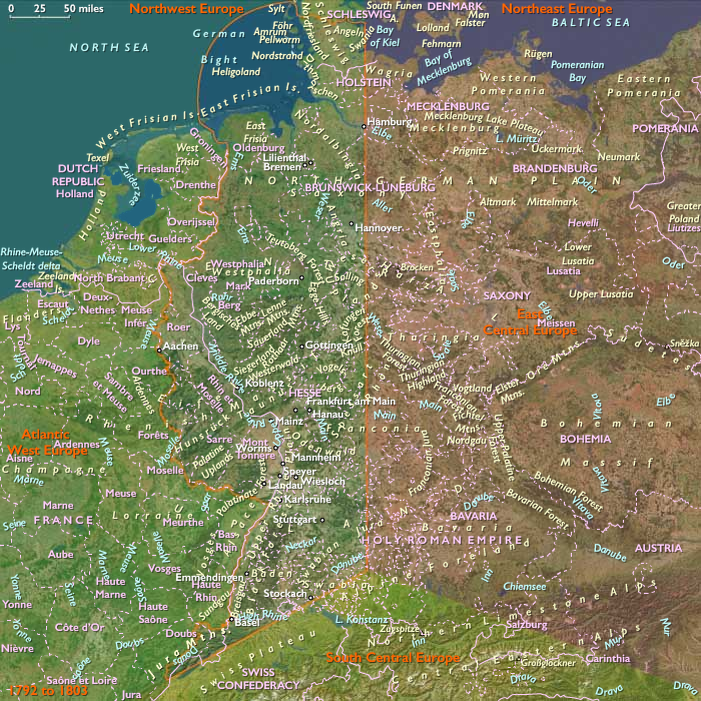
While the revolutionary government frantically raises fresh troops and reorganizes its armies, an allied army under Charles William Ferdinand, Duke of Brunswick, assembles at Koblenz on the Rhine. The invasion commences in July 1792.
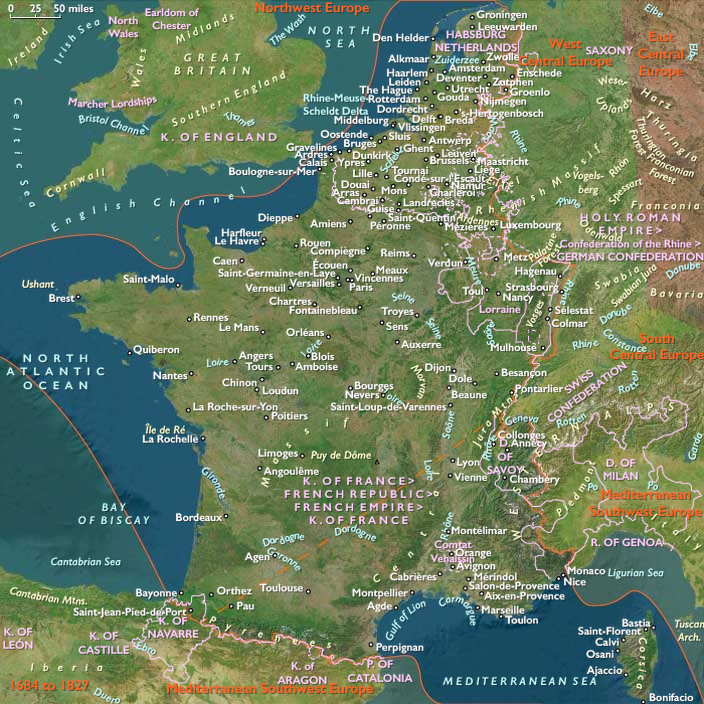
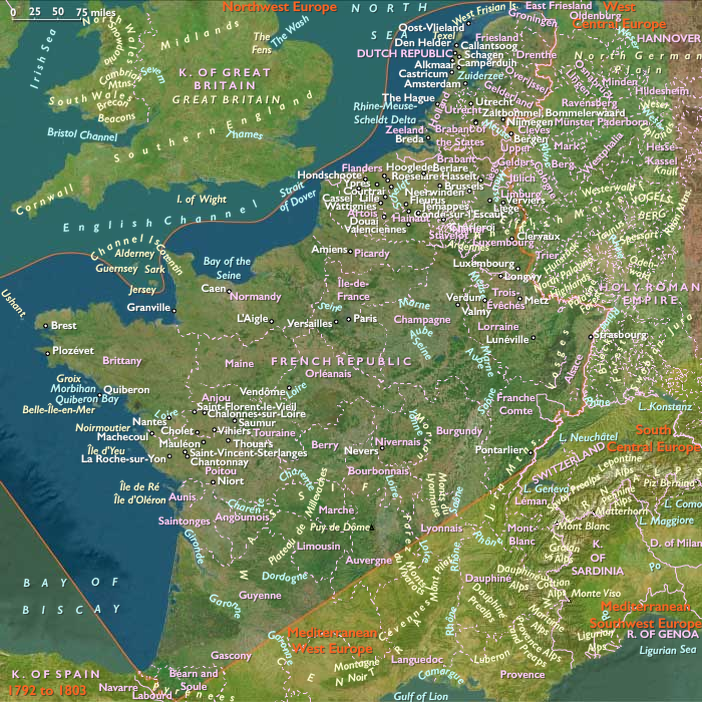
Brunswick's army, composed mostly of Prussian veterans, takes the fortresses of Longwy and Verdun.
The Duke no issues a declaration on 25 July 1792, which had been written by the brothers of Louis XVI, that declare his [Brunswick's] intent to restore the French King to his full powers, and to treat any person or town who opposes him as rebels to be condemned to death by martial law.
This motivates the revolutionary army and government to oppose the Prussian invaders by any means necessary, and leads almost immediately to the overthrow of the King by a crowd that storms the Tuileries Palace.
The invaders continue on, but at the Battle of Valmy on September 20, 1792, they come to a stalemate against Dumouriez and Kellermann in which the highly professional French artillery distinguishes itself.
Allthough the battle is a tactical draw, it buys time for the revolutionaries and gives a great boost to French morale.
Furthermore, the Prussians, facing a campaign longer and more costly than predicted, decide against the cost and risk of continued fighting, and determine to retreat from France to preserve their army.
Meanwhile, the French have been successful on several other fronts, occupying Savoy and Nice in Italy, while General Custine invades Germany, capturing Speyer, Worms and Mainz along the Rhine, and reaching as far as Frankfurt.
Dumouriez goes on the offensive in Belgium once again, winning a great victory over the Austrians at Jemappes on November 6, 1792, and occupying the entire country by the beginning of winter.
People
- Adam Philippe, Comte de Custine
- Charles François Dumouriez
- Charles William Ferdinand, Duke of Brunswick-Lüneburg
- François Christophe de Kellermann
- Louis XVI of France
Groups
- Austria, Archduchy of
- Habsburg Monarchy, or Empire
- Brunswick-Lüneburg, Electorate of (Electorate of Hanover)
- Prussia, Kingdom of
- Netherlands, Southern (Austrian)
- France, Kingdom of (constitutional monarchy)
Topics
- French Revolution
- First Coalition, War of the
- French Revolutionary Wars: Campaigns of 1792
- French Revolutionary Wars, or “Great French War”
- Valmy, Battle of
- Jemappes, Battle of
Subjects
Regions
Subregions

Years: 1792 - 1792
People
- Adam Philippe, Comte de Custine
- Charles François Dumouriez
- Charles William Ferdinand, Duke of Brunswick-Lüneburg
- François Christophe de Kellermann
- Louis XVI of France
Groups
- Austria, Archduchy of
- Habsburg Monarchy, or Empire
- Brunswick-Lüneburg, Electorate of (Electorate of Hanover)
- Prussia, Kingdom of
- Netherlands, Southern (Austrian)
- France, Kingdom of (constitutional monarchy)
Topics
- French Revolution
- First Coalition, War of the
- French Revolutionary Wars: Campaigns of 1792
- French Revolutionary Wars, or “Great French War”
- Valmy, Battle of
- Jemappes, Battle of
Subjects
Regions
Subregions