
The peace is in many respects also …
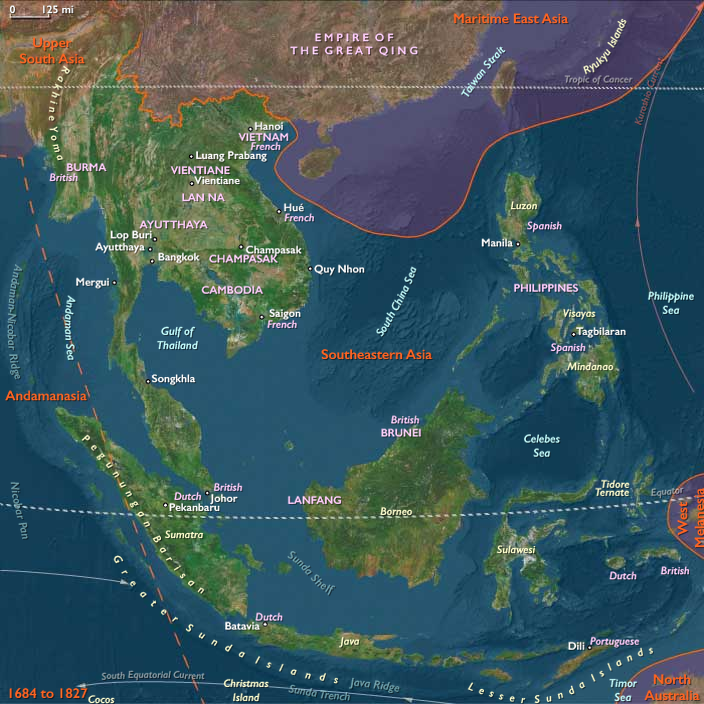
Years: 1684 - 1827
The peace is in many respects also strange, for rather than settling Java into a calm "traditional" existence, it provides the setting for ongoing social and cultural ferment as Javanese reassesses not only their past but also their present.
The literary reflections of this crisis have been insufficiently studied, but works ascribed to the Surakarta court poets Yasadipura I (1729-1803) and his son Yasadipura II (? -1844), for example, suggest that efforts to reexamine and revitalize old histories fail, not least because the ability to read them accurately had been lost, and that attempts to understand the Java—and "Javaneseness"—of their own day lead frequently to searing critiques of their own social hierarchy and customs, as well as those of foreigners and Islam.
This sort of questioning and restlessness is not necessarily fatal, however, and might under different circumstances have permitted a continuation of the equilibrium already achieved or even conceivably have led to a kind of Javanese renaissance and a different, more advantageous relationship with the Dutch, but changes in the larger world determine otherwise.
Locations
Groups
- Bugis
- Hinduism
- Buddhism
- Indian people
- Malays, Ethnic
- Javanese people
- Acehnese people
- Osing people
- Dutch people
- Islam
- Bali, Kingdom of
- English people
- Tidore, Sultanate of
- Aceh, or Atjeh, Sultanate
- Blambangan, Kingdom of
- Ternate, Sultanate of
- Balinese
- Makassar people
- Banjarmasin, Sultanate of
- Banten Sultanate
- Mataram, Sultanate of
- Netherlands, United Provinces of the (Dutch Republic)
- East India Company, British (The Company of Merchants of London Trading into the East Indies)
- Dutch East India Company in Indonesia
- Dutch East India Company (Vereenigde Oostindische Compagnie or VOC in Dutch, literally "United East Indies Company")
- England, (Stuart) Kingdom of
Topics
Commodoties
Subjects
Regions
Subregions
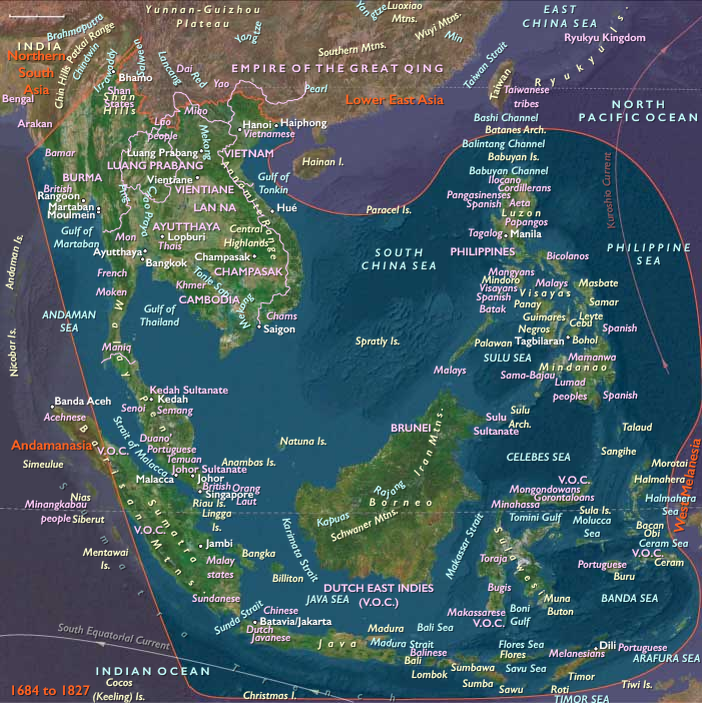
Years: 1684 - 1827
Locations
Groups
- Bugis
- Hinduism
- Buddhism
- Indian people
- Malays, Ethnic
- Javanese people
- Acehnese people
- Osing people
- Dutch people
- Islam
- Bali, Kingdom of
- English people
- Tidore, Sultanate of
- Aceh, or Atjeh, Sultanate
- Blambangan, Kingdom of
- Ternate, Sultanate of
- Balinese
- Makassar people
- Banjarmasin, Sultanate of
- Banten Sultanate
- Mataram, Sultanate of
- Netherlands, United Provinces of the (Dutch Republic)
- East India Company, British (The Company of Merchants of London Trading into the East Indies)
- Dutch East India Company in Indonesia
- Dutch East India Company (Vereenigde Oostindische Compagnie or VOC in Dutch, literally "United East Indies Company")
- England, (Stuart) Kingdom of
Topics
Commodoties
Subjects
Regions
Subregions