
Caligula’s Northern Campaign and the Aborted Invasion …
Years: 40 - 40
Caligula’s Northern Campaign and the Aborted Invasion of Britain (40 CE)
The northern campaign of Emperor Caligula in 40 CE, intended as an invasion of Britain, was ultimately abandoned, leading to widespread mockery from ancient historians. Accounts describe his troops gathering seashells as "spoils of war", and his triumph in Rome featuring Gauls dressed as Germanic captives. However, modern historians dispute the nature and purpose of this expedition, offering alternative explanations.
Possible Explanations for Caligula’s Actions
Since primary sources differ, historians have put forward several theories:
-
A Training and Scouting Mission
- The journey to the English Channel may have been a preliminary reconnaissance for a future invasion.
- It is possible that Caligula intended to test logistics and troop movements before launching a full-scale campaign.
-
A Diplomatic Encounter: The Surrender of Adminius
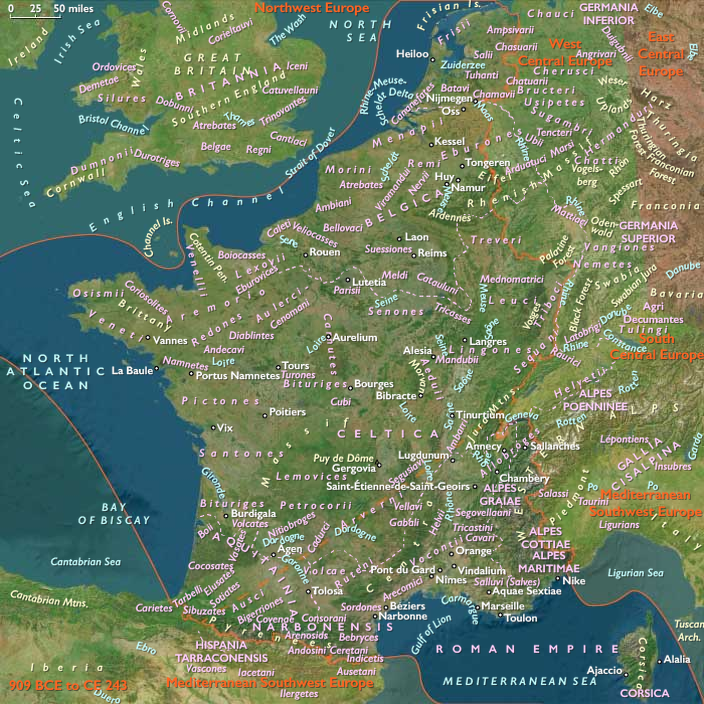
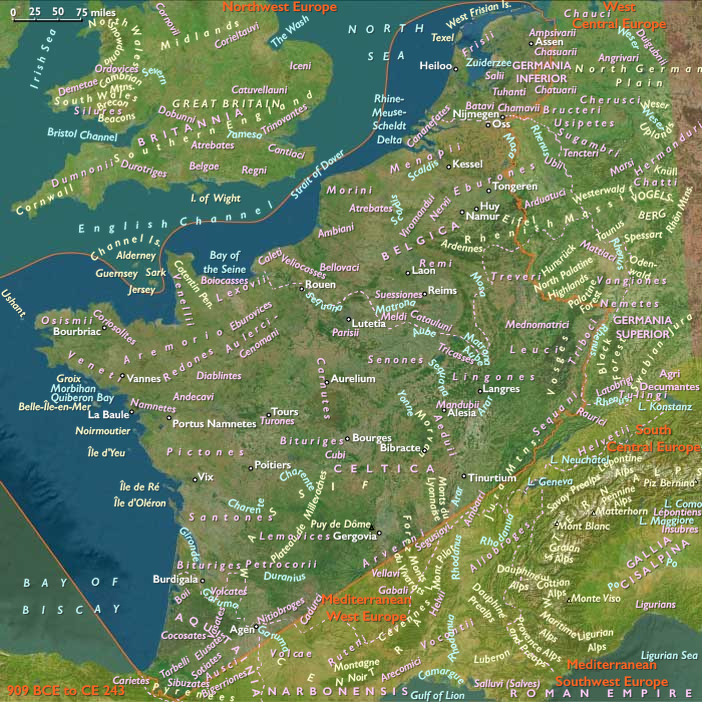
- Adminius (Amminus), son of Cunobelinus, the king of the Cantiaci in eastern Kent, had been exiled by his father around 39–40 CE.
- He fled to continental Europe with a small group of followers and surrendered to the Romans.
- Caligula may have exaggerated this event, claiming it as a great victory over Britain.
- He even had an extravagant report read before the Senate, declaring a triumph over "foreign tribes."
-
Interpretations of the "Seashells" Incident
- Suetonius and Dio Cassius mock Caligula for ordering his troops to collect seashells, supposedly as spoils of war.
- Some modern historians suggest "seashells" (conchae in Latin) could be a metaphor for:
- Boats, meaning that Caligula’s troops had captured British ships.
- Female genitalia, implying the troops were visiting brothels.
-
A Potential Mutiny at Boulogne
- Another theory is that Caligula’s troops refused to embark on the invasion, leading to a breakdown in the campaign.
- Roman legions had previously shown reluctance to cross into unknown territories, and a mutiny could explain why the invasion was abandoned.
Adminius’ Exile and Its Political Consequences
- Cunobelinus, King of the Cantiaci, had maintained friendly relations with Rome, but by 40 CE, an anti-Roman faction may have emerged in Britain.
- His other sons, Togodumnus and Caratacus, might have forced Adminius out of power, consolidating an anti-Roman resistance.
- Alternatively, the Cantiaci could have revolted against Cunobelinus’ rule, prompting Adminius’ flight to the Romans.
The Failure of Caligula’s Expedition and Its Long-Term Effects
- Caligula’s refusal to return Adminius to his father contributed to growing anti-Roman sentiment in Britain.
- This eventually led to increased hostilities, necessitating the successful Roman invasion under Claudius in 43 CE.
- While Caligula’s ambitions in Britain failed, his actions planted the seed for later Roman intervention.
Conclusion: A Misunderstood Expedition?
- While ancient historians derided Caligula’s British campaign, modern scholars suggest it may not have been as absurd as depicted.
- His gathering of seashells and triumph in Rome were likely propaganda efforts to maintain prestige, masking the invasion’s failure.
- Ultimately, his expedition proved inconsequential, but it foreshadowed Rome’s inevitable conquest of Britain under Claudius.
Though remembered as an eccentric display of imperial delusion, Caligula’s campaign to Britain in 40 CE may have been a stepping stone for Rome’s eventual annexation of the island three years later.
People
Groups
- Britons (historical)
- Catuvellauni (Celtic tribe)
- Cantiaci (Celtic tribe)
- Roman Empire (Rome): Julio-Claudian dynasty
Topics
Commodoties
Subjects
Regions
Subregions
Years: 40 - 40
People
Groups
- Britons (historical)
- Catuvellauni (Celtic tribe)
- Cantiaci (Celtic tribe)
- Roman Empire (Rome): Julio-Claudian dynasty
Topics
Commodoties
Subjects
Regions
Subregions