
Charles the Fat’s Palace at Sélestat: A …
Years: 881 - 881
Charles the Fat’s Palace at Sélestat: A New Carolingian Imperial Residence
As Emperor of the Carolingian Empire, Charles the Fat begins the construction of a new palace at Sélestat in Alsace, inspired by Charlemagne’s grand imperial palace at Aachen. This decision reflects Charles’ ambition to emulate Charlemagne, as described in Notker Balbulus’ (Gesta Karoli Magni), while also addressing the political realities of his reign.
Why Build a Palace at Sélestat?
-
A Necessary Alternative to Aachen
- The palace of Aachen, built by Charlemagne, had served as the imperial seat of the Carolingians.
- However, Aachen lay within the kingdom of Charles’ brother, Louis the Younger (King of East Francia), making it politically impractical for Charles to establish his court there.
- A new palace would provide Charles with his own imperial residence, reinforcing his authority.
-
Strategic Location in Western Alemannia
- Sélestat, located in Alsace, lies within Charles’ core territory in western Alemannia, ensuring that it remains under his direct control.
- The location is more central to the empire than Aachen, allowing for easier administration of Lotharingia, Burgundy, and East Francia.
-
Symbolic Continuation of Carolingian Imperial Tradition
- By modeling Sélestat after Aachen, Charles strengthens his claim as the rightful heir of Charlemagne’s legacy.
- This reflects his desire to reunite the fractured Carolingian Empire, much like Charlemagne had unified Western Europe.
Palatial Features: Inspired by Aachen
- While details of the palace’s construction are scarce, it likely followed the Aachen model, incorporating:
- A grand aula regia (royal hall) for imperial audiences.
- A palatine chapel, mirroring Charlemagne’s famous octagonal church at Aachen.
- Fortifications and administrative buildings to serve as the empire’s political and ceremonial center.
Legacy and Historical Context
- Charles’ reign is plagued by Viking invasions, noble revolts, and internal fragmentation, and his imperial ambitions ultimately fail to restore the unity of the Carolingian Empire.
- The palace at Sélestat does not achieve the historical prominence of Aachen, reflecting the declining power of the late Carolingian rulers.
- Nonetheless, its construction symbolizes the continuing influence of Charlemagne’s vision, even as the Carolingian world disintegrates into feudal principalities.
Conclusion
Charles the Fat’s construction of the Sélestat palace represents both a strategic necessity and an ideological statement, reinforcing his imperial authority while acknowledging Charlemagne’s enduring legacy. However, his inability to effectively govern his vast realm prevents Sélestat from becoming the true imperial capital of a restored Carolingian Empire.
Locations
People
Groups
- Franks
- Frankish, or Carolingian (Roman) Empire
- Francia Occidentalis (West Francia, or France), Kingdom of
- Francia Orientalis (East Francia), Kingdom of
Subjects
Regions
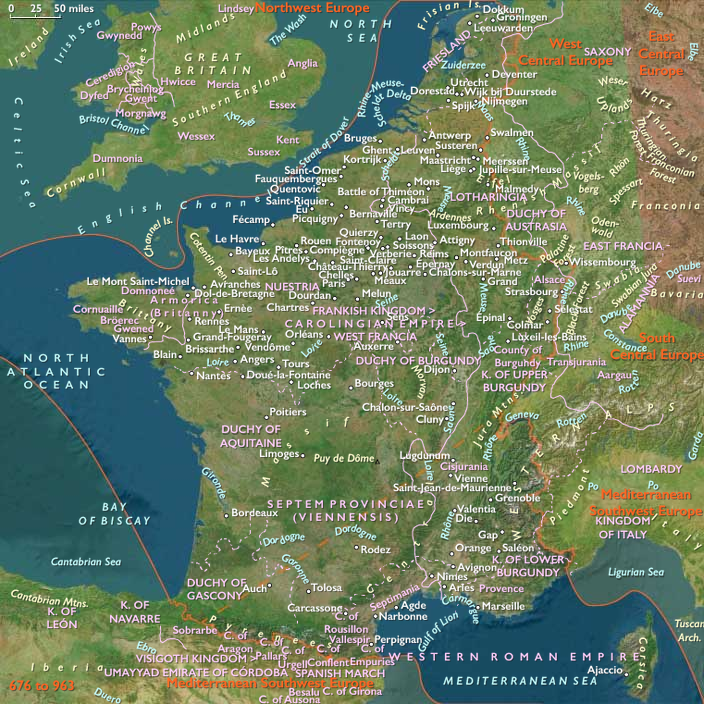
Subregions
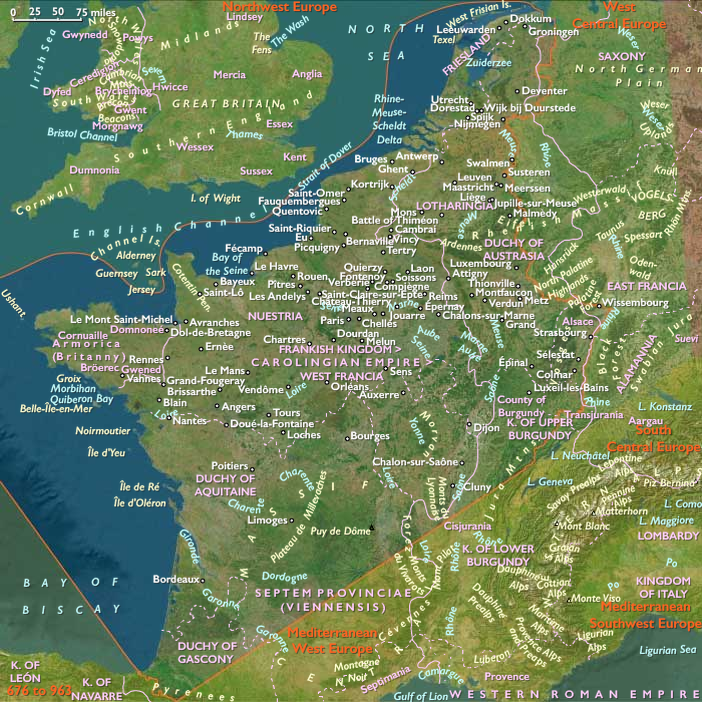
Related Events
Showing 9 events out of 9 total
Years: 881 - 881
Locations
People
Groups
- Franks
- Frankish, or Carolingian (Roman) Empire
- Francia Occidentalis (West Francia, or France), Kingdom of
- Francia Orientalis (East Francia), Kingdom of
Subjects
Regions
Subregions