
Chilperic I’s Breton Campaign Against Waroch II …
Years: 578 - 578
Chilperic I’s Breton Campaign Against Waroch II (578 CE)
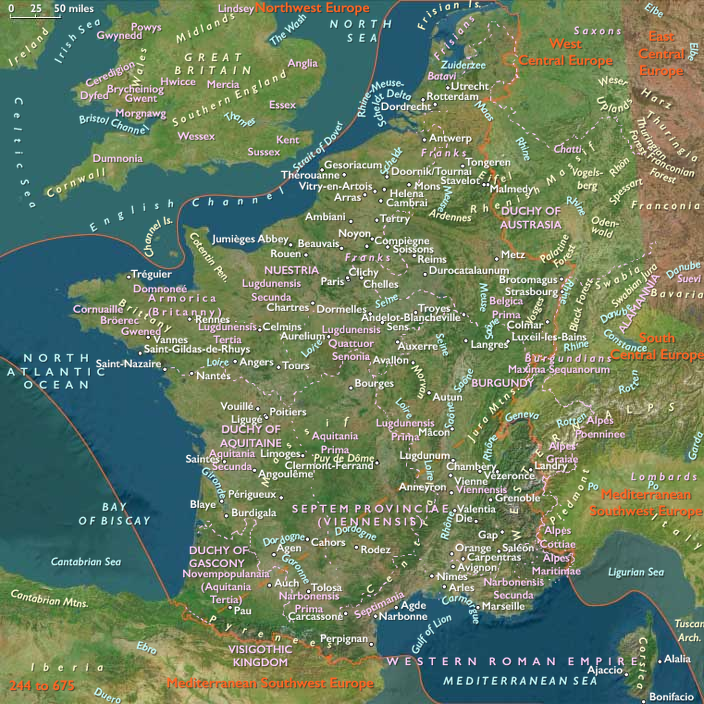
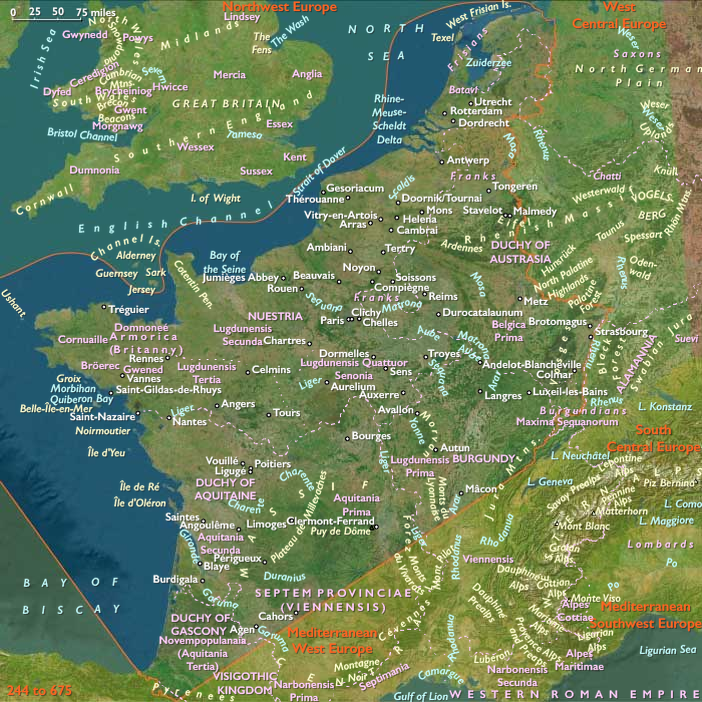
In 578 CE, Chilperic I of Neustria launches a military campaign against Waroch II, the ruler of the Veneti (Vanetais), a powerful Breton leader along the Vilaine River. This conflict is part of the ongoing Frankish struggle to maintain dominance over eastern Brittany, where Breton lords frequently resist Frankish control.
1. Composition of the Frankish Army
Chilperic assembles a diverse army, drawing forces from:
- Poitou
- Touraine
- Anjou
- Maine
- Bayeux
Notably, the men from Bayeux (Baiocassenses) are Saxons, likely descended from earlier Saxon settlers in Neustria. These Saxon warriors play a significant role in the battle.
2. The Battle Against the Bretons
- The Frankish and Breton armies engage in battle for three days, with heavy fighting along the Vilaine River.
- The Bretons decisively rout the Saxons from Bayeux, highlighting the ferocity of Breton resistance.
- After prolonged fighting, Waroch II submits, recognizing Chilperic’s authority.
3. Terms of Waroch II’s Surrender
- Waroch does homage to Chilperic for Vannes, acknowledging Frankish suzerainty.
- He sends his son as a hostage, ensuring his loyalty.
- He agrees to pay an annual tribute, securing peace on Frankish terms.
4. Waroch’s Subsequent Rebellion and Frankish Control Over Brittany
- Despite swearing loyalty, Waroch later breaks his oath, continuing Breton resistance.
- However, Chilperic’s dominance over the Bretons remains relatively secure.
- The poet Venantius Fortunatus celebrates Chilperic’s victory in a poem, demonstrating the significance of the campaign in Frankish propaganda.
Conclusion: Frankish Struggles to Subdue Brittany
The 578 campaign is part of the larger Merovingian effort to control Brittany, a region that remains semi-independent and rebellious. Chilperic’s temporary success against Waroch II shows the strength of Frankish influence, but the Bretons will continue to resist, making Brittany one of the most difficult territories for the Franks to govern.
Locations
People
Groups
Topics
Commodoties
Subjects
Regions
Subregions
Years: 578 - 578
Locations
People
Groups
Topics
Commodoties
Subjects
Regions
Subregions