
Filters:
The Siege of Domfront and the Rebellion …
Years: 1053 - 1053
The Siege of Domfront and the Rebellion of William of Talou (1052–1053)
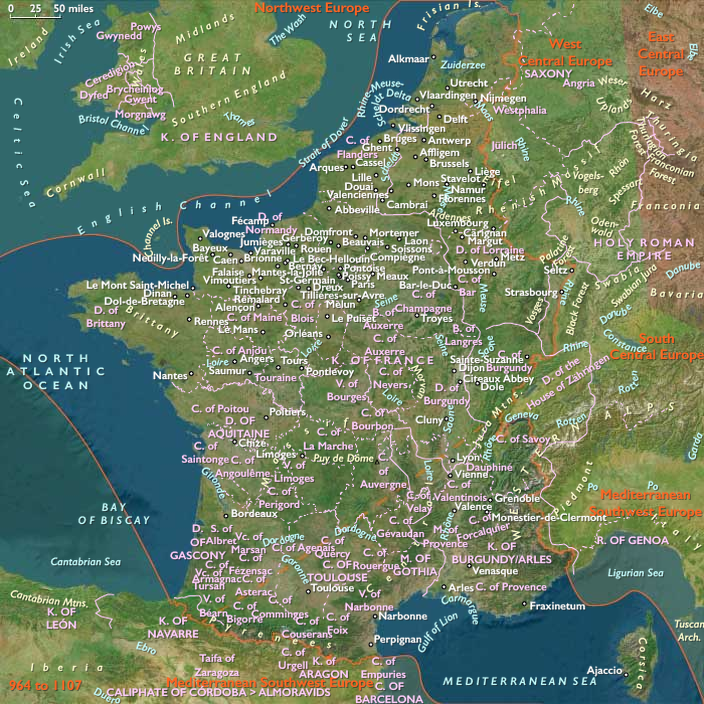
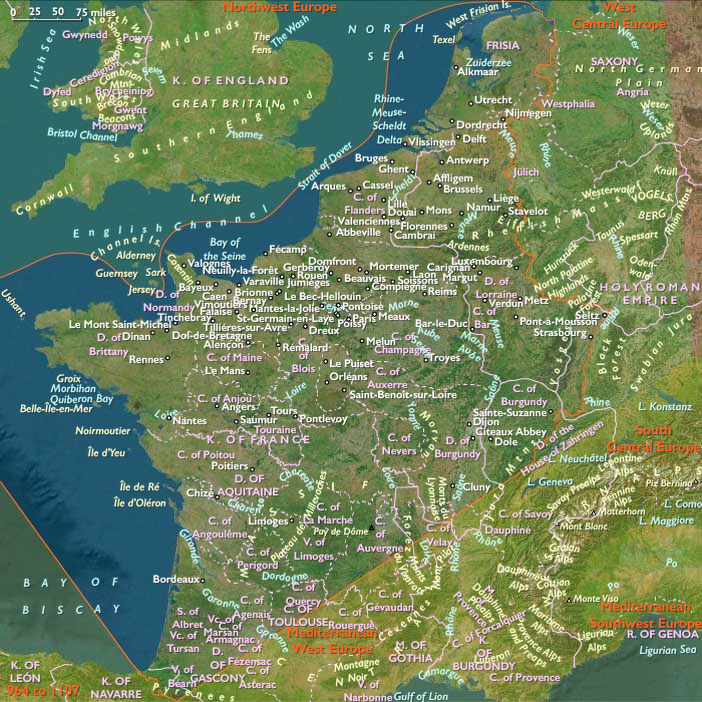
Following the Franco-Angevin invasion of Normandy in 1052, Duke William II of Normandy launched a counteroffensive to reclaim his lost territories. His first objective was Domfront, which had fallen to Geoffrey Martel, Count of Anjou, and his allies. However, as William laid siege to Domfront during the winter of 1052, internal Norman discontent erupted into rebellion, led by William of Talou. Despite this setback, William successfully retook Alençon and Domfront in rapid succession, forcing Geoffrey Martel to retreat.
The Siege of Domfront (Winter 1052–1053)
- William had lost Domfront and Alençon to Geoffrey Martel in 1052 due to treachery within his own ranks.
- Determined to restore control over southern Normandy, William besieged Domfront, enduring a long winter campaign against the Angevin defenders.
- However, tensions among William’s own Norman lords came to a head during the siege.
The Rebellion of William of Talou
- William of Talou, Count of Arques and a cousin of Duke William, had initially supported the siege but withdrew his forces, openly rebelling against the duke.
- His defection marked a serious internal challenge, as he was one of the most powerful Norman magnates, holding Arques, near the Seine, a key strategic fortress.
- This rebellion complicated William’s war effort, as he now had to contend with a major internal threat while still fighting Geoffrey Martel.
William’s Counteroffensive: The Retaking of Alençon and Domfront
- Despite the rebellion, William pressed forward aggressively, swiftly reclaiming Alençon, a key stronghold that had sided with Geoffrey Martel.
- The retaking of Alençon forced the Angevin forces back toward Domfront, where William redoubled his siege efforts.
- In a rapid campaign, William finally retook Domfront, delivering a severe blow to Geoffrey Martel’s ambitions in Normandy.
- Geoffrey was forced to retreat across the Norman border into Maine, abandoning his territorial gains in the duchy.
Aftermath and Continued Rebellion
- Geoffrey Martel’s retreat marked the failure of his Norman campaign, but he remained a threat in Maine.
- With his external enemies weakened, William now had to turn his attention to crushing the rebellion of William of Talou.
- The rebellion would culminate in the Siege of Arques (1053), where William would face another test of his military and political skill.
Significance and Legacy
- The recapture of Alençon and Domfront reaffirmed William’s military supremacy over the Angevins and secured his southern frontier.
- Geoffrey Martel’s defeat weakened Angevin influence in Normandy, allowing William to focus on internal threats.
- The rebellion of William of Talou, however, proved that Norman noble resistance had not been fully crushed, and William’s ability to subdue his own rebellious vassals would be critical to his continued success.
The events of 1052–1053 demonstrated William’s relentless resolve in defending his duchy, setting the stage for his final consolidation of power in Normandy before his invasion of England in 1066.
Locations
People
Groups
Subjects
Regions
Subregions
Related Events
Showing 10 events out of 23 total
Years: 1053 - 1053
Locations
People
Groups
Subjects
Regions
Subregions