
Filters:
Baghdad is second in size only to …
Years: 676 - 819
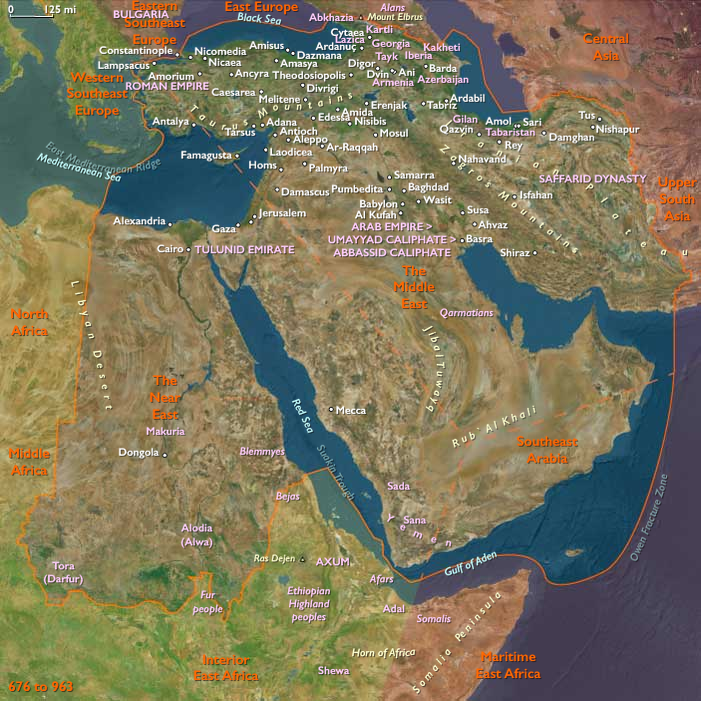
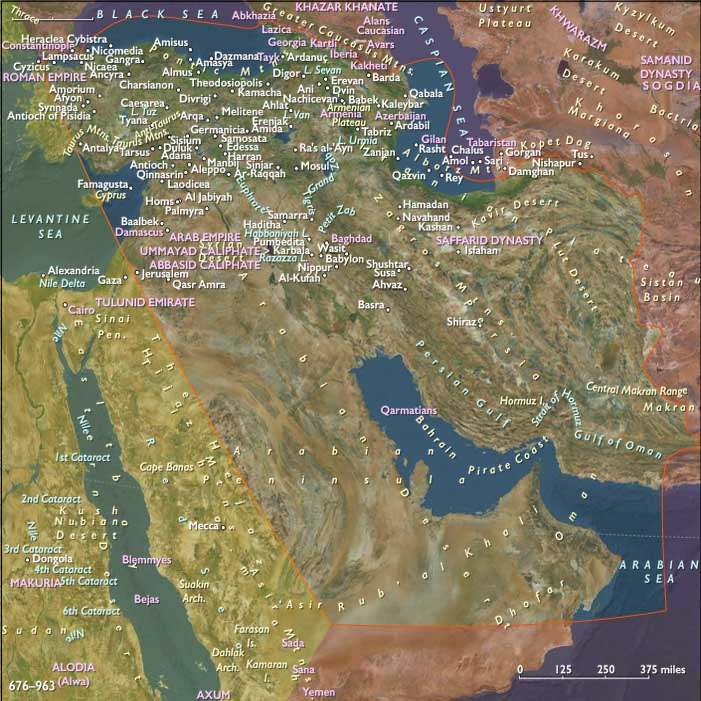
Baghdad is second in size only to Constantinople by the reign of Mansur's grandson, Harun ar Rashid (786-806).
Baghdad is able to feed its enormous population and to export large quantities of grain because the political administration had realized the importance of controlling the flows of the Tigris and the Euphrates rivers.
The Abbasids reconstruct the city's canals, dikes, and reservoirs, and drain the swamps around Baghdad, freeing the city of malaria.
Harun ar Rashid, the caliph of the Arabian Nights, actively supports intellectual pursuits, but the great flowering of Arabic culture that is credited to the Abbasids reaches its apogee during the reign of his son, Al Mamun (813-33).
After the death of Harun ar Rashid, his sons, Amin and Al Mamun, quarrel over the succession to the caliphate.
Their dispute soon erupt into civil war.
Amin is backed by the Iraqis, while Al Mamun has the support of the Iranians.
Al Mamun also has the support of the garrison at Khorasan and thus is able to take Baghdad in 813.
The Abbasids, although Sunni Muslims, hope that by astute and stern rule they will be able to contain Shia resentment at yet another Sunni dynasty.
The Iranians, many of whom are Shias, hope that Al Mamun will make his capital in their own country, possibly at Merv.
Al Mamun, however, eventually realizes that the Iraqi Shias will never countenance the loss of prestige and economic power if they no longer have the capital.
He decides to center his rule in Baghdad.
The Iranians, disappointed, began to break away from Abbasid control.
Baghdad is able to feed its enormous population and to export large quantities of grain because the political administration had realized the importance of controlling the flows of the Tigris and the Euphrates rivers.
The Abbasids reconstruct the city's canals, dikes, and reservoirs, and drain the swamps around Baghdad, freeing the city of malaria.
Harun ar Rashid, the caliph of the Arabian Nights, actively supports intellectual pursuits, but the great flowering of Arabic culture that is credited to the Abbasids reaches its apogee during the reign of his son, Al Mamun (813-33).
After the death of Harun ar Rashid, his sons, Amin and Al Mamun, quarrel over the succession to the caliphate.
Their dispute soon erupt into civil war.
Amin is backed by the Iraqis, while Al Mamun has the support of the Iranians.
Al Mamun also has the support of the garrison at Khorasan and thus is able to take Baghdad in 813.
The Abbasids, although Sunni Muslims, hope that by astute and stern rule they will be able to contain Shia resentment at yet another Sunni dynasty.
The Iranians, many of whom are Shias, hope that Al Mamun will make his capital in their own country, possibly at Merv.
Al Mamun, however, eventually realizes that the Iraqi Shias will never countenance the loss of prestige and economic power if they no longer have the capital.
He decides to center his rule in Baghdad.
The Iranians, disappointed, began to break away from Abbasid control.
Locations
People
Groups
- Iranian peoples
- Arab people
- Bedouin
- Khorasan, Greater
- Islam
- Muslims, Sunni
- Umayyad Caliphate (Damascus)
- Muslims, Shi'a
- Umayyad Caliphate (Harran)
- Abbasid Caliphate (Baghdad)
Topics
Subjects
Regions
Subregions
Years: 676 - 819
Locations
People
Groups
- Iranian peoples
- Arab people
- Bedouin
- Khorasan, Greater
- Islam
- Muslims, Sunni
- Umayyad Caliphate (Damascus)
- Muslims, Shi'a
- Umayyad Caliphate (Harran)
- Abbasid Caliphate (Baghdad)
Topics
Subjects
Regions
Subregions