
East Central Europe (1324–1335 CE): Stability of …
Years: 1324 - 1335
East Central Europe (1324–1335 CE): Stability of Angevin Hungary, Luxembourg-Bohemian Influence, Polish Reunification Efforts, Habsburg-Bavarian Rivalries, and Urban Prosperity
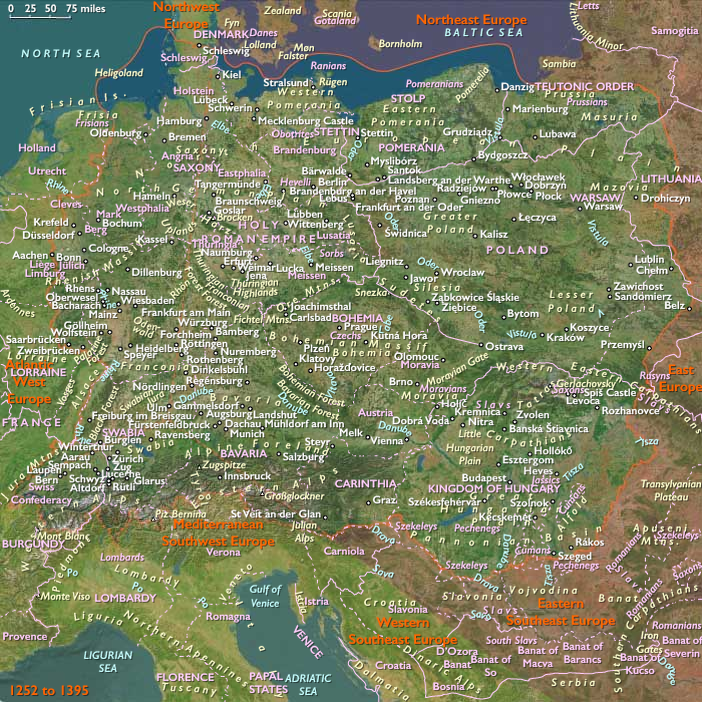
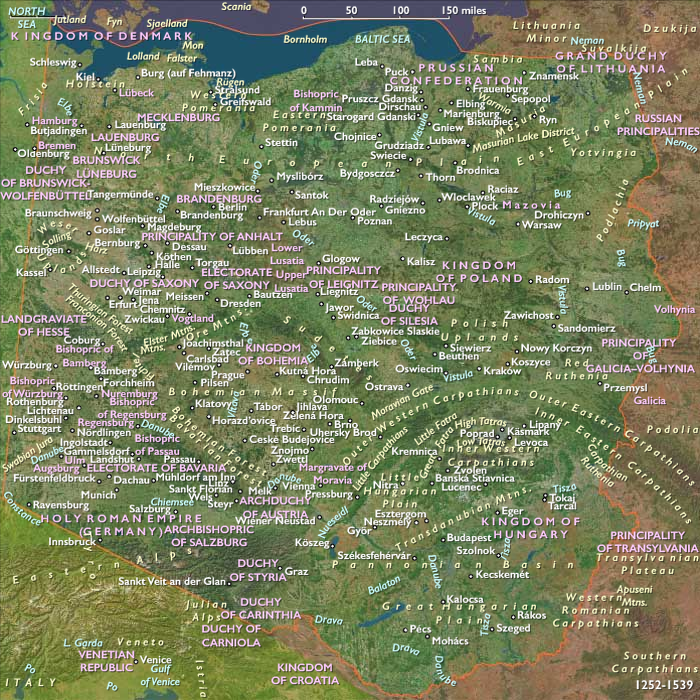
The period between 1324 and 1335 CE saw significant political stabilization and consolidation throughout East Central Europe. The firm rule of the Angevin dynasty in Hungary under Charles Robert, the continued strengthening of Bohemia under John of Luxembourg, persistent internal rivalries among Polish duchies balanced by tentative reunification efforts, intensifying political rivalries between the Habsburgs and Bavarian Wittelsbachs within the Holy Roman Empire, and sustained urban and economic expansion across the region’s thriving cities—including the influential Hanseatic centers—characterized this transformative era.
Political and Military Developments
Continued Consolidation of Angevin Rule in Hungary
-
Under Charles Robert of Anjou (Charles I of Hungary, r. 1308–1342), Hungary further stabilized politically and economically. Charles Robert consolidated central royal authority, subdued powerful oligarchs, and implemented significant administrative and fiscal reforms, including coinage stabilization, laying robust foundations for subsequent prosperity.
Luxembourg Ascendancy and Bohemian Expansion
-
Bohemia, under John of Luxembourg (r. 1310–1346), solidified its regional influence, navigating dynastic alliances, marriage diplomacy, and military interventions.
-
John's diplomatic and military engagements across Europe increased Bohemia’s political stature, notably through strategic ties with neighboring states and influential participation in imperial politics.
Polish Duchies and Attempts at Reunification
-
Continued fragmentation characterized Polish duchies, notably Silesia, Greater Poland, Lesser Poland, and Mazovia. However, significant developments occurred under Władysław Łokietek, who, by 1320, was crowned King of Poland in Kraków, initiating ambitious attempts to reunify fragmented Polish lands, setting a critical precedent for centralized royal governance.
Habsburg and Bavarian Rivalries in the Empire
-
The Habsburg Frederick the Fair (r. 1308–1330) contended with the Wittelsbach ruler Louis IV of Bavaria (r. 1314–1347, Holy Roman Emperor from 1328) for supremacy within the Holy Roman Empire.
-
The intensified rivalry culminated in complex diplomatic maneuvering, territorial conflicts, and shifting alliances, profoundly influencing regional stability and imperial politics, particularly affecting Austria, Bavaria, and neighboring principalities.
Strengthening of Brunswick-Wolfenbüttel
-
The Principality of Brunswick-Wolfenbüttel, under Duke Otto the Mild (r. 1318–1344), further consolidated its regional position in Lower Saxony, enhancing its political prominence, economic prosperity, and diplomatic influence across northern East Central Europe.
Economic and Technological Developments
Continued Urban Growth and Hanseatic Economic Prosperity
-
Cities in the Hanseatic League, notably Lübeck, Rostock, Toruń, Gdańsk, Kraków, and Wrocław, maintained robust economic expansion through extensive Baltic and inland trade networks.
-
Substantial investments in urban infrastructure, expanded marketplaces, warehouses, and improved fortifications further bolstered regional economic vitality.
Agricultural Innovation and Productivity
-
Improved agricultural techniques—such as advanced plowing technology, systematic crop rotation, and better irrigation—fostered greater productivity, sustaining urban growth and supporting increased population densities across the region.
Cultural and Artistic Developments
Bohemian Cultural Flourishing under Luxembourg Patronage
-
Under John of Luxembourg’s patronage, Prague and other Bohemian urban centers experienced vibrant cultural and artistic activity, exemplified by Gothic architectural projects, courtly literary works, and illuminated manuscripts.
Polish Cultural Vitality
-
Despite continued political divisions, Polish duchies, particularly in Greater Poland and Silesia, saw continued cultural vibrancy. Ecclesiastical and monastic institutions supported manuscript production, religious art, and scholarly pursuits, maintaining strong local cultural identities.
Hungarian Ecclesiastical and Royal Patronage
-
King Charles Robert notably supported ecclesiastical and artistic initiatives, enhancing Hungary’s cultural landscape through the construction of religious monuments, cathedrals, and monastic complexes. Ecclesiastical centers such as Esztergom, Veszprém, and Pécs maintained significant cultural and intellectual influence.
Settlement and Urban Development
Urbanization and Economic Integration
-
Major urban centers, including Vienna, Prague, Kraków, Gdańsk, Lübeck, Brunswick, and Wrocław, further expanded and consolidated their economic and administrative significance. Improved fortifications, municipal institutions, and commercial infrastructure underpinned regional prosperity.
Germanic Settlement and Regional Demographic Shifts
-
The continued influx of German settlers (Ostsiedlung) into Silesia, Brandenburg, Mecklenburg, Lusatia, and Polish territories significantly reshaped the region’s demographic patterns, fostering cultural integration, agricultural productivity, and economic vitality.
Social and Religious Developments
Ecclesiastical Authority and Social Stability
-
Ecclesiastical institutions—including the powerful Archbishopric of Salzburg and influential bishoprics of Passau, Bamberg, and Regensburg—continued expanding their social, political, and cultural authority. Church institutions notably shaped educational structures, regional governance, and societal cohesion.
Aristocratic Power and Feudal Structures
-
Aristocratic elites remained dominant, particularly in Hungary, Poland, and Bohemia, wielding considerable political and economic influence. Feudal relationships and aristocratic autonomy persisted strongly, shaping local governance, regional stability, and social hierarchies.
Long-Term Consequences and Historical Significance
The era 1324–1335 CE represented a crucial phase of stabilization and transformation within East Central Europe. Hungary under Angevin rule experienced unprecedented political consolidation, setting lasting frameworks for administrative and economic strength. Bohemian stability under Luxembourg rule enhanced its regional prominence and cultural vitality, positioning Prague as a critical European cultural and political center. Polish reunification efforts under Władysław Łokietek began reversing fragmentation, paving the way for future centralized governance. Intensified Habsburg-Bavarian rivalries profoundly shaped imperial and regional dynamics. The sustained economic prosperity of Hanseatic cities and the continued urban and cultural flourishing reinforced regional vitality. Collectively, these developments laid essential foundations for subsequent geopolitical, economic, and cultural trajectories, fundamentally shaping East Central Europe’s historical path into the later medieval period.
People
- Casimir III the Great
- Charles I of Hungary
- Frederick the Fair
- John of Bohemia
- Louis IV
- Otto the Mild
- Wladyslaw I the Elbow-high
Groups
- Saxons
- Germans
- Hungarian people
- Wends, or Sorbs (West Slavs)
- Christianity, Chalcedonian
- Bavarians (West Germanic tribe)
- Thuringia, Duchy of
- Passau, Bishopric of
- Holy Roman Empire
- Germany, Kingdom of (within the Holy Roman Empire)
- Czechs [formerly Bohemians] (West Slavs)
- Slovaks (West Slavs)
- Carinthia, Duchy of
- Hungary, Kingdom of
- Bamberg, Prince-Bishopric of
- Mazovia, Duchy of
- Poland, Greater
- Poland during the period of fragmentation, Kingdom of
- Austria, Archduchy of
- Brandenburg (Ascanian) Margravate of
- Bohemia, Kingdom of
- Mecklenburg, House of
- Styria, Duchy of
- Ordensstaat (Monastic state of the Teutonic Knights)
- Lübeck, Free City of
- Brunswick-Lüneburg, Duchy of
- Regensburg (Ratisbon), Imperial Free City of
- Cammin, Prince-Bishopric of
- Regensburg, Prince-Bishopric of
- Anhalt-Zerbst, Principality of
- Bavaria, Upper, Duchy of
- Bavaria, Lower, Duchy of
- Galicia–Volhynia, Kingdom of
- Brunswick-Wolfenbüttel, Duchy of
- Salzburg, Archbishopric of
- Saxe-Wittenberg, Duchy of
- Saxe-Ratzeburg-Lauenburg, Duchy of
- Saxe-Mölln-Bergedorf, Duchy of
Topics
- Ostsiedlung (German: Settlement in the East), a.k.a. German eastward expansion
- Poland, Fragmentation of
Subjects
Regions
Subregions
Years: 1324 - 1335
People
- Casimir III the Great
- Charles I of Hungary
- Frederick the Fair
- John of Bohemia
- Louis IV
- Otto the Mild
- Wladyslaw I the Elbow-high
Groups
- Saxons
- Germans
- Hungarian people
- Wends, or Sorbs (West Slavs)
- Christianity, Chalcedonian
- Bavarians (West Germanic tribe)
- Thuringia, Duchy of
- Passau, Bishopric of
- Holy Roman Empire
- Germany, Kingdom of (within the Holy Roman Empire)
- Czechs [formerly Bohemians] (West Slavs)
- Slovaks (West Slavs)
- Carinthia, Duchy of
- Hungary, Kingdom of
- Bamberg, Prince-Bishopric of
- Mazovia, Duchy of
- Poland, Greater
- Poland during the period of fragmentation, Kingdom of
- Austria, Archduchy of
- Brandenburg (Ascanian) Margravate of
- Bohemia, Kingdom of
- Mecklenburg, House of
- Styria, Duchy of
- Ordensstaat (Monastic state of the Teutonic Knights)
- Lübeck, Free City of
- Brunswick-Lüneburg, Duchy of
- Regensburg (Ratisbon), Imperial Free City of
- Cammin, Prince-Bishopric of
- Regensburg, Prince-Bishopric of
- Anhalt-Zerbst, Principality of
- Bavaria, Upper, Duchy of
- Bavaria, Lower, Duchy of
- Galicia–Volhynia, Kingdom of
- Brunswick-Wolfenbüttel, Duchy of
- Salzburg, Archbishopric of
- Saxe-Wittenberg, Duchy of
- Saxe-Ratzeburg-Lauenburg, Duchy of
- Saxe-Mölln-Bergedorf, Duchy of
Topics
- Ostsiedlung (German: Settlement in the East), a.k.a. German eastward expansion
- Poland, Fragmentation of
Subjects
Regions
Subregions