
East Central Europe (184–195 CE): Post-Marcomannic Recovery …
Years: 184 - 195
East Central Europe (184–195 CE): Post-Marcomannic Recovery and Frontier Reconstruction
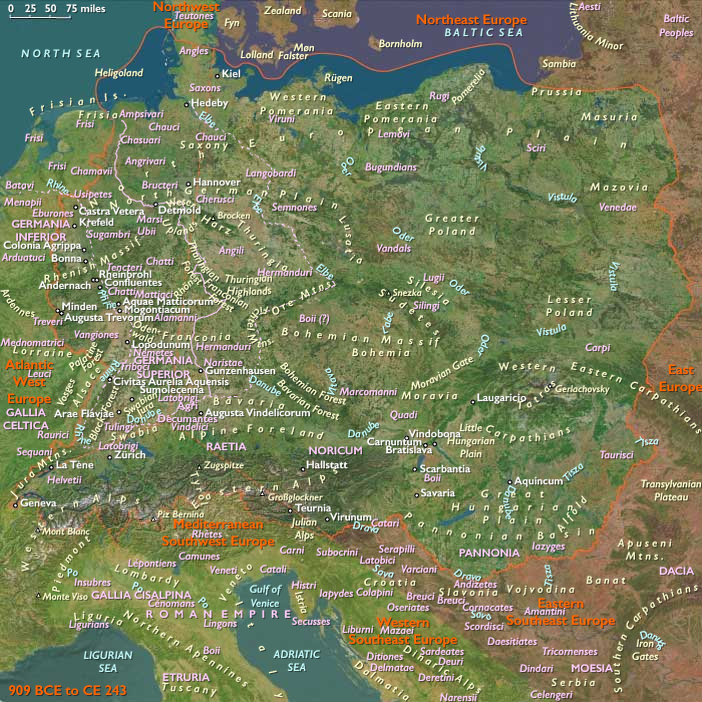
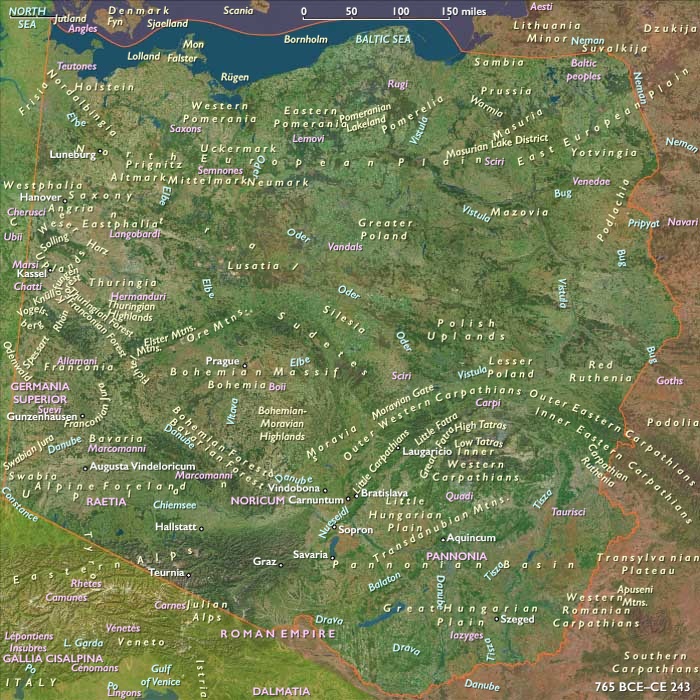
Between 184 and 195 CE, East Central Europe—covering Poland, Czechia, Slovakia, Hungary, and those portions of Germany and Austria lying east of 10°E and north of a line stretching from roughly 48.2°N at 10°E southeastward to the Austro-Slovenian border near 46.7°N, 15.4°E—entered a period of gradual recovery and stabilization following the devastation of the Marcomannic Wars (166–180 CE) and the widespread Antonine Plague (165–180 CE). Under Emperor Commodus (180–192 CE) and his successors, the region experienced significant rebuilding efforts along the Roman Danube frontier, slow economic revitalization, and cautious diplomatic re-engagement with the Marcomanni, Quadi, and Iazyges.
Political and Military Developments
Commodus’s Frontier Policy and Recovery Efforts
-
Under Emperor Commodus, Roman authorities prioritized stabilizing the heavily disrupted Danube frontier provinces—Pannonia Superior, Pannonia Inferior, and Noricum.
-
Roman legions and auxiliary forces focused on rebuilding and reinforcing frontier fortifications, re-establishing defensive lines, and reorganizing provincial administration.
Diplomatic Stabilization with Tribes
-
Following extensive conflict, cautious diplomatic relationships were re-established with the Marcomanni, Quadi, and Iazyges. Treaties and arrangements made by Marcus Aurelius were cautiously maintained, with adjustments reflecting new power dynamics and lingering tensions.
Continued Tribal Consolidation and Internal Changes
-
Tribal societies, impacted by warfare and disease, reorganized internally, consolidating leadership and settlements and adjusting to new Roman diplomatic realities.
Economic and Technological Developments
Gradual Economic Recovery
-
Economic recovery along the Danube frontier progressed slowly, with trade cautiously resuming between Roman provinces and tribal territories. Roman goods such as ceramics, metals, textiles, and glassware gradually re-entered circulation, exchanged for regional commodities like iron, livestock, amber, and agricultural products.
Frontier Technological and Infrastructure Improvements
-
Reconstruction of frontier fortifications stimulated localized economies and encouraged innovations in defensive architecture, military logistics, and infrastructure projects, such as improved roads, bridges, and fortresses.
Cultural and Artistic Developments
Stabilization and Resumption of Artistic Activities
-
Cultural life and artistic production gradually revived along the frontier, as reflected in pottery, metalwork, jewelry, and military equipment, exhibiting a renewed synthesis of Roman and tribal cultural influences.
Settlement and Urban Development
Reconstruction and Reinforcement of Frontier Towns
-
Roman frontier towns (Carnuntum, Vindobona, Aquincum) underwent major rebuilding and reinforcement, resuming their roles as administrative, economic, and military hubs.
-
Settlements became permanently fortified, reflecting lessons learned from earlier conflicts and anticipating potential future threats.
Tribal Settlement Adaptation
-
Germanic and Sarmatian tribal settlements adjusted to post-war conditions, establishing stronger fortifications and increasingly structured defensive communities reflecting long-term changes in settlement patterns.
Social and Religious Developments
Stabilization of Tribal Social Structures
-
After years of conflict and plague, tribal societies re-stabilized internally, further solidifying hierarchical structures dominated by warrior leaders and elites who had emerged during the wars.
Continuation and Evolution of Religious Practices
-
Religious practices among tribal groups continued to reflect themes of resilience and community solidarity, emphasizing rites that celebrated survival and protection following crisis conditions.
Long-Term Consequences and Historical Significance
The era 184–195 CE represented a critical transitional period in East Central Europe, marked by the slow but steady recovery from the devastating Marcomannic Wars and the Antonine Plague. Roman frontier provinces were rebuilt and restructured, regional economies revived, and diplomatic ties cautiously re-established, setting foundations for a renewed era of frontier stability. These efforts reshaped Roman-tribal relations and provided essential groundwork for future interactions and conflicts along the Danube frontier.
People
Groups
- Iazyges, or Iazygians
- Marcomanni (Germanic tribe)
- Lombards (West Germanic tribe)
- Germans
- Quadi (Germanic tribe)
- Noricum (Roman province)
- Roman Empire (Rome): Nerva-Antonine dynasty
- Pannonia Superior (Roman province)
- Pannonia Inferior (Roman province)
Topics
Commodoties
Subjects
Regions
Subregions
Years: 184 - 195
People
Groups
- Iazyges, or Iazygians
- Marcomanni (Germanic tribe)
- Lombards (West Germanic tribe)
- Germans
- Quadi (Germanic tribe)
- Noricum (Roman province)
- Roman Empire (Rome): Nerva-Antonine dynasty
- Pannonia Superior (Roman province)
- Pannonia Inferior (Roman province)
Topics
Commodoties
Subjects
Regions
Subregions