
East Micronesia (1252 – 1395 CE): Kosraean …
Years: 1252 - 1395
East Micronesia (1252 – 1395 CE): Kosraean Stone Kingship, Marshallese Navigators, and Atoll Resilience
Geographic and Environmental Context
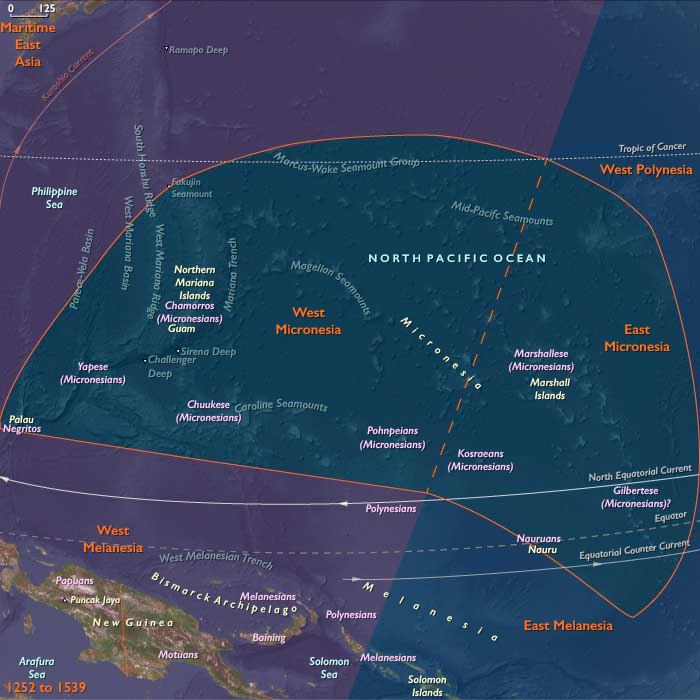
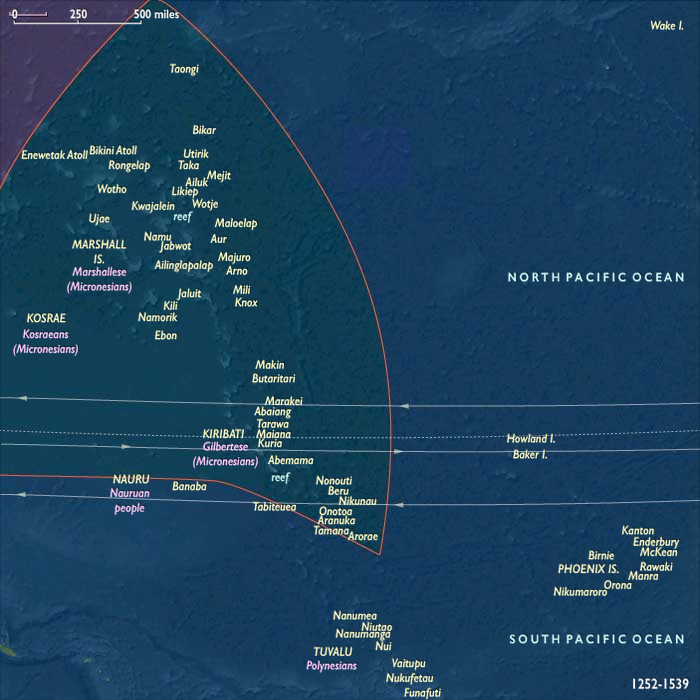
East Micronesia includes Kiribati (Gilbert Islands), the Marshall Islands (Ralik and Ratak chains), Nauru, and Kosrae.
-
Kiribati & Marshalls: long chains of low coral atolls with thin soils, freshwater lenses, and lagoons.
-
Nauru: a small uplifted limestone island with limited arable pockets.
-
Kosrae: a high volcanic island with perennial streams, fertile alluvium, and a protective fringing reef.
Climate and Environmental Shifts
-
Late Medieval Warm Period conditions gave way to early Little Ice Age variability after c. 1300, with multi-year ENSO droughts stressing atolls.
-
High islands (Kosrae) buffered climate shocks with reliable rainfall; atolls depended on deep babai (swamp taro) pits, breadfruit preservation, and inter-island aid.
Societies and Political Developments
-
Kosrae: sacred kingship (tokosra) reached its architectural apex with the Lelu stone city (coral-block causeways, walled compounds, canals), concentrating ritual and administrative power while coordinating island-wide labor.
-
Marshall Islands: hierarchical polities under iroij (paramount chiefs) expanded multi-atoll domains; alab(lineage land stewards) and rijerbal (workers) organized land and lagoon tenure.
-
Kiribati: village assemblies in the maneaba (meeting house) governed land, water, and ritual; lineage elders arbitrated drought response and voyaging support.
-
Nauru: small clan communities balanced garden plots with reef fishing, tied into passing canoe circuits.
Economy and Trade
-
Staples: coconut, breadfruit, pandanus; babai in taro pits on atolls; irrigated taro and valley gardens on Kosrae.
-
Fisheries: lagoon netting and weirs, trolling for tuna/bonito; preserved fish and breadfruit paste stored for lean seasons.
-
Exchange webs:
-
Atolls specialized in salt fish, mats, cordage, and shell valuables.
-
Kosrae exported timber, canoe components, and surplus taro, receiving shells and fine mats.
-
Inter-atoll reciprocity moved food and materials along Ralik–Ratak and Gilbert chains, binding drought-prone islets to better-provisioned neighbors.
-
Subsistence and Technology
-
Atoll food security: excavated babai pits lined and composted against salinity; fermentation pits for breadfruit paste; coconut groves as windbreaks.
-
Canoes & navigation: outrigger sailing canoes with crab-claw sails; formal training of navigators who memorized star paths, swell patterns, seabird behavior; stick charts (rebbelib, meddo) in the Marshalls encoded wave interference and island positions.
-
Hydraulic & masonry works (Kosrae): terraced garden streams, stone seawalls, and the coral-block compounds of Lelu.
-
Fish weirs: stone and wooden structures in atoll lagoons scheduled harvests by tide and season.
Movement and Interaction Corridors
-
Ralik–Ratak chains (Marshalls): dense inter-atoll shuttles for tribute, marriage, and famine relief.
-
Kiribati trunk line: north–south runs linked village clusters to share staples and skilled navigators.
-
Kosrae hub: high-island surplus and sacred court drew canoes from surrounding low isles; convoys redistributed food during drought.
-
Nauru: opportunistic node in west-east passages, provisioning and exchanging craft goods.
Belief and Symbolism
-
Kosrae: royal ritual at Lelu fused sacred genealogy and political authority; first-fruits offerings and temple feasts affirmed hierarchy.
-
Marshalls & Kiribati: sea and wind deities, navigation spirits, and ancestral protectors honored in chant and shrine; chiefly legitimacy rested on control of land-lagoon rituals.
-
Clan cemeteries and sacred groves expressed continuity; canoe consecrations sacralized voyaging.
Adaptation and Resilience
-
Portfolio subsistence (trees + taro pits + fisheries + preserves) stabilized atolls through drought cycles.
-
Redistribution via tribute convoys and kin obligations moved staples toward deficit atolls.
-
Navigation knowledge institutionalized as disaster insurance—masters could route canoes to reliable rain zones and food stores.
-
High-island buffering: Kosrae’s surplus and administrative capacity at Lelu underwrote regional aid and ritual cohesion.
Long-Term Significance
By 1395, East Micronesia was a resilient atoll–high island system:
-
Kosrae’s Lelu anchored a centralized sacred polity.
-
Marshallese chiefdoms refined lagoon tenure and long-range navigation.
-
Kiribati strengthened maneaba governance and communal risk-sharing.
-
Nauru remained a modest but connected outpost.
Together, sophisticated navigation, food preservation, and ritual redistribution sustained dense populations across some of the world’s most marginal yet masterfully managed oceanic landscapes.
Groups
Topics
Commodoties
Subjects
Regions
Subregions
Years: 1252 - 1395
Groups
Topics
Commodoties
Subjects
Regions
Subregions