
Eric I the Victorious is the first …
Years: 990 - 990
Eric I the Victorious is the first Swedish king about whom anything definite is known.
His original territory lay in Uppland and neighboring provinces.
He had been victorious over an invasion from the south in the Battle of the Fýrisvellir close to Uppsala.
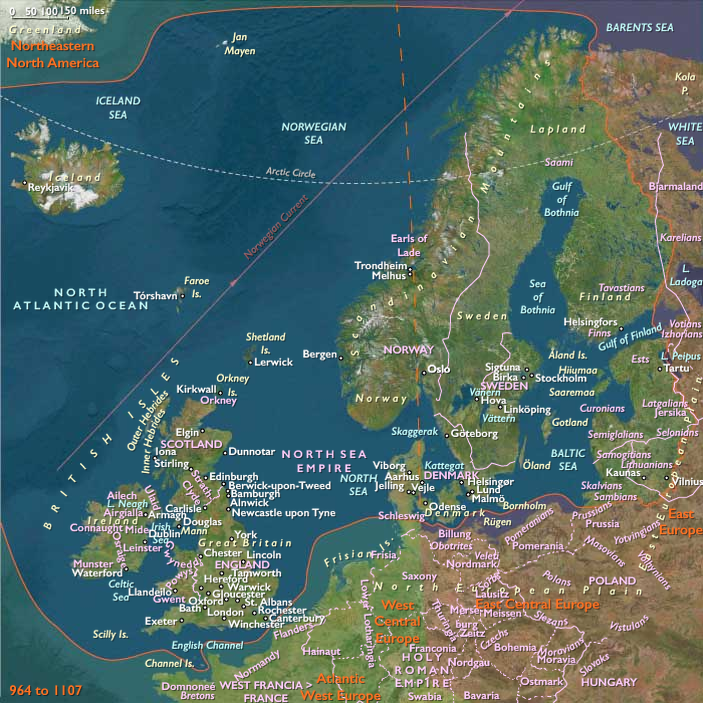
The extent of his kingdom is unknown.
In addition to the Swedish heartland around Lake Mälaren, it may have extended down the Baltic Sea coast as far south as Blekinge.
According to the Flateyjarbok, his success was due to the fact that he allied with the peasants against the nobility, and it is obvious from archaeological findings that the influence of the latter diminished during the last part of the tenth century.
He was also, probably, the introducer of the famous medieval Scandinavian system of universal conscription known as the ledung in the provinces around Mälaren.
According to Adam of Bremen, Eric allied himself with the Polish prince Boleslav to conquer Denmark and chase away its king Sweyn Forkbeard.
He proclaimed himself the king of Sweden and Denmark which he ruled until his death, which would have taken place in the mid-990s.
Adam says that Eric was baptized in Denmark, but later returned to the Norse gods.
Adam of Bremen gives Emund Eriksson as Eric's predecessor.
In all probability he founded the town of Sigtuna, which still exists and where the first Swedish coins will be stamped for his son and successor Olof Skötkonung.
Along with Sigtuna, …
Locations
People
Groups
- Polytheism (“paganism”)
- Christianity, Chalcedonian
- Denmark, Kingdom of
- Svealand, (Scandinavian) Kingdom of
- Götaland, (Scandinavian) Kingdom of
- Danes (Scandinavians)
- Swedes (North Germanic tribe)
- Poland, Principality of
- Sweden, Kingdom of
Subjects
Regions
Subregions

Years: 990 - 990
Locations
People
Groups
- Polytheism (“paganism”)
- Christianity, Chalcedonian
- Denmark, Kingdom of
- Svealand, (Scandinavian) Kingdom of
- Götaland, (Scandinavian) Kingdom of
- Danes (Scandinavians)
- Swedes (North Germanic tribe)
- Poland, Principality of
- Sweden, Kingdom of
Subjects
Regions
Subregions