
The Battle of Jengland (851): Erispoe's Victory …
Years: 851 - 851
August
The Battle of Jengland (851): Erispoe's Victory and the Recognition of Breton Independence
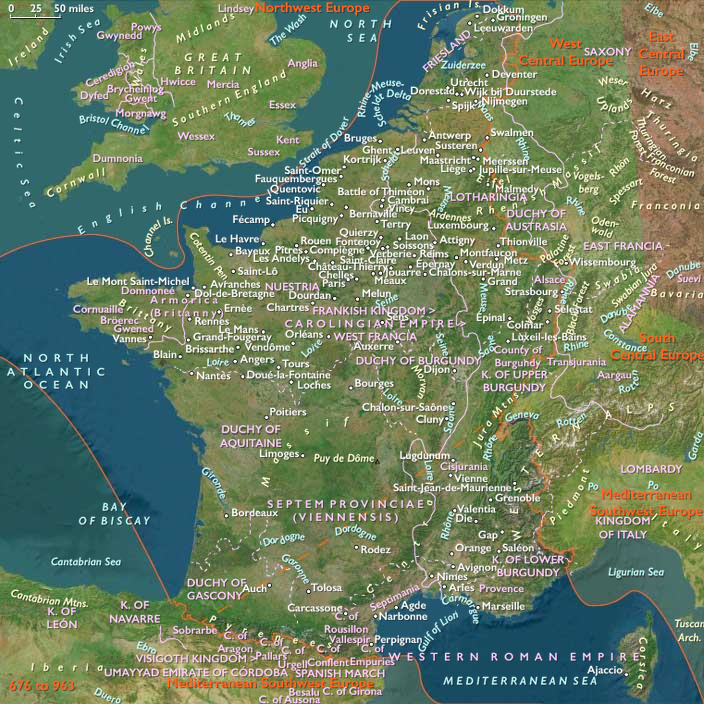
Following the death of Nominoe in March 851, his son Erispoe is proclaimed leader of Brittany. However, his claim to power is immediately challenged by Charles the Bald, the King of West Francia, who still considers Brittany a Frankish vassal state.
Determined to continue his father’s campaign for Breton autonomy, Erispoe allies with Lambert II of Nantes, a Frankish noble who had been dispossessed by Charles. Their forces continue the Breton offensive, prompting Charles to launch a counter-campaign to reassert his authority over the region.
Charles the Bald Prepares for War
- Faced with the Breton threat, Charles seeks support from his brother, Louis the German, who provides a contingent of Saxons to bolster the Frankish army.
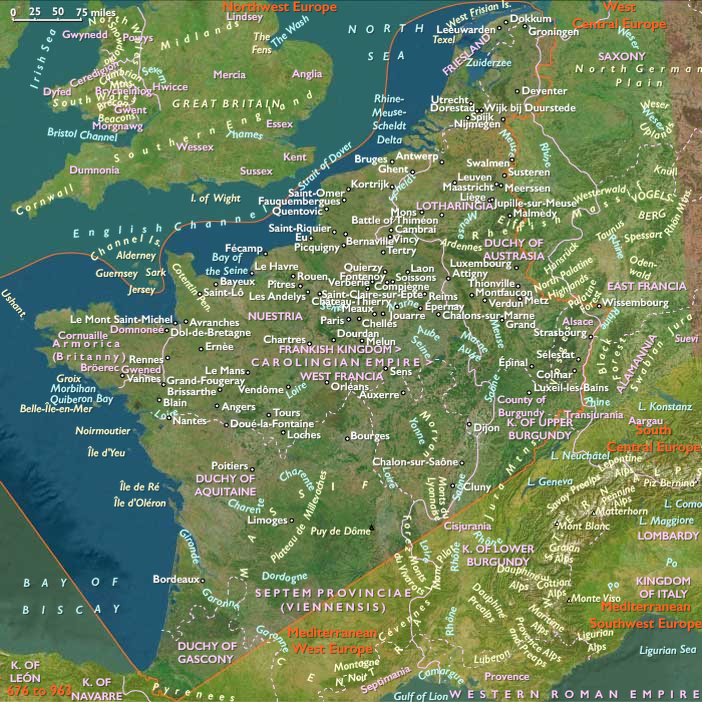
- In August 851, Charles leads his forces from Maine, advancing into Brittany along the Roman road from Nantes to Corseul.
- The Frankish army is estimated at around 4,000 troops, while Erispoe commands a much smaller force of approximately 1,000 men.
The Battle of Jengland: Breton Tactics Prevail
-
Charles arranges his troops in two lines:
- Saxon mercenaries at the front, tasked with absorbing the initial Breton cavalry assault.
- Frankish heavy infantry and cavalry at the rear, prepared for close combat.
-
The battle begins with a javelin assault by the Bretons, forcing the Saxons to retreat behind the Frankish line.
-
The Franks are taken by surprise, expecting a direct engagement, but instead, the Bretons employ a highly mobile strategy reminiscent of Parthian tactics:
- Hit-and-run attacks, avoiding prolonged melee.
- Feigned retreats, drawing the Frankish forces out and isolating groups.
- Encirclement maneuvers, overwhelming overextended Frankish troops.
-
The battle lasts two days, during which the Franks suffer catastrophic losses in men and horses, while the Bretons remain relatively unscathed.
-
Unable to counter Erispoe’s superior mobility, Charles withdraws under cover of night.
-
When his disappearance is discovered the next morning, panic spreads among the remaining Frankish soldiers, leading to a disorganized rout.
-
The Bretons raid the Frankish camp, seizing weapons, armor, and supplies, and slaughtering fleeing soldiers.
Aftermath: The Treaty of Angers and Recognition of Brittany (851)
- Following his humiliating defeat, Charles is forced to recognize Erispoe as King of Brittany at the Treaty of Angers (851).
- Brittany is now fully independent from West Francia, marking the first formal recognition of Breton sovereignty.
- In addition to recognizing Erispoe’s rule, Charles cedes the counties of Rennes, Nantes, and Retz to Brittany, further expanding its territory.
Legacy of the Battle of Jengland
- Erispoe secures Brittany’s autonomy, continuing his father Nominoe’s legacy.
- Frankish military dominance is shattered, proving that Brittany is no longer just a rebellious province but a fully independent power.
- Charles the Bald, already struggling with Viking incursions and internal noble revolts, is forced to abandon further attempts to conquer Brittany.
- The battle cements the reputation of the Breton cavalry, whose mobile tactics prove effective against heavily armored Frankish forces, shaping Breton military doctrine for centuries.
The Battle of Jengland (851) is a turning point in the history of Brittany, securing Breton independence from Carolingian rule and reshaping the balance of power in Western Francia.
Locations
People
- Charles the Bald
- Erispoe
- Lambert II of Nantes
- Lothair I
- Louis the German
- Nominoë
- Pepin II of Aquitaine
Groups
- Franks
- Saxons
- Breton people
- Brittany, Kingdom of
- Maine, County of
- Francia Occidentalis (West Francia, or France), Kingdom of
- Francia Orientalis (East Francia), Kingdom of
Topics
Commodoties
Subjects
Regions
Subregions
Years: 851 - 851
August
Locations
People
- Charles the Bald
- Erispoe
- Lambert II of Nantes
- Lothair I
- Louis the German
- Nominoë
- Pepin II of Aquitaine
Groups
- Franks
- Saxons
- Breton people
- Brittany, Kingdom of
- Maine, County of
- Francia Occidentalis (West Francia, or France), Kingdom of
- Francia Orientalis (East Francia), Kingdom of
Topics
Commodoties
Subjects
Regions
Subregions