
Wheel-turned, highly polished black pottery, commonly used …
Years: 2637BCE - 2494BCE
Wheel-turned, highly polished black pottery, commonly used for ritual purposes and funerary ware, had replaced the Yangshao type at the end of China’s Neolithic period.
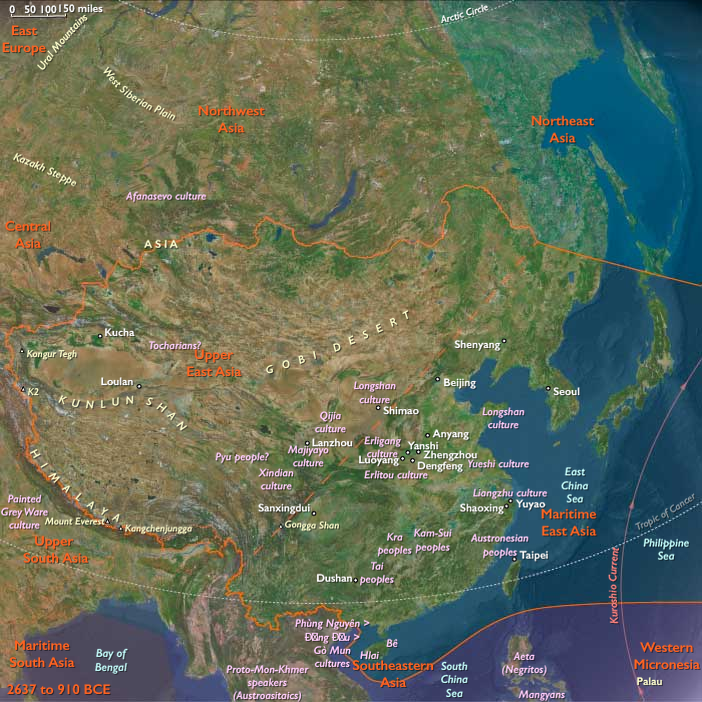
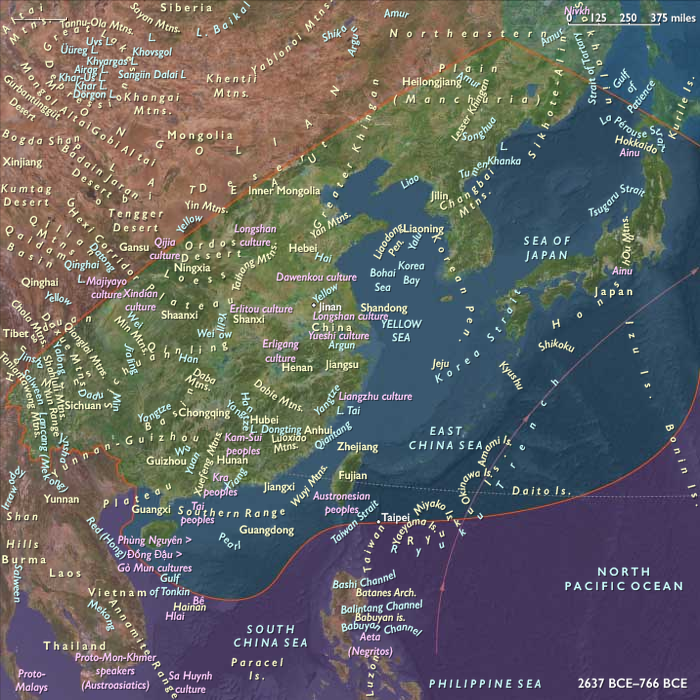
The prosperous Longshan culture, centered on the central and lower Yellow River, is notable for its highly polished black pottery (or egg-shell pottery); its thin walls and metallic, burnished finish marking a great technical advance.
Named after Longshan, Shandong Province, the first excavated site and dated from about 3000 BCE to 2000 BCE, the culture’s distinctive feature is the high level of skill in pottery making, including the use of pottery wheels.
The four centuries from 3000 BCE to 2600 BCE are considered the early period of the Longshan culture.
The Longshan type of thin-walled and polished black pottery will also be discovered in the Yangzi River valley and as far as the southeastern coast of China proper, a clear indication that Neolithic agricultural sub-groups of the greater Longshan Culture will eventually spread out across China proper.
Life during the Longshan culture marks a transition to the establishment of cities, as rammed earth walls and moats begin to appear; the site at Taosi is the largest walled Longshan settlement.
Locations
Groups
Topics
Commodoties
Subjects
Regions
Subregions
Years: 2637BCE - 2494BCE
Locations
Groups
Topics
Commodoties
Subjects
Regions
Subregions