
Jean de Meun’s Roman de la …
Years: 1276 - 1287
Jean de Meun’s Roman de la Rose: Satire and Controversy in Late 13th-Century France
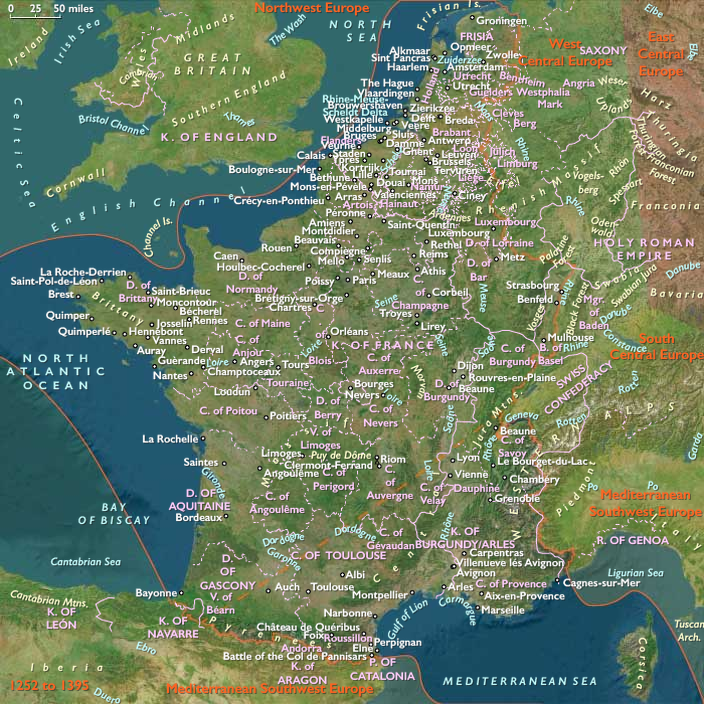
Jean de Meun (or Meung) composed a 22,000-line continuation of the Roman de la Rose, transforming the idealistic and courtly allegory of Guillaume de Lorris into a wide-ranging, erudite, and often caustic satire. His additions (lines 4089–21780) stand in stark contrast to de Lorris’s original 4,000-line portrayal of love as an ennobling quest, instead presenting a deeply skeptical and intellectual critique of love, women, and the Church, as well as a broader commentary on medieval society.
The date of composition for this second part is generally placed between 1268 and 1285, based on a reference within the poem to the deaths of Manfred of Sicily and Conradin, both executed in 1268 on the orders of Charles of Anjou—who is described in the poem as the current king of Sicily. This contextual clue suggests that Jean de Meun was actively composing his work during this period.
However, some scholars, notably M. F. Guillon (Jean Clopinel, 1903), argue for a later date, proposing that the poem should be read primarily as a political satire and assigning its composition to the last five years of the 13th century. This alternative dating aligns with Jean de Meun’s known anti-clerical views, suggesting that the work may have been shaped by the intensifying ideological conflicts of the period.
Regardless of its precise dating, Jean de Meun’s Roman de la Rose became one of the most influential literary works of the Middle Ages, provoking admiration, debate, and condemnation for its provocative, unorthodox perspectives. It deeply influenced later medieval thought, sparking controversies on gender, philosophy, and ecclesiastical authority that persisted well into the 14th and 15th centuries.
Locations
People
Groups
Topics
Subjects
Regions
Subregions

Years: 1276 - 1287
Locations
People
Groups
Topics
Subjects
Regions
Subregions