
Gold Lunulae: Crescent-Shaped Necklaces of the Early …
Years: 2205BCE - 2062BCE
Gold Lunulae: Crescent-Shaped Necklaces of the Early Bronze Age (c. 2200–2000 BCE)
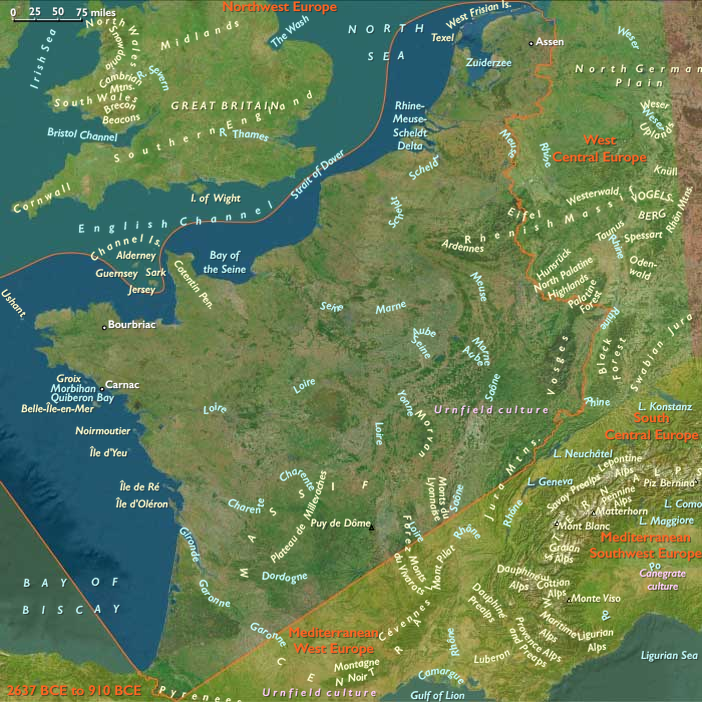
Gold lunulae, distinctive crescent-shaped necklaces, represent some of the earliest and most finely crafted goldworkof the Early Bronze Age. Though found primarily in Ireland, they have also been discovered in Portugal, Great Britain, and Brittany, suggesting widespread trade or shared cultural traditions during this period.
Dating and Craftsmanship
- While no lunula has been directly dated, artifact associations suggest they were made between 2200 and 2000 BCE (Needham 1996, 124).
- Fewer than 200 gold lunulae are known, and it is possible that they were produced by only a handful of skilled artisans.
Manufacturing Techniques: The Kerivoa Evidence
The most revealing find comes from Kerivoa, Brittany, where:
-
Three lunulae were discovered inside a box containing sheet gold and a gold rod.
-
The rod had its terminals hammered flat, suggesting that lunulae were created by hammering a gold rod into a thin sheet before shaping it into a crescent.
-
Decoration was applied using a stylus, impressing intricate patterns into the surface.
-
Additional lunulae from Saint-Potan (Brittany) and Harlyn Bay (Cornwall) show identical tool impressions, indicating they were all made with the same stylus, likely by a single craftsperson.
-
The contents of the Kerivoa box may have been the artisan’s toolkit, reinforcing the idea that lunulae production was a specialized and highly skilled craft.
Design and Cultural Significance
- The decorative patterns on gold lunulae strongly resemble contemporary Beaker pottery motifs, hinting at possible symbolic or cultural connections.
- They also resemble amber and jet spacer necklaces, which are believed to be slightly later in date, but their ideological relationship remains unknown.
Unanswered Questions: Ideology and Function
- The symbolic meaning of lunulae remains uncertain. Their crescent shape may have had astronomical, religious, or status-related significance.
- The ideological connection between different materials used for Early Bronze Age necklaces—gold, amber, and jet—remains a mystery, suggesting that material choice may have carried distinct social or ritual importance.
Conclusion
Gold lunulae stand as remarkable achievements of Bronze Age metalworking, highlighting the technical expertise, trade networks, and artistic traditions of early European metalworkers. The Kerivoa evidence suggests that some were produced by a single workshop or individual, emphasizing the importance of specialized craftsmanship in the emerging metal economies of the Early Bronze Age.
Locations
Groups
Topics
Commodoties
Subjects
Regions

Subregions
Years: 2205BCE - 2062BCE
Locations
Groups
Topics
Commodoties
Subjects
Regions
Subregions