
Han Chinese had suffered heavy discrimination during …
Years: 1637 - 1637
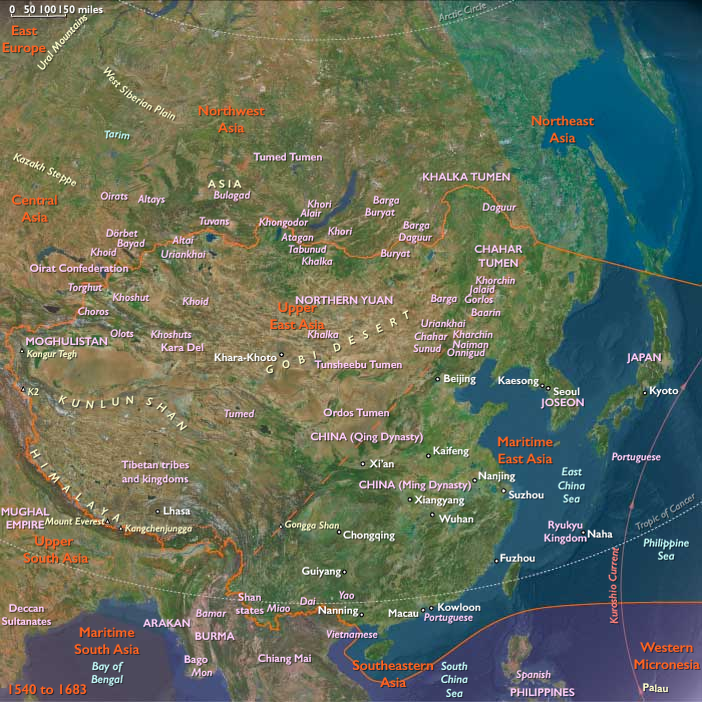
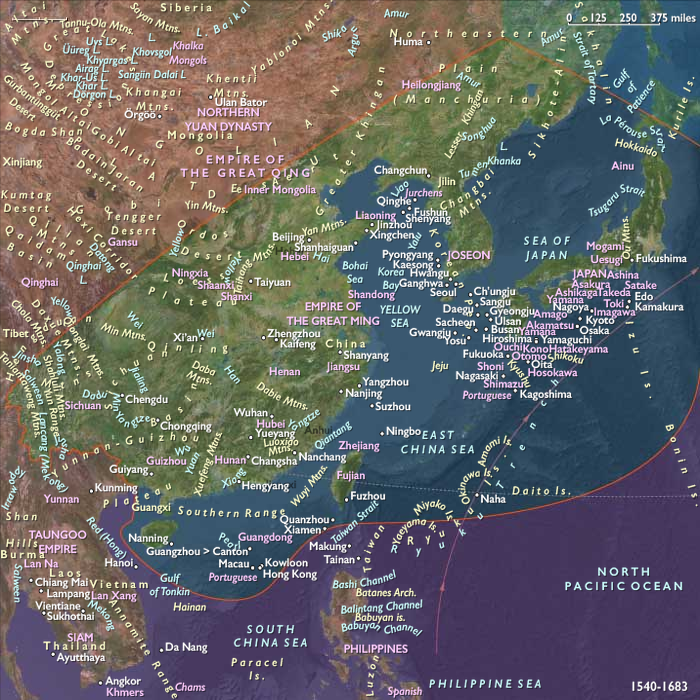
Han Chinese had suffered heavy discrimination during Nurhaci's reign, but Huang Taiji has begun to employ officials of Han ethnicity.
He realizes that they will still be the majority and the Manchus always a minority, which means to control the Han people, the two ethnic groups will need to live together or else the Qing Dynasty will repeat the fate of the Yuan Dynasty.
Beginning in the late 1620s, Huang Taiji had begun to incorporate allied and conquered Mongol tribes into the Banner system.
The first Han Chinese additions had been merely sprinkled into existing banners as replacements.
Eventually, the sheer numbers of Han Chinese soldiers had caused Manchu leaders to form them into the "Old Han Army", mainly for infantry support.
A separate Chinese artillery corps had been formed in 1631.
At the time of Nurhaci's death in 1626, there had been four Banner Lords with Huang Taji as the lowest rank.
Huang Taiji is rumored to have been involved in the suicide of Prince Dorgon's mother, Lady Abahai, in order to block the succession of his younger brother.
At the same time, by forcing Abahai to follow her husband into death, he assured that there would be no one to support the fifteen-year-old Dorgon or fourteen-year-old Dodo.
At the end of Nurhaci's reign, Huang Taji had secured control of the two White Banners (Striped and Plain), but after Abahai's death, he switched his banners for the two elite Yellow Banners (Plain and Bordered) controlled by Dodo and Dorgon, bequeathed to them by Nurhaci, who had controlled them personally.
Having thus gained control over the two banners of the greatest strength and influence, Huang Taji gradually has stripped his competitors of their powers.
Eventually, he will also receive the Plain Blue Banner, the third strongest, from a son of Nurhaci's brother Surhaci, who had controlled the two Blue Banners.
These three banners will officially become the Upper Three Banners during the early part of the Qing Dynasty.
Locations
People
Groups
Topics
Commodoties
Subjects
Regions
Subregions
Years: 1637 - 1637
Locations
People
Groups
Topics
Commodoties
Subjects
Regions
Subregions