
Henry Maudslay’s engineering works develop screw-cutting machines …
Years: 1810 - 1810
Henry Maudslay’s engineering works develop screw-cutting machines and lathes.
Following earlier work by Samuel Bentham, his first major commission had been to build a series of forty-two woodworking machines to produce wooden rigging blocks (each ship requires thousands) for the Navy under Sir Marc Isambard Brunel.
The machines are capable of making one hundred and thirty thousand ships’ blocks a year, needing only ten unskilled men to operate them compared with the one hundred and ten skilled workers needed before their installation.
This is the first well-known example of specialized machinery, used for machining in an assembly-line type factory.
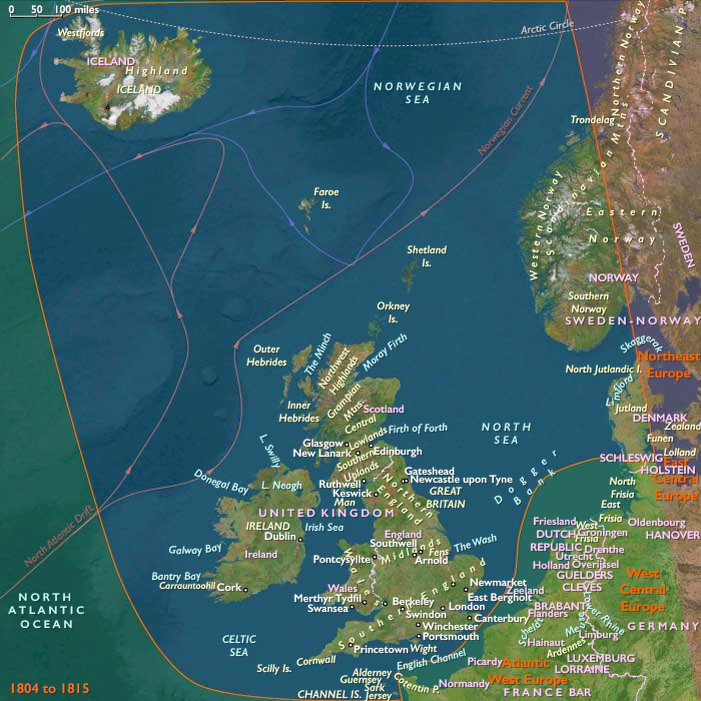
The machines are installed in the purpose-built Portsmouth Block Mills, which still survive, including some of the original machinery.
Maudslay had also developed the first industrially practical screw-cutting lathe in 1800, allowing standardization of screw thread sizes for the first time.
This allows the concept of interchangeability (an idea that is already taking hold) to be practically applied to nuts and bolts.
Before this, screw threads were usually made by chipping and filing (that is, with skilled freehand use of chisels and files).
Nuts were rare; metal screws, when made at all, were usually for use in wood.
Metal bolts passing through wood framing to a metal fastening on the other side were usually fastened in non-threaded ways (such as clinching or upsetting against a washer).
Maudslay standardizes the screw threads used in his workshop and produces sets of taps and dies that will make nuts and bolts consistently to those standards, so that any bolt of the appropriate size will fit any nut of the same size.
This is a major advance in workshop technology.
Although Maudslay was not the first person to invent a slide-rest (as many writers have claimed), and may not have been the first inventor to combine a lead screw, slide-rest, and set of change gears all on one lathe (Jesse Ramsden may have done that in 1775; evidence is scant), he is certainly the person who introduced to the rest of the world the winning three-part combination of lead screw, slide rest, and change gears, sparking a great advance in machine tools and in the engineering use of screw threads.
Maudslay invents the first bench micrometer capable of measuring to one ten-thousandth of an inch (0.0001 in ≈ 3 µm).
He calls it the "Lord Chancellor", as it is used to settle any questions regarding accuracy of workmanship.
By 1810, Maudslay is employing eighty workers and is running out of room at his workshop, so he moves to larger premises in Westminster Road, Lambeth.
Maudslay also recruits a promising young Admiralty draftsman, Joshua Field, who proves to be so talented that Maudslay takes him into partnership.
The company later becomes Maudslay, Sons & Field, when Maudslay’s sons become partners.
Locations
People
Groups
Topics
Subjects
Regions

Subregions
Years: 1810 - 1810
Locations
People
Groups
Topics
Subjects
Regions
Subregions