
Filters:
The religious systems known as Jainism and …
Years: 501BCE - 490BCE
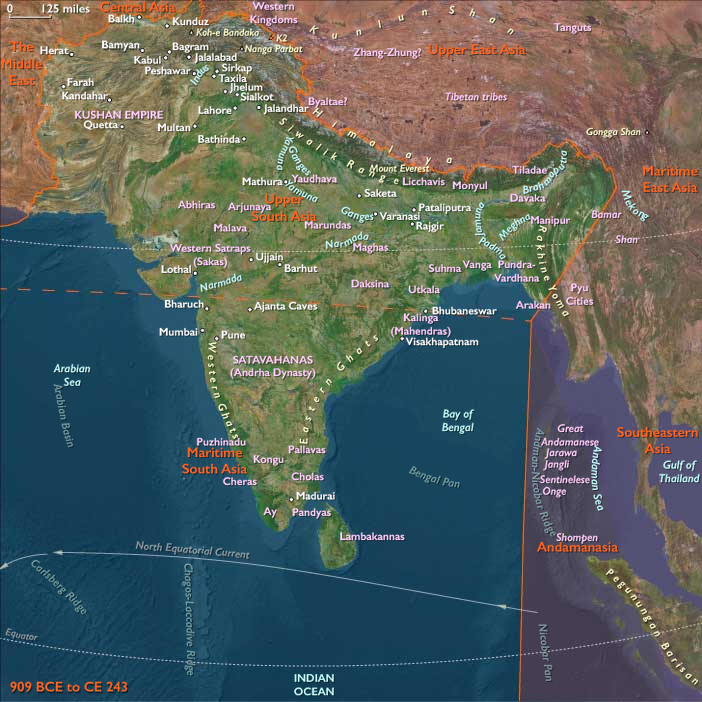
The religious systems known as Jainism and Buddhism are established in India's northeast, where Indo-Aryan influence is relatively weak, with the wide support of the merchant and landowning aristocracies of eastern India, around the same time as the coalescing of Hinduism.
The adoption by these classes of either of the two religions represents, in part, a revolt against Brahmanism, a term to describe the post-Vedism era, which is central for the development of the modern Brahmin community and their rituals.
Its liturgy is reflected in the mantra portion of the four Vedas.
The religious practices center on a clergy administering rites.
Groups
Topics
Subjects
Regions
Subregions

Related Events
Showing 10 events out of 47 total
Years: 501BCE - 490BCE
Groups
Topics
Subjects
Regions
Subregions