
Homo rudolfensis is a fossil human species …
Years: 1853325BCE - 1604494BCE
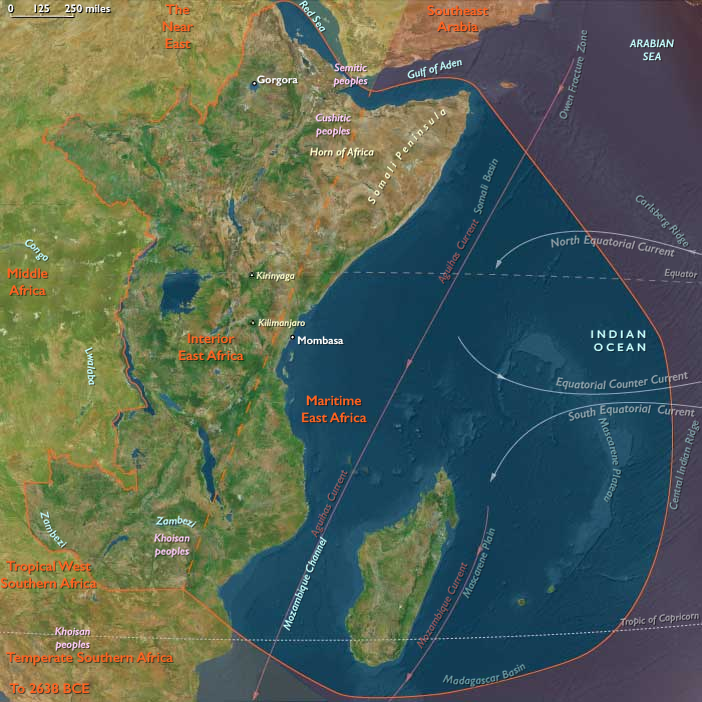
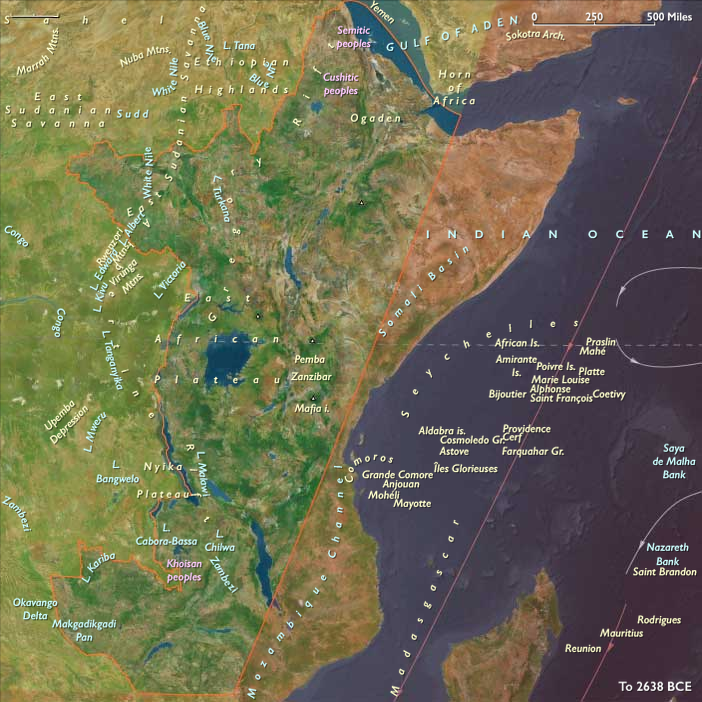
Homo rudolfensis is a fossil human species discovered by Bernard Ngeneo, a member of a team led by anthropologist Richard Leakey and zoologist Meave Leakey in 1972, at Koobi Fora on the east side of Lake Rudolf (now Lake Turkana) in Kenya.
Originally thought to be a member of the species Homo habilis, the fossil was the center of much debate concerning its species.
The skull was at first incorrectly dated at nearly three million years old.
The differences in this skull, when compared to others of the Homo habilis species, are too pronounced, leading to the presumption of a Homo rudolfensis species, contemporary with Homo habilis.
It is not certain if H. rudolfensis was ancestral to the later species in Homo, or if H. habilis was, or if some third species yet to be discovered was.
Homo erectus (from the Latin ērĭgĕre, "to put up, set upright") is an extinct species of hominid that originated in Africa—and spread as far as China and Java—from the end of the Pliocene epoch to the later Pleistocene, about 1.8 to 1.3 million years ago.
There is still disagreement on the subject of the classification, ancestry, and progeny of H. erectus, with two major alternative hypotheses: erectus may be another name for Homo ergaster, and therefore the direct ancestor of later hominids such as Homo heidelbergensis, Homo neanderthalensis, and Homo sapiens; or it may be an Asian species distinct from African ergaster
H. erectus originally migrated from Africa during the Early Pleistocene, possibly as a result of the operation of the Saharan pump, around two million years ago, and dispersed throughout much of the Old World.
Fossilized remains one million eight hundred thousand to one million years old have been found in Africa (e.g., Lake Turkana and Olduvai Gorge), Europe (Georgia, Spain), Indonesia (e.g., Sangiran and Trinil), Vietnam, and China (e.g., Shaanxi).
Locations
Groups
Topics
Subjects
Regions
Subregions
Years: 1853325BCE - 1604494BCE
Locations
Groups
Topics
Subjects
Regions
Subregions