
Interior East Africa (1828–1839 CE): Political Fragmentation …
Years: 1828 - 1839
Interior East Africa (1828–1839 CE): Political Fragmentation and Emerging Dynamics
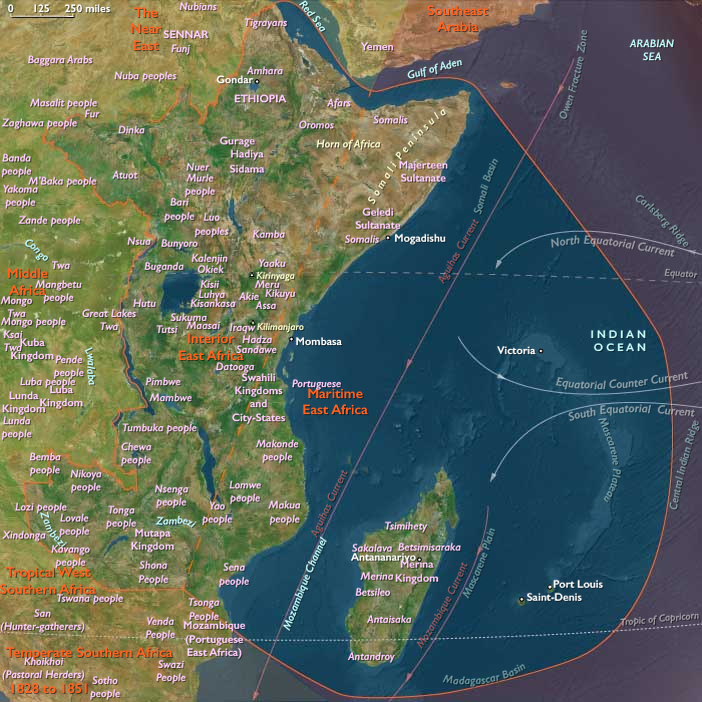
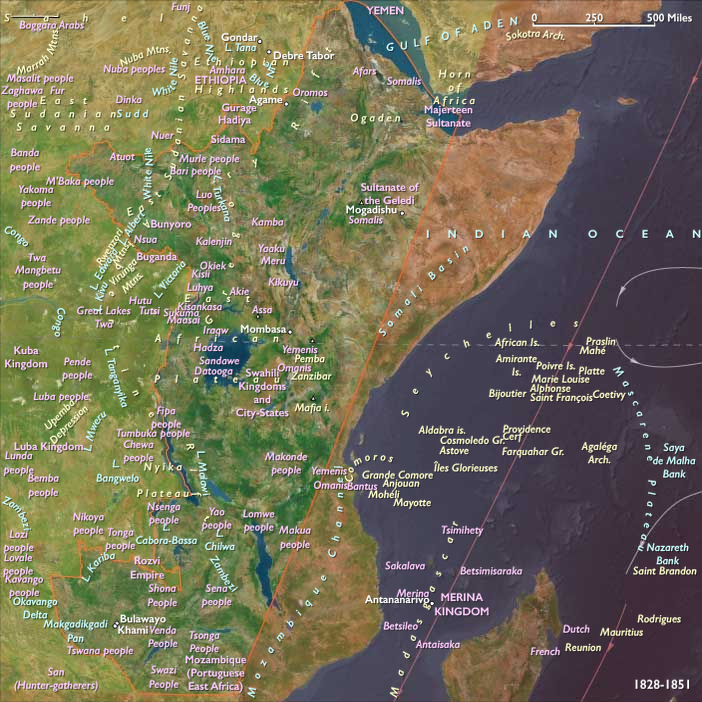
Between 1828 and 1839, Interior East Africa experienced continued political fragmentation and significant shifts in social dynamics. The Ethiopian Empire grappled with internal rivalries under the prolonged Zemene Mesafint ("Era of Princes"), while various ethnic groups and societies navigated changing economic opportunities and threats from external forces.
Ethiopia: Political Instability and Oromo Influence
By the early nineteenth century, the Ethiopian Empire centered around Gondar consisted largely of the northern and central highlands, with nominal imperial authority. Real power rested with rival nobles competing for military titles such as Ras (marshal or governor) and the more influential title of Ras-bitwoded (chief minister and supreme commander). These powerful regional nobles routinely enthroned and deposed ceremonial emperors, who held the empty title of nəgusä nägäst ("King of Kings").
The empire's major ethnic groups included the Semitic-speaking Amhara and Tigray, alongside Cushitic-speaking peoples such as the Oromo and Agaw, many of whom had adopted Christianity by this period. The largest single ethnic group, the Oromo, remained neither politically nor culturally unified. While many Oromo were assimilated into Amhara culture through marriage, adoption of Christianity, and use of the Amharic language, others retained their distinct linguistic identity despite significant changes in lifestyle. On the eastern fringes of the highlands, many Oromo communities had adopted Islam, especially around the historic sultanates of Ifat and Adal. Regardless of their cultural orientation, the Oromo increasingly influenced court politics in Gondar, acting both as allies and as powerful kingmakers in their own right.
To the south of the Ethiopian kingdom, Oromo cultivators had begun developing their own centralized kingdoms, motivated by examples from northern Amhara traditions and neighboring Sidama societies. Many Oromo chieftains strategically embraced Islam, using it as a tool for centralization and enhancing their position in regional trade networks linking interior markets with Red Sea ports.
Southern Sudan: Social Disruption and Slave Trade
In the territories corresponding to modern South Sudan, decentralized pastoralist societies of the Dinka, Nuer, Atuot, and Murle peoples faced intensified raids from northern slave traders. This period marked a peak in the devastating slave trade, profoundly destabilizing these societies. Communities such as the Bari people, near the White Nile, were severely impacted, their economies and social structures disrupted by external raids.
Great Lakes Region: Luo and Bantu Interaction
Around Lake Victoria, the Luo peoples consolidated their territories, interacting extensively through trade and occasional conflict with neighboring Bantu-speaking communities like the Kisii, Luhya, and Nsua. These interactions contributed to the emergence of distinct regional identities. In the Kenyan highlands, groups such as the Kikuyu, Kamba, Kalenjin, and Yaaku continued to maintain complex social structures and participate actively in regional commerce.
Pastoralist Expansion: Maasai Dominance
In the vast plains of Kenya and northern Tanzania, the pastoral Maasai expanded their territories significantly. Neighboring peoples, such as the Akie, Datooga, Iraqw, Hadza, and Sandawe, adapted through strategic alliances, shifting migratory patterns, or increased engagement in trade to accommodate Maasai dominance.
Buganda and Bunyoro: Strengthening Centralized States
The centralized kingdoms of Buganda and Bunyoro, located in the Great Lakes region, strengthened their administrative structures, solidifying their dominance over smaller groups such as the Mari and Great Lakes Twa. Agricultural productivity and political organization flourished during this era, laying foundations for further expansion.
Southern Interior: Maravi Fragmentation and Rise of the Yao
During this period, the once-powerful Maravi Empire, encompassing territories in present-day Malawi, Mozambique, and Zambia, fragmented into smaller, competing chiefdoms due to internal conflicts and external pressures from slave raids. The resulting political vacuum allowed the Yao people to significantly increase their regional influence. Skilled traders, the Yao became central intermediaries in ivory and slave trades linking interior markets with coastal Arab trading settlements, reshaping regional trade dynamics. Groups like the Chewa, Tumbuka, Nsenga, Tonga, Fipa, and Nkoya also adapted to the changing economic landscape, developing new roles in the expanding trade networks.
External Pressures: Egyptian and European Interests
By the second quarter of the nineteenth century, external factors increasingly affected the Ethiopian highlands and surrounding regions. Egypt, seeking control over strategic Red Sea ports, began incursions along the coast, posing threats to regional autonomy and trade stability. Concurrently, European powers, particularly Britain and France, showed heightened interest in the Horn of Africa. The ensuing competition for control of trade routes and influence, coupled with increasing availability of modern weaponry, introduced new dimensions to existing regional conflicts.
Groups
- Hadza people
- Dinka people
- Nuer people
- Tigray-Tigrinya people
- Yao people
- Agaw people
- Ethiopian Orthodox Tewahedo Church
- Oromo people
- Tumbuka people
- Meru people
- Great Lakes Twa
- Kikuyu
- Chewa people
- Kamba people
- Islam
- Mari people
- Gurage people
- Amhara people
- Luo people of Kenya and Tanzania
- Wameru
- Atuot
- Iraqw
- Murle people
- Maasai
- Akie
- Datooga
- Kalenjin
- Kisii people
- Tonga people of Zambia and Zimbabwe
- Ethiopia, Solomonid Dynasty of
- Buganda, Kingdom of
- Maravi
- Fipa people
- Tonga people (Malawi)
- Yaaku
- Bemba people
- Bari people
- Nkoya
- Bunyoro (Bunyoro-Kitara), kingdom of
- Egypt, (Ottoman) Viceroyalty of
- France, constitutional monarchy of
- Britain (United Kingdom of Great Britain and Northern Ireland)
Topics
Commodoties
Subjects
Regions
Subregions
Years: 1828 - 1839
Groups
- Hadza people
- Dinka people
- Nuer people
- Tigray-Tigrinya people
- Yao people
- Agaw people
- Ethiopian Orthodox Tewahedo Church
- Oromo people
- Tumbuka people
- Meru people
- Great Lakes Twa
- Kikuyu
- Chewa people
- Kamba people
- Islam
- Mari people
- Gurage people
- Amhara people
- Luo people of Kenya and Tanzania
- Wameru
- Atuot
- Iraqw
- Murle people
- Maasai
- Akie
- Datooga
- Kalenjin
- Kisii people
- Tonga people of Zambia and Zimbabwe
- Ethiopia, Solomonid Dynasty of
- Buganda, Kingdom of
- Maravi
- Fipa people
- Tonga people (Malawi)
- Yaaku
- Bemba people
- Bari people
- Nkoya
- Bunyoro (Bunyoro-Kitara), kingdom of
- Egypt, (Ottoman) Viceroyalty of
- France, constitutional monarchy of
- Britain (United Kingdom of Great Britain and Northern Ireland)
Topics
Commodoties
Subjects
Regions
Subregions