
Interior East Africa (1840–1851 CE): Shifts in …
Years: 1840 - 1851
Interior East Africa (1840–1851 CE): Shifts in Power and Expanding Influence
Between 1840 and 1851, Interior East Africa experienced major transformations in political and economic structures, driven by regional power shifts, intensified trade networks, and the initial stages of sustained European interest.
Ethiopia: Emergence of Kassa Hailu
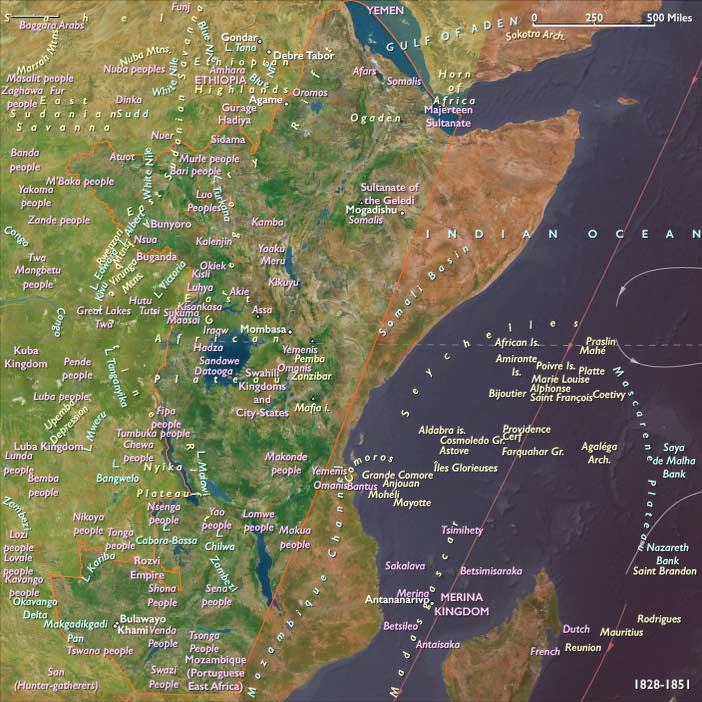
In the Ethiopian highlands, power dynamics underwent significant change with the rise of the ambitious noble Kassa Hailu, from the district of Qwara, near the Sudanese border. Initially serving under the influential Oromo-Christian warlord Ras Ali of Yejju, Kassa distinguished himself militarily, eventually becoming governor of a minor province and marrying Ali’s daughter, Tawabech. However, by 1847 Kassa openly rebelled against Ali, capturing and burning his capital, Debre Tabor. By 1854, Kassa had declared himself Negus (King), culminating in his coronation as Emperor Tewodros II in February 1855.
Kassa's ascendancy signaled a clear shift toward the restoration of central Ethiopian authority. He aimed to overcome decades of political fragmentation under the Zemene Mesafint, initiating military and administrative reforms designed to reestablish cohesive royal authority and revitalize the Ethiopian Orthodox Church.
Southern Sudan: Escalation of the Slave Trade
In the southern Sudanese region, communities such as the Dinka, Nuer, Murle, and Bari suffered immensely from the continuing and intensified slave trade, largely driven by northern traders connected to Middle Eastern markets. The sustained violence and disruption drew increased attention from European humanitarian groups, marking the initial stages of broader European intervention in the region.
Great Lakes Region: Consolidation and Conflict
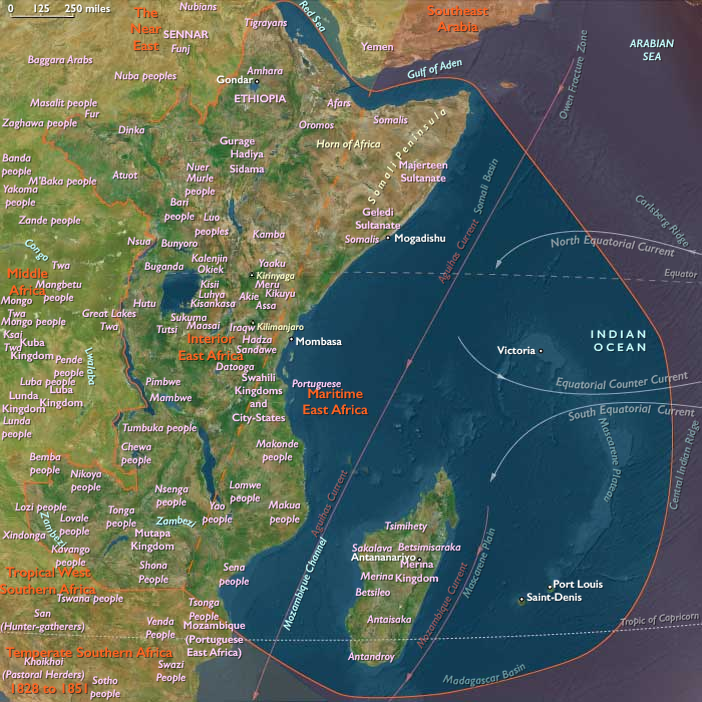
Around Lake Victoria, centralized kingdoms such as Buganda and Bunyoro further solidified their political structures, intensifying their dominance over neighboring ethnic groups like the Luo, Kisii, Luhya, and the smaller Mari and Twa peoples. The period was marked by complex alliances and conflicts, as these kingdoms competed to control agricultural and pastoral lands and crucial regional trade routes.
Maasai Dominance and Regional Dynamics
In the vast plains of present-day Kenya and northern Tanzania, the pastoralist Maasai continued their territorial expansion. Their increasing dominance compelled neighboring groups—including the Akie, Datooga, Iraqw, Hadza, and Sandawe—to adjust either by aligning with Maasai power, relocating to marginal lands, or strengthening trade relationships to ensure economic survival.
Southern Interior: Yao Ascendancy and Trade Networks
In the territories corresponding to present-day Malawi, Zambia, and southern Tanzania, the Yao people significantly expanded their influence as crucial intermediaries in the ivory and slave trades. Exploiting the vacuum left by the declining Maravi Empire, the Yao cemented their position by facilitating lucrative commerce between interior groups and Arab coastal traders. Their strategic trading position reshaped regional economies, deeply impacting neighboring societies like the Chewa, Tumbuka, Nsenga, Tonga, Fipa, and Nkoya, who adapted by expanding agriculture, participating more extensively in commerce, or resisting through fortified settlements.
The slave trade reached its peak during this era, with approximately twenty thousand enslaved people annually transported from interior regions—particularly via Nkhotakota—to coastal trading hubs like Kilwa, profoundly reshaping social structures and economies across the region.
Early European Explorations: Livingstone's Arrival
During this era, European exploration and missionary activity began significantly reshaping the region. The Scottish explorer David Livingstone emerged prominently, driven by humanitarian goals to combat the slave trade through promoting "Christianity, Commerce, and Civilization." Exploring extensively through present-day Zambia and the broader Zambezi region, Livingstone became the first European to document the spectacular waterfalls on the Zambezi River, which he named Victoria Falls after Britain’s Queen Victoria in 1855.
His descriptions and activities sparked broader European interest, laying the groundwork for later intensified exploration and colonization in subsequent decades.
External Influences: Egyptian and European Competition
Along the Ethiopian highlands and the Red Sea coast, external competition increased significantly. Egypt continued attempts to control strategic ports, threatening local autonomy and trade stability, while Britain and France intensified their commercial and political interests in the Horn of Africa, marking a period of rising geopolitical competition and strategic positioning in the region.
People
Groups
- Hadza people
- Dinka people
- Nuer people
- Tigray-Tigrinya people
- Yao people
- Agaw people
- Ethiopian Orthodox Tewahedo Church
- Oromo people
- Great Lakes Twa
- Chewa people
- Meru people
- Kamba people
- Kikuyu
- Tumbuka people
- Islam
- Mari people
- Gurage people
- Luo people of Kenya and Tanzania
- Amhara people
- Wameru
- Atuot
- Kisii people
- Tonga people of Zambia and Zimbabwe
- Murle people
- Maasai
- Akie
- Datooga
- Iraqw
- Kalenjin
- Ethiopia, Solomonid Dynasty of
- Buganda, Kingdom of
- Maravi
- Fipa people
- Anglicans (Episcopal Church of England)
- Nkoya
- Yaaku
- Bemba people
- Tonga people (Malawi)
- Bari people
- Bunyoro (Bunyoro-Kitara), kingdom of
- Egypt, (Ottoman) Viceroyalty of
- France, constitutional monarchy of
- Britain (United Kingdom of Great Britain and Northern Ireland)
Topics
Commodoties
Subjects
Regions
Subregions
Years: 1840 - 1851
People
Groups
- Hadza people
- Dinka people
- Nuer people
- Tigray-Tigrinya people
- Yao people
- Agaw people
- Ethiopian Orthodox Tewahedo Church
- Oromo people
- Great Lakes Twa
- Chewa people
- Meru people
- Kamba people
- Kikuyu
- Tumbuka people
- Islam
- Mari people
- Gurage people
- Luo people of Kenya and Tanzania
- Amhara people
- Wameru
- Atuot
- Kisii people
- Tonga people of Zambia and Zimbabwe
- Murle people
- Maasai
- Akie
- Datooga
- Iraqw
- Kalenjin
- Ethiopia, Solomonid Dynasty of
- Buganda, Kingdom of
- Maravi
- Fipa people
- Anglicans (Episcopal Church of England)
- Nkoya
- Yaaku
- Bemba people
- Tonga people (Malawi)
- Bari people
- Bunyoro (Bunyoro-Kitara), kingdom of
- Egypt, (Ottoman) Viceroyalty of
- France, constitutional monarchy of
- Britain (United Kingdom of Great Britain and Northern Ireland)
Topics
Commodoties
Subjects
Regions
Subregions