
Interior East Africa (1852–1863 CE): Consolidation, Conflict, …
Years: 1852 - 1863
Interior East Africa (1852–1863 CE): Consolidation, Conflict, and Rising European Presence
Between 1852 and 1863, Interior East Africa experienced significant political realignment, intensified trade, and the growing influence of European explorers and missionaries. Ethiopia began a notable re-centralization under Tewodros II, while southern and central regions continued to be shaped by the consequences of the slave trade, regional conflicts, and external interventions.
Ethiopia: Tewodros II and Reunification Efforts
In Ethiopia, Emperor Tewodros II (Kassa Hailu), crowned officially in 1855, aggressively pursued the reunification and centralization of the fragmented Ethiopian Empire following the prolonged Zemene Mesafint (Era of Princes). He sought to restore the monarchy's power and prestige through administrative reforms, military modernization, and revitalization of the Ethiopian Orthodox Church.
One of Tewodros’s earliest campaigns targeted the semi-independent kingdom of Shewa, which had maintained significant autonomy. He subdued Shewa and imprisoned its prince, the young Menelik, who later emerged as a powerful ruler in his own right. Despite early successes, Tewodros faced persistent resistance and rebellions across the empire, particularly in regions with powerful nobility and entrenched Oromo interests, limiting his broader ambitions.
Southern Sudan: Intensified Slave Raids and Humanitarian Attention
In the territories of present-day South Sudan, the brutal northern slave raids escalated dramatically, devastating communities such as the Dinka, Nuer, Murle, Bari, and neighboring Nilotic peoples. Tens of thousands were enslaved annually and transported northward toward markets in Egypt and the Middle East. The severity of these raids drew increasing international humanitarian attention, notably from British and European observers who publicized the region’s plight, laying groundwork for later interventions.
The Great Lakes Region: Inter-Kingdom Rivalries
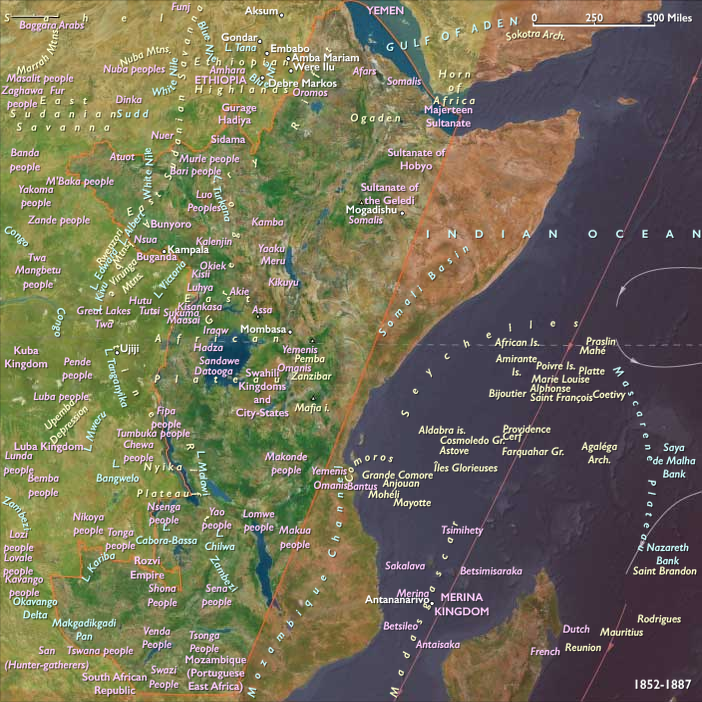
In the Great Lakes region, centralized states like Buganda and Bunyoro experienced intensified rivalries as they expanded and solidified their control. These powerful kingdoms asserted their influence over neighboring ethnic groups, including the Luo, Luhya, Kisii, Mari, and Twa, through conquest, alliances, and strategic intermarriages. Internal administrative reforms enhanced their military capabilities and governance structures, further reinforcing their dominance.
Maasai Territorial Expansion and Regional Shifts
The pastoral Maasai continued territorial expansion across the plains of present-day Kenya and northern Tanzania. Their influence compelled neighboring agricultural and pastoral groups—such as the Kikuyu, Kamba, Kalenjin, Akie, Datooga, Iraqw, Hadza, and Sandawe—to adapt by either aligning with Maasai authority, retreating into marginal territories, or intensifying defensive and economic strategies. This reshaped local trade routes and regional economies, increasingly integrated into broader commercial networks.
Southern Interior: Transformations through Trade and Conflict
In present-day Malawi, Zambia, and southern Tanzania, societies experienced rapid transformations due to intensified trade and the devastating impacts of the slave trade. The Yao people, now established as major trade intermediaries between the interior and Arab coastal traders, dominated regional commerce. Trading networks in ivory and enslaved people dramatically altered social and economic landscapes, impacting neighboring societies including the Chewa, Tumbuka, Nsenga, Tonga, Fipa, and Nkoya.
During this period, explorer and missionary activity significantly increased, bringing deeper external engagement. Notably, Scottish explorer David Livingstone continued his expeditions in the Zambezi region, highlighting the region's potential for commerce and missionary efforts, while vocally opposing the slave trade.
European Exploration and Influence: Livingstone and Humanitarianism
The increased presence of European explorers and missionaries, especially David Livingstone, had profound impacts across the southern and central interior. In 1855, Livingstone became the first European to document the spectacular waterfalls on the Zambezi River, naming them Victoria Falls after Queen Victoria. His vivid descriptions drew heightened European interest and focused international attention on both the humanitarian crises associated with slavery and the economic opportunities in the region.
Livingstone's advocacy for the "3 Cs"—Christianity, Commerce, and Civilization—significantly shaped European perceptions and future policy towards Interior East Africa. His calls for intervention influenced subsequent British and European humanitarian and colonial actions in the region.
External Pressures: Egypt and the Horn of Africa
Along Ethiopia’s eastern and northern frontiers, external powers, particularly Egypt, sought greater influence. Egypt’s repeated attempts to dominate strategic Red Sea ports heightened tensions and competition with Ethiopian and Somali coastal entities. Simultaneously, British and French ambitions in the Horn of Africa increased significantly, driven by both commercial interests and strategic considerations, further complicating regional politics.
People
Groups
- Hadza people
- Dinka people
- Nuer people
- Tigray-Tigrinya people
- Yao people
- Agaw people
- Ethiopian Orthodox Tewahedo Church
- Oromo people
- Great Lakes Twa
- Chewa people
- Meru people
- Kamba people
- Kikuyu
- Tumbuka people
- Islam
- Mari people
- Gurage people
- Luo people of Kenya and Tanzania
- Amhara people
- Wameru
- Atuot
- Kisii people
- Tonga people of Zambia and Zimbabwe
- Murle people
- Maasai
- Akie
- Datooga
- Iraqw
- Kalenjin
- Ethiopia, Solomonid Dynasty of
- Buganda, Kingdom of
- Maravi
- Fipa people
- Anglicans (Episcopal Church of England)
- Nkoya
- Yaaku
- Bemba people
- Tonga people (Malawi)
- Bari people
- Bunyoro (Bunyoro-Kitara), kingdom of
- Egypt, (Ottoman) Viceroyalty of
- France, constitutional monarchy of
- Britain (United Kingdom of Great Britain and Northern Ireland)
Topics
Commodoties
Subjects
Regions
Subregions
Related Events
Showing 5 events out of 5 total
Years: 1852 - 1863
People
Groups
- Hadza people
- Dinka people
- Nuer people
- Tigray-Tigrinya people
- Yao people
- Agaw people
- Ethiopian Orthodox Tewahedo Church
- Oromo people
- Great Lakes Twa
- Chewa people
- Meru people
- Kamba people
- Kikuyu
- Tumbuka people
- Islam
- Mari people
- Gurage people
- Luo people of Kenya and Tanzania
- Amhara people
- Wameru
- Atuot
- Kisii people
- Tonga people of Zambia and Zimbabwe
- Murle people
- Maasai
- Akie
- Datooga
- Iraqw
- Kalenjin
- Ethiopia, Solomonid Dynasty of
- Buganda, Kingdom of
- Maravi
- Fipa people
- Anglicans (Episcopal Church of England)
- Nkoya
- Yaaku
- Bemba people
- Tonga people (Malawi)
- Bari people
- Bunyoro (Bunyoro-Kitara), kingdom of
- Egypt, (Ottoman) Viceroyalty of
- France, constitutional monarchy of
- Britain (United Kingdom of Great Britain and Northern Ireland)
Topics
Commodoties
Subjects
Regions
Subregions