
Interior East Africa (1864–1875 CE): Regional Conflict, …
Years: 1864 - 1875
Interior East Africa (1864–1875 CE): Regional Conflict, Shifting Alliances, and Foreign Influence
Between 1864 and 1875, Interior East Africa experienced heightened regional conflicts, intensified foreign incursions, and significant internal transformations. Ethiopia faced profound political realignments following the death of Tewodros II, while other regions navigated internal consolidation, slave raids, and increased European and Egyptian influence.
Ethiopia: The Fall of Tewodros II and Rise of Yohannes IV
Emperor Tewodros II, despite his ambition to centralize and modernize Ethiopia, faced continual rebellion and internal opposition. His controversial efforts to reform the church, tax clergy lands, and maintain a professional army alienated powerful constituencies. Desperate for European support, Tewodros proposed ambitious plans—such as a joint expedition with Britain to conquer Jerusalem. However, diplomatic misunderstandings led him to take British envoys hostage. The resulting British military expedition in 1868 stormed his fortress at Magdala, leading Tewodros to commit suicide, dramatically ending his reign.
After Tewodros’s death, Ethiopia faced renewed fragmentation but avoided a return to full regionalism (Zemene Mesafint). Rival claimants competed for power: Tekla Giorgis assumed temporary control over the central highlands, while Menelik of Shewa, having escaped from imprisonment, declared himself negus, securing Shewan autonomy. Ultimately, Kasa Mercha, governor of Tigray, defeated Tekla Giorgis decisively due to superior weaponry. Kasa Mercha was crowned Yohannes IV in 1872 at the ancient capital of Aksum, marking the rise of a new centralized power.
Egyptian Expansion and Ethiopian Resistance
Egypt’s ambitious Khedive Isma'il Pasha sought a "Greater Egypt" that extended southward into Ethiopia. Egyptian forces launched incursions from multiple directions: from present-day Djibouti, Harar, and the coastal city of Mitsiwa (Massawa). However, their campaign was largely unsuccessful. Afar tribesmen annihilated one Egyptian column inland from Djibouti. Egyptian occupation forces briefly held Harar, though they failed to penetrate further into Ethiopia. Yohannes IV’s Tigrayan warriors decisively defeated Egyptian troops near Mitsiwa in 1875 and again in 1876, preserving Ethiopian independence.
Southern Sudan: Intensifying Slave Raids and Egyptian Administration
Southern Sudan endured intensified slave raids, largely sponsored by northern Sudanese and Egyptian authorities. Annual expeditions captured tens of thousands from non-Muslim ethnic groups, especially the Dinka, Nuer, Azande, and Bari, severely disrupting local societies. Under Khedive Isma'il, Egypt established the province of Equatoria in southern Sudan in the early 1870s, further institutionalizing slave raiding and economic exploitation.
The Azande, under their renowned leader King Gbudwe, fiercely resisted external encroachments by the Egyptians, French, Belgians, and Mahdists, maintaining their independence despite intense pressure.
Great Lakes Region: Bunyoro, Buganda, and the Ivory Trade
In present-day Uganda, the powerful kingdoms of Bunyoro and Buganda faced new challenges and opportunities due to external trade interests. Buganda emerged as a regional powerhouse under the kabaka (king), whose centralized administration, well-maintained infrastructure, and professional military and naval forces provided significant political stability. The 1875 visit of explorer Henry M. Stanley revealed the extent of Buganda’s military strength, observing over one hundred thousand troops and a sophisticated naval fleet.
By contrast, Bunyoro struggled against Egyptian incursions seeking ivory and slaves. Egypt dispatched British explorer Samuel Baker to assert Egyptian dominance over Bunyoro in the 1870s, but fierce resistance forced Baker into retreat. This conflict tarnished Bunyoro’s image internationally, resulting in later British biases against the kingdom.
Other ethnic groups in northern Uganda, such as the Acholi, adapted swiftly to increasing Egyptian demand for ivory, acquiring firearms and using them to reinforce local independence, though this caused new internal inequalities.
Kenya and Tanzania: Maasai Expansion and Shifting Societal Dynamics
The Maasai pastoralists continued to expand across the plains of Kenya and Tanzania, influencing local power dynamics profoundly. Neighboring agricultural and pastoral communities—the Kikuyu, Kamba, Kalenjin, Akie, Datooga, Iraqw, Hadza, and Sandawe—adapted variously through cooperation, conflict, or strategic withdrawal, reshaping regional trade and territorial boundaries.
Southern Interior and Lake Malawi: Explorations and Missions
The mid-nineteenth century explorations by British missionary and explorer David Livingstone brought significant international attention to Lake Malawi (Lake Nyasa) and the Shire Highlands, identified by Livingstone as suitable for European settlement. As a direct result, numerous Anglican and Presbyterian missions were established in this area through the 1860s and 1870s, marking the beginnings of sustained European settlement.
The regional slave trade intensified during this period, notably by the Arab traders at Nkhotakota, significantly affecting local ethnic groups such as the Yao, Chewa, Tumbuka, and Nsenga. These developments, coupled with increasing missionary presence, significantly reshaped local societies.
External Influences and Growing European Interest
The presence of explorers, missionaries, and traders dramatically increased foreign influence in Interior East Africa. Trade routes brought American-made mericani cloth from Zanzibar into Buganda and Bunyoro, exchanging these textiles and firearms for ivory, profoundly transforming local economies and political power structures.
Explorer narratives, particularly Stanley’s reports from Buganda and Baker’s contentious writings on Bunyoro, shaped European attitudes toward East African kingdoms, laying groundwork for future colonial attitudes and interventions.
People
- David Livingstone
- Henry Morton Stanley
- Isma'il Pasha
- Menelik II
- Samuel Baker
- Tewodros II
- Yohannes IV
Groups
- Hadza people
- Nuer people
- Dinka people
- Tigray-Tigrinya people
- Yao people
- Agaw people
- Ethiopian Orthodox Tewahedo Church
- Oromo people
- Tumbuka people
- Chewa people
- Meru people
- Kamba people
- Kikuyu
- Great Lakes Twa
- Islam
- Mari people
- Gurage people
- Luo people of Kenya and Tanzania
- Amhara people
- Wameru
- Atuot
- Iraqw
- Tonga people of Zambia and Zimbabwe
- Zande people
- Kisii people
- Datooga
- Kalenjin
- Murle people
- Maasai
- Akie
- Ethiopia, Solomonid Dynasty of
- Buganda, Kingdom of
- Maravi
- Fipa people
- Anglicans (Episcopal Church of England)
- Nkoya
- Yaaku
- Bemba people
- Tonga people (Malawi)
- Bari people
- Bunyoro (Bunyoro-Kitara), kingdom of
- Presbyterians
- Acholi people
- Egypt, (Ottoman) Viceroyalty of
- France, constitutional monarchy of
- Belgium, Kingdom of
- Britain (United Kingdom of Great Britain and Northern Ireland)
Topics
Commodoties
Subjects
Regions
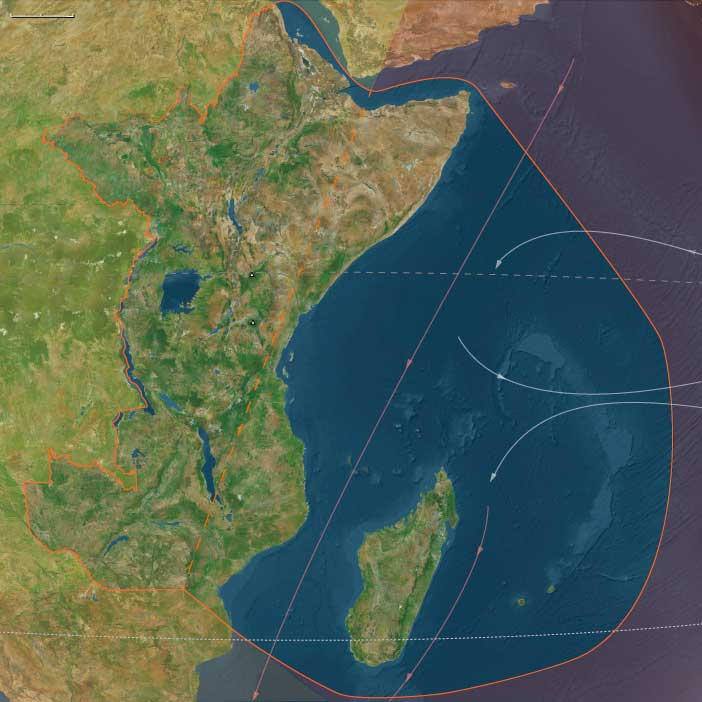
Subregions
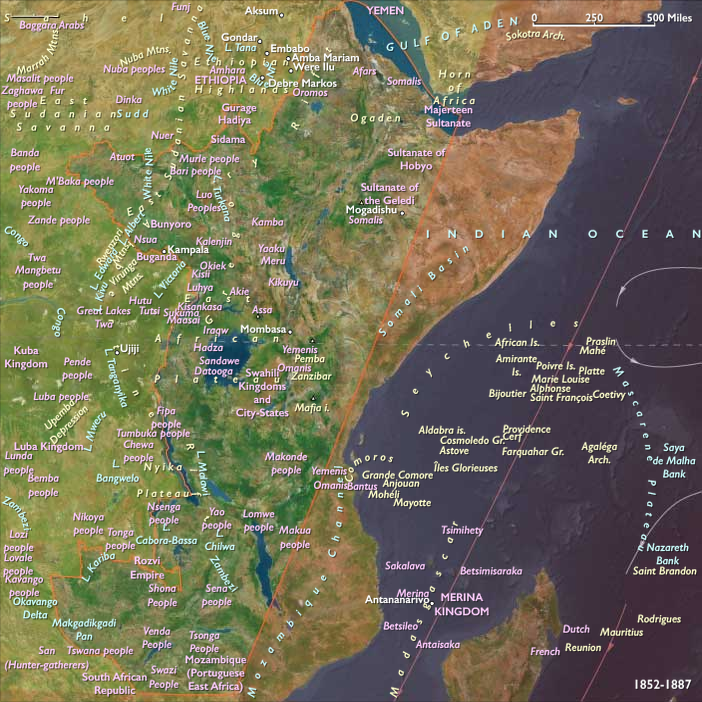
Years: 1864 - 1875
People
- David Livingstone
- Henry Morton Stanley
- Isma'il Pasha
- Menelik II
- Samuel Baker
- Tewodros II
- Yohannes IV
Groups
- Hadza people
- Nuer people
- Dinka people
- Tigray-Tigrinya people
- Yao people
- Agaw people
- Ethiopian Orthodox Tewahedo Church
- Oromo people
- Tumbuka people
- Chewa people
- Meru people
- Kamba people
- Kikuyu
- Great Lakes Twa
- Islam
- Mari people
- Gurage people
- Luo people of Kenya and Tanzania
- Amhara people
- Wameru
- Atuot
- Iraqw
- Tonga people of Zambia and Zimbabwe
- Zande people
- Kisii people
- Datooga
- Kalenjin
- Murle people
- Maasai
- Akie
- Ethiopia, Solomonid Dynasty of
- Buganda, Kingdom of
- Maravi
- Fipa people
- Anglicans (Episcopal Church of England)
- Nkoya
- Yaaku
- Bemba people
- Tonga people (Malawi)
- Bari people
- Bunyoro (Bunyoro-Kitara), kingdom of
- Presbyterians
- Acholi people
- Egypt, (Ottoman) Viceroyalty of
- France, constitutional monarchy of
- Belgium, Kingdom of
- Britain (United Kingdom of Great Britain and Northern Ireland)
Topics
Commodoties
Subjects
Regions
Subregions