
Iran’s native Tahirid dynasty, which had come …
Years: 831 - 831
Iran’s native Tahirid dynasty, which had come to power in 821, rules increasingly independent of the Abbasid caliphate’s central government.
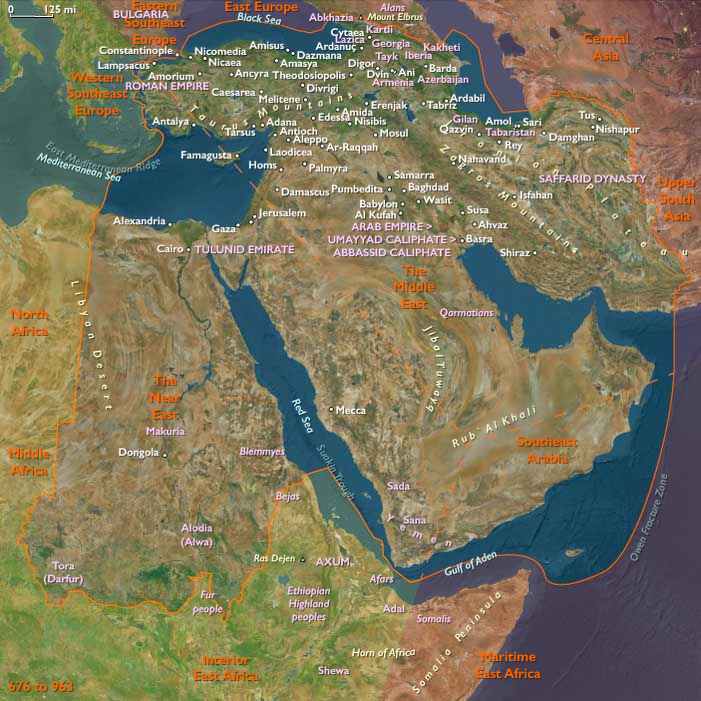
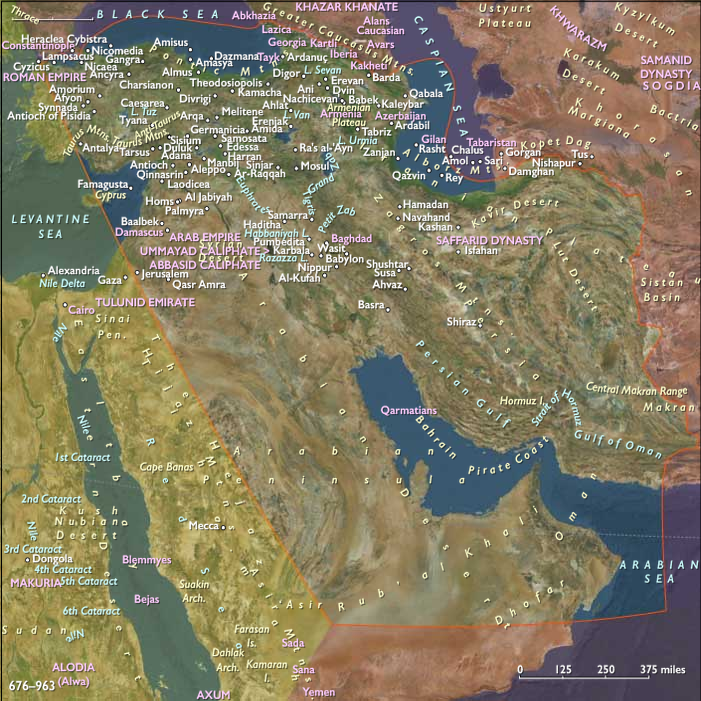
The lands in the east of Persia that had been awarded by Caliph al-Ma'mun to the dynast Tahir ibn Husayn, who had been succeeded on his death in 822 by his son Taljha, will subsequently be extended by his successors as far as the borders of India until their overthrow by the Saffarid dynasty, who in 873 will annex Khurasan to their own empire in eastern Persia.
Talha’s governorship had lasted until 828.
Tahir's other son, Abdullah, had been instated as the wali of Egypt and the Arabian Peninsula, and when Talha died in 828, he had been given the governorship of Khurasan.
Although Abdallah had been made the governor of Khorasan following his brother's death in 828, he had only arrived in Nishapur in 830; in the meantime he had been busy fighting more revolts.
He had been assigned for a brief time in 829 to stop the Khurramite Babak, but then was given new orders by the caliph to move to Khurasan and stop the Kharijites.
Abdallah's brother 'Ali had acted as deputy governor of Khurasan until he was ready to take up residence in Nishapur.
Abdullah is considered one of the greatest of the Tahirid rulers, as his reign witnesses a flourishing of agriculture in his native land of Khurasan, popularity among the populations of the eastern lands of the Abbasid caliphate, and the extension of Khurasanian influence due to Abdullah’s experience with the western parts of the caliphate.
Locations
People
Groups
- Iranian peoples
- Persian people
- Khorasan, Greater
- Egypt in the Middle Ages
- Khurramites
- Abbasid Caliphate (Baghdad)
- Tahirid dynasty
Topics
Commodoties
Subjects
Regions
Subregions
Years: 831 - 831
Locations
People
Groups
- Iranian peoples
- Persian people
- Khorasan, Greater
- Egypt in the Middle Ages
- Khurramites
- Abbasid Caliphate (Baghdad)
- Tahirid dynasty
Topics
Commodoties
Subjects
Regions
Subregions