
Isthmian America (1876–1887 CE): Canal Ambitions, French …
Years: 1876 - 1887
Isthmian America (1876–1887 CE): Canal Ambitions, French Venture, and Rising Tensions with Colombia
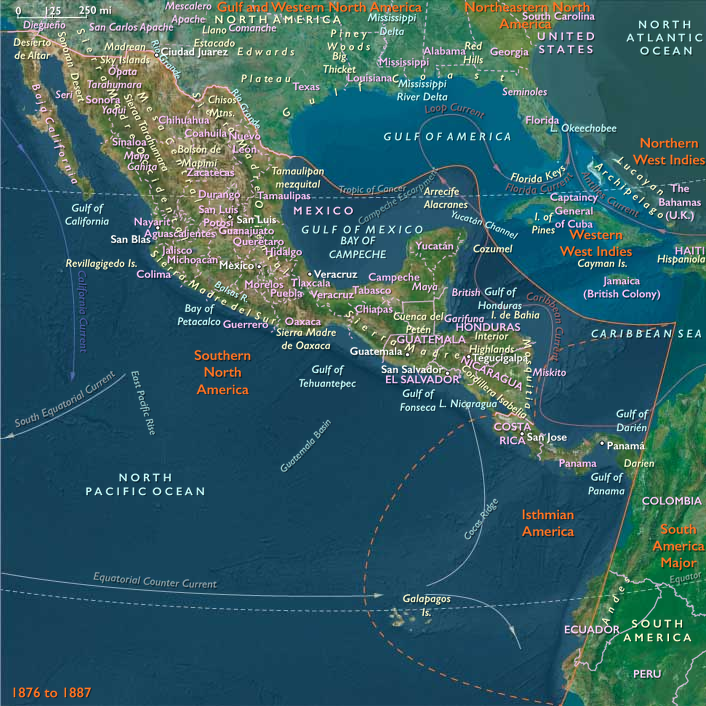
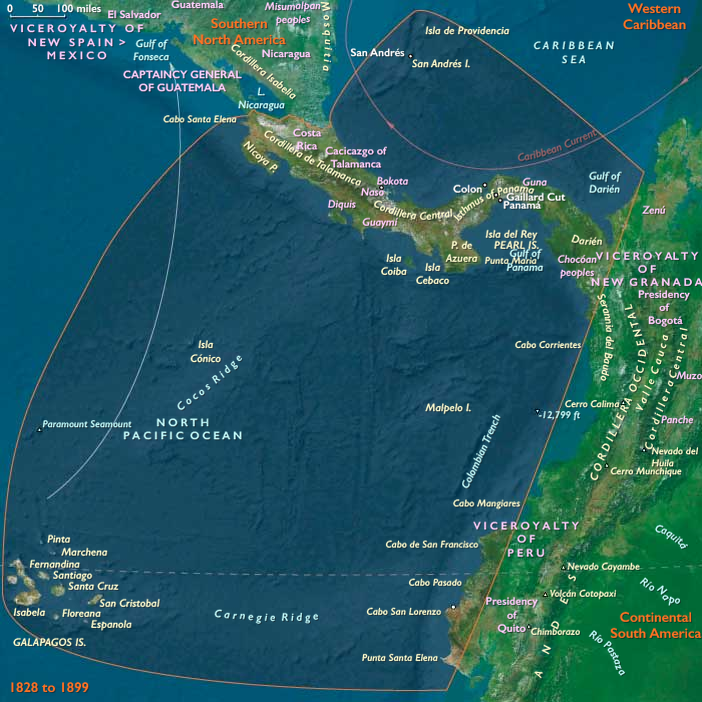
Between 1876 and 1887, Isthmian America—including Costa Rica, Panama, northwestern Colombia, western Ecuador, the Raizal Islands, and the Galápagos Islands—enters an era dominated by renewed international canal-building ambitions, the onset of the ambitious French Panama Canal venture, escalating political instability, and growing tensions between Panama and Colombia.
Longstanding Canal Interests and Diplomatic Background
Throughout the nineteenth century, governments and private investors in the United States, Britain, and France display recurring interest in constructing an interoceanic canal across Central America, focusing primarily on potential routes through Nicaragua and Panama. Early explorations in the 1830s under U.S. President Andrew Jackson, such as the abortive mission led by Charles A. Biddle, had set precedents, yet actual canal construction remains elusive.
Recognizing strategic interests, the United States and Colombia had signed the pivotal Bidlack-Mallarino Treaty in 1846, ratified in 1848. This agreement grants the U.S. and its citizens rights of free transit over any future canal or railroad built across the Panamanian isthmus, while simultaneously committing the U.S. to guaranteeing the neutrality of the region and Colombian sovereignty, ensuring open transit for at least twenty years and thereafter until revision by mutual consent.
Meanwhile, ongoing Anglo-American tensions regarding canal routes in Central America lead to the Clayton-Bulwer Treaty (1850), which mandates joint Anglo-American participation in any Nicaraguan canal and extends this neutrality principle broadly across potential canal routes, including Panama.
The French Panama Canal Venture
In the late 1870s, renewed Colombian efforts to attract canal investments successfully draw French attention to Panama. After detailed surveys and diplomatic negotiations, Colombia grants an exclusive concession in 1879 to a newly formed French enterprise aiming to build a sea-level canal along the existing Panama Railroad route. The company, led by the renowned French diplomat and entrepreneur Ferdinand de Lesseps, celebrated internationally for his role in the construction of the Suez Canal, commits to completing the canal within twelve years, subject to a potential six-year extension granted solely at Colombia’s discretion.
De Lesseps’s concession agreement also secures a transferable but strictly non-governmental lease valid for ninety years. Additionally, the French company acquires controlling interest in the Panama Railroad Company, though Americans continue managing its daily operations.
Commencement, Engineering Challenges, and Financial Troubles
With considerable fanfare, Ferdinand de Lesseps ceremonially inaugurates canal construction on January 1, 1880. However, substantial excavation and earth-moving operations do not begin in earnest until the following year. Early optimism soon fades as engineers repeatedly warn that a sea-level canal across Panama’s challenging terrain proves impractical. De Lesseps—an influential promoter but not an engineer—remains unconvinced until after six years of increasingly costly and difficult efforts.
By the late 1880s, with mounting financial pressures and clear engineering hurdles, plans shift toward constructing a lock canal. Yet serious construction on the lock canal does not begin until late 1888, by which time the company is already deeply entrenched in financial crisis. At its operational peak during this era, the French canal company employs approximately ten thousand workers on the isthmus, illustrating the immense human scale and logistical challenges of the ambitious project.
Political Instability: The Panama Rebellion (1885)
In the midst of growing infrastructural developments, Panama’s political stability deteriorates sharply. In early 1885, a rebellion initiated by a radical Liberal general in Panama City escalates rapidly into a chaotic three-way conflict, severely damaging local governance and infrastructure. The strategic port city of Colón suffers catastrophic destruction as violence intensifies.
Responding to Colombian government requests, United States naval forces land to restore order and protect transit routes, yet arrive too late to prevent widespread destruction. As a consequence, extensive property losses occur, resulting in millions of dollars in damage claims from U.S., British, and French citizens and companies. Colombia successfully deflects responsibility by asserting an inability to control these events.
Colombian Constitutional Changes and Rising Panamanian Nationalism (1886)
Political turmoil and economic uncertainties lead Colombia to enact constitutional reforms in 1886, reorganizing the nation as the unitary Republic of Colombia. Under this centralized government, departmental autonomy significantly decreases, and Panama is singled out explicitly as being subject to direct control from Bogotá. This intensification of Colombian administrative control fuels nationalist sentiment among Panamanians.
Reflecting growing separatist aspirations, the United States consul general reports by the end of this era that approximately three-quarters of Panamanians support independence from Colombia and would actively revolt if assured of obtaining arms and immunity from U.S. intervention. This underlying tension foreshadows future struggles and Panama’s eventual path toward independence.
Regional Impact and Legacy
The broader Isthmian region continues to experience shifting economic dynamics during this era. Costa Rica maintains relative stability through agricultural exports and modest growth. Northwestern Colombia and coastal western Ecuador adjust economically to fluctuations in transit commerce, diversifying agricultural and commercial interests. Meanwhile, the Raizal Islands sustain their maritime significance within Caribbean networks, and the Galápagos Islands remain primarily isolated, though still occasionally visited by scientific and commercial vessels.
Thus, the period 1876–1887 encapsulates an intense phase of international ambition, infrastructure development, political unrest, and deepening nationalist sentiments within Panama, setting critical precedents that profoundly shape the region’s subsequent history.
People
Groups
- United States of America (US, USA) (Washington DC)
- Britain (United Kingdom of Great Britain and Ireland)
- Ecuador, Republic of
- New Granada, Republic of the
- Nicaragua, Republic of
- Costa Rica, Republic of
- Colombia, United States of
- France (French republic); the Third Republic
- Colombia, Republic of
Topics
Commodoties
Subjects
Regions
Subregions
Years: 1876 - 1887
People
Groups
- United States of America (US, USA) (Washington DC)
- Britain (United Kingdom of Great Britain and Ireland)
- Ecuador, Republic of
- New Granada, Republic of the
- Nicaragua, Republic of
- Costa Rica, Republic of
- Colombia, United States of
- France (French republic); the Third Republic
- Colombia, Republic of
Topics
Commodoties
Subjects
Regions
Subregions