
It had been too late and too …
Years: 1631 - 1631
July
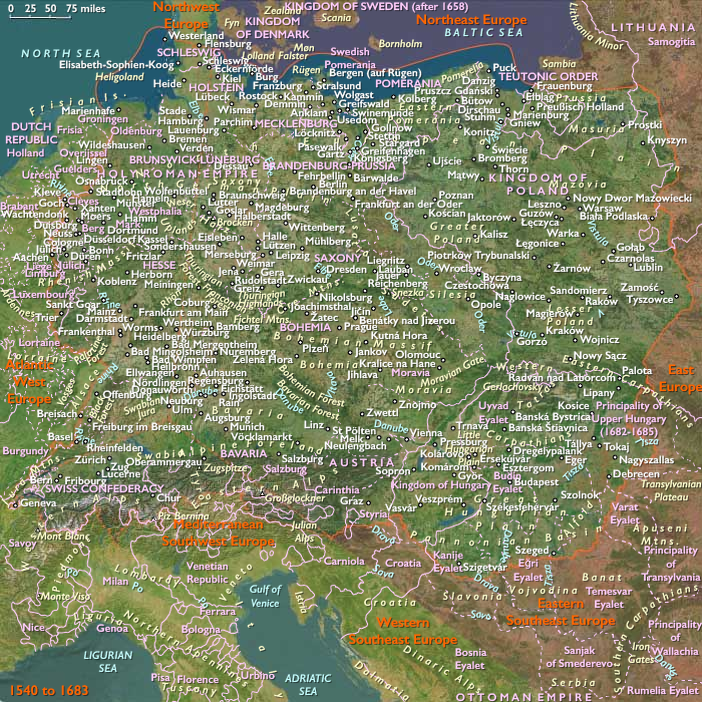
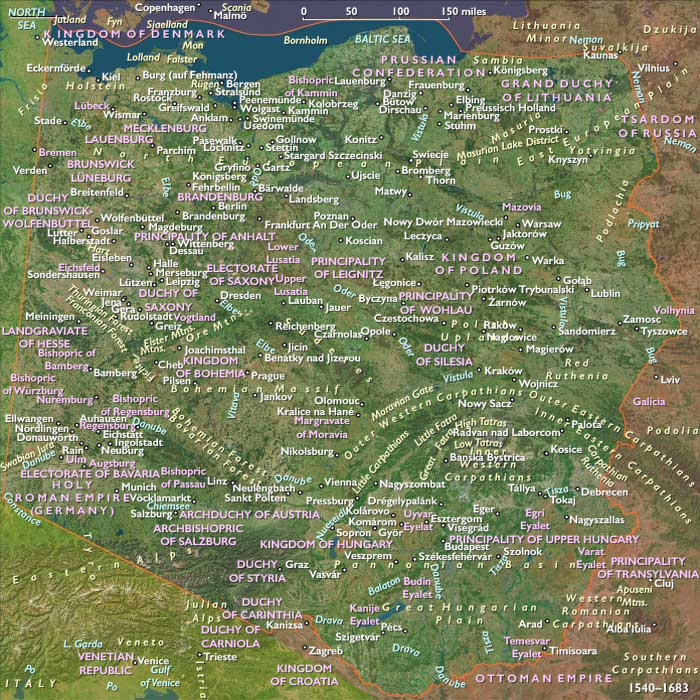
It had been too late and too far for the Swedish army to save one of Gustav’s “occupied” allies, Magdeburg, from the horrific sack by imperial troops, in which a major portion of the population had been murdered and the city burned.
The sack of Magdeburg, though, can be turned to good use: the broadsides and pamphlets distributed throughout Europe assure that prince and pauper alike understand how the Emperor, or at least his troops, treat the Protestant subjects.
Over the past few months, Gustav has consolidated his bridgehead and expanded across northern Germany, attracting support from German princes but mostly building his army from mercenary forces along the way.
By the time he reaches the Saxon border, his force has expanded over twenty-three thousand.
In order for Swedes to attack the imperial troops in the south, they need to pass through Saxony.
In order for Tilly’s forces, now freed from northern Italy, to attack Gustav's army, they too need to pass through Saxony.
Electoral Saxony has not been touched by the war, at least not directly, and it hangs like a ripe plum between the two combatants, full of hogs, cattle, horses, grain, fruit, all the stuff that the hungry Imperial and League troops craved.
In midsummer, General Tilly asks John George for permission to pass through the territory; the elector declines permission, noting that Saxon sweetmeats have not yet been touched.
Locations
People
Groups
- Magdeburg, Archbishopric of
- Saxony, Electorate of
- Brandenburg, (Hohenzollern) Margravate of
- Sweden, (second) Kingdom of
- Catholic League, the (German)
- Habsburg Monarchy, or Empire
Topics
- Protestant Reformation
- Counter-Reformation (also Catholic Reformation or Catholic Revival)
- Thirty Years' War
- Swedish Intervention in the Thirty Years' War
Commodoties
Subjects
Regions
Subregions
Years: 1631 - 1631
July
Locations
People
Groups
- Magdeburg, Archbishopric of
- Saxony, Electorate of
- Brandenburg, (Hohenzollern) Margravate of
- Sweden, (second) Kingdom of
- Catholic League, the (German)
- Habsburg Monarchy, or Empire
Topics
- Protestant Reformation
- Counter-Reformation (also Catholic Reformation or Catholic Revival)
- Thirty Years' War
- Swedish Intervention in the Thirty Years' War
Commodoties
Subjects
Regions
Subregions