
Economic development during the Tokugawa period includes …
Years: 1636 - 1647
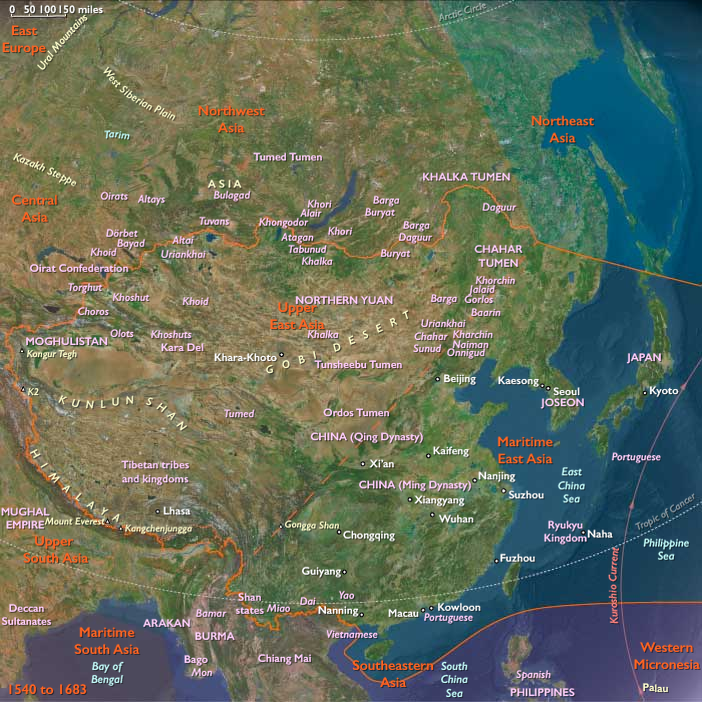
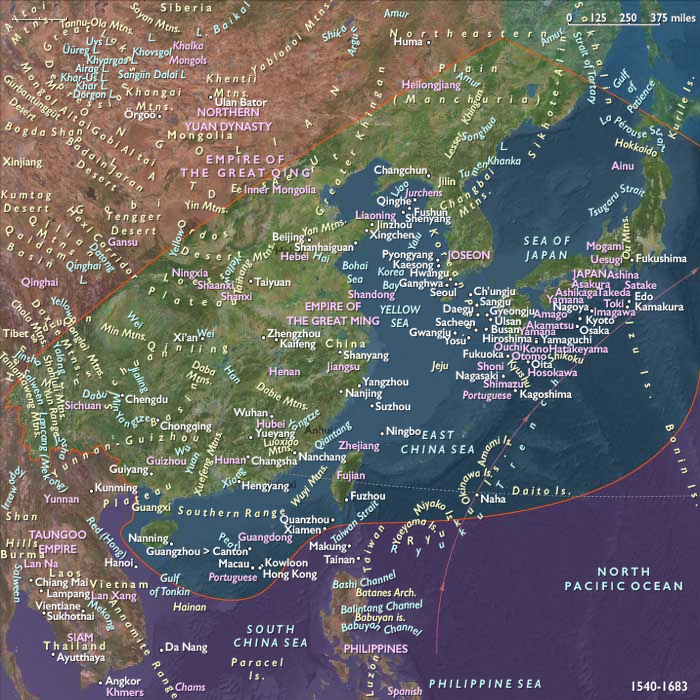
Economic development during the Tokugawa period includes urbanization, more shipping of commodities, a significant expansion of domestic and, initially, foreign commerce, and a diffusion of trade and handicraft industries.
Edo has a population of more than one million and Osaka and Kyoto each have more than four hundred thousand inhabitants by the mid-eighteenth century.
Many other castle towns grow as well.
Osaka and Kyoto become busy trading and handicraft production centers while Edo is the center for the supply of food and essential urban consumer goods.
The construction trades flourish along with banking facilities and merchant associations.
Increasingly, han authorities oversee the rising agricultural production and the spread of rural handicrafts.
Locations
People
Groups
Subjects
Regions
Subregions
Related Events
Filter results
Showing 5 events out of 5 total
Northeastern North America
(1636 to 1647 CE): Indigenous Conflict, Colonial Expansion, and Epidemic Catastrophe
Between 1636 and 1647 CE, Northeastern North America witnessed dramatic changes through devastating indigenous-European conflicts, accelerated European colonial expansion, severe population declines due to disease, and intensified rivalry over fur-trade dominance. This period was dominated by the destructive Pequot War (1636–1638), catastrophic epidemics among the Huron (Wendat), fierce attacks by the Haudenosaunee Confederacy, and strategic realignments shaping indigenous-European alliances and power dynamics.
European Colonial Expansion and Consolidation
English Colonization Intensifies
English colonies expanded rapidly with new settlements established in Connecticut (1636) and Rhode Island (1636), greatly increasing territorial pressure on indigenous nations. Conflicts such as the Pequot War accelerated colonial dominance in southern New England, reshaping indigenous alliances and power structures significantly.
French Influence and Huron Alliances in New France
French colonization solidified around Quebec, largely due to alliances with the influential Huron Confederacy, which controlled critical fur-trading routes along the St. Lawrence River. In 1609, Atironta, a principal headman of the Arendarhonon tribe (a subgroup of the Huron), had forged the initial alliance with the French at Quebec, reinforcing cooperative ties that flourished through this period.
Detailed observations of the Huron by French Jesuits began to appear prominently in the Jesuit Relations, particularly in 1639, when Jesuit François du Peron vividly described the Huron as robust, tall individuals who wore beaver-skin mantles, porcelain bead necklaces, greased hair, and faces painted black and red.
Dutch Patroonship Expansion in New Netherland
Dutch colonization expanded through the patroon system in New Netherland, furthering agricultural settlement and extending trade networks along the Hudson Valley and surrounding regions.
Devastating Indigenous-European Conflicts
The Pequot War (1636–1638)
The destructive Pequot War dramatically reduced indigenous power in southern New England. English settlers and allied indigenous tribes, notably the Narragansett and Mohegan, decisively defeated the Pequot, profoundly reshaping regional power structures.
Haudenosaunee Attacks and Regional Instability
In the early 1640s, the Haudenosaunee Confederacy (Iroquois League)—particularly threatened by declining populations and disrupted fur-trade dominance—initiated fierce attacks against frontier Huron villages along the St. Lawrence River. The primary objective was disrupting the lucrative Huron-French fur-trade partnership, but this aggression rapidly escalated into direct conflict with the French colonists.
The Haudenosaunee, who considered themselves the region’s most advanced society, intensified these aggressive campaigns, seeking territorial expansion and dominance over the eastern Great Lakes region.
Epidemic Catastrophe and Demographic Collapse
Devastation of the Huron Population
From 1634 to 1640, Eurasian diseases—particularly smallpox and measles—severely devastated the Huron Confederacy, whose population at the onset of European contact ranged between 20,000 and 40,000 individuals. Epidemiological studies link this intensified wave of infection to increased immigration of European children from densely populated cities in France, Britain, and the Netherlands, where smallpox was endemic. These diseases likely spread rapidly to the Huron through routine contact with traders.
The epidemics killed between half and two-thirds of the Huron population, reducing their numbers dramatically to approximately 12,000 survivors. The catastrophic mortality disrupted family structures, depopulated villages, abandoned agricultural lands, and severely weakened their societal cohesion and traditional culture.
Broader Epidemic Effects
Similar epidemic devastation occurred widely among other indigenous groups, compounding demographic and societal disruption throughout Northeastern North America. Indigenous lands depopulated by epidemics enabled rapid European territorial expansion, exacerbating indigenous vulnerability.
Indigenous Strategic Realignments and Adaptations
Post-Pequot War Indigenous Alliances
The Narragansett and Mohegan tribes, by aligning with English settlers against the Pequot, reshaped regional indigenous power structures. This strategic alliance permanently altered the balance of power in southern New England.
Huron-French Alliance under Duress
Though the Huron retained their alliance with the French despite catastrophic epidemics, their capacity to control the fur trade diminished. Nevertheless, the French continued to support the surviving Huron through trade and limited military assistance against Haudenosaunee aggression.
Shifts in the Fur Trade and Environmental Consequences
Decline of the Hudson Valley Beaver Population
By 1640, firearms, increasingly traded to indigenous groups by Europeans, had dramatically accelerated the decline of the beaver population, nearly eliminating it from the Hudson Valley region. This environmental impact forced the fur trade’s center northward, focusing increasingly on colder regions along the St. Lawrence River, controlled by the Huron and their French trading partners.
Interior Indigenous Communities: Stability, Migration, and Adaptation
Great Lakes Algonquian Stability
The Potawatomi, Ojibway, Cree, Cheyenne, and Arapaho continued maintaining traditional subsistence patterns while cautiously engaging in expanding European trade networks. Similarly, tribes including the Kickapoo, Menominee, Sauk, and Fox adapted strategically to shifting regional alliances and economic opportunities.
Miami and Illinois Economic Positioning
The Miami and Illinois leveraged agriculturally productive territories along the Ohio Valley to strategically position themselves within European fur trade networks, increasing their political and economic significance.
Siouan-speaking Peoples: Stability and Westward Migration
Separation of the Assiniboine from the Sioux
The Assiniboine nation, sharing ancestry with the Sioux, separated from the larger Sioux nation no later than 1640, as evidenced by the Jesuit Paul Le Jeune’s reference to them alongside the "Naduessi" (Sioux) in the Jesuit Relations of that year. Linguistic analysis confirms that the Assiniboine and closely related Stoney of Alberta represent a distinct subdivision alongside the Santee, Lakota, and Yankton-Yanktonai.
Continued Stability Among Eastern Siouan Groups
The Dakota, Assiniboine, and Winnebago (Ho-Chunk) maintained stable settlements in Wisconsin and Upper Michigan, insulated from direct European settlement pressures, though other groups—including ancestors of the Omaha, Iowa, Kansa, Osage, and Quapaw—gradually moved westward.
Plains Indigenous Communities: Stability and Continuity
Pawnee Resilience
The Pawnee maintained stable, agriculturally prosperous villages along central Plains river valleys, preserving their ceremonial traditions and societal structures despite regional disruptions.
Gros Ventre and Tsuu T’ina Isolation
Northern Plains tribes, notably the Gros Ventre near Lake Manitoba and the Tsuu T’ina (Sarcee) in northern Saskatchewan, maintained cultural autonomy and stability, largely shielded by geographic isolation from direct European impacts.
Newfoundland’s Beothuk: Escalating Threats
Increasingly Vulnerable Beothuk
The Beothuk faced mounting pressures from expanding English settlements in Newfoundland. Competition for resources and exposure to disease increasingly threatened their survival, accelerating their eventual decline.
Indigenous Artistic and Cultural Continuity
Endurance of Cultural Practices
Indigenous groups continued vibrant artistic traditions—including intricate beadwork, ceremonial pottery, and ornate tobacco pipes—reinforcing cultural identity and resilience amidst ongoing societal disruption.
Continued Ceremonial Traditions
Haudenosaunee Longhouse ceremonies, Mi’kmaq seasonal celebrations, and Pawnee religious rites persisted robustly, providing essential cultural continuity amid geopolitical upheavals.
Environmental Context and Adaptation Strategies
Little Ice Age Challenges
Climatic variability associated with the Little Ice Age continued to challenge indigenous subsistence strategies. Communities demonstrated notable resilience through adaptive agriculture, extensive ecological knowledge, and flexible seasonal mobility.
Legacy of the Era (1636–1647 CE)
The period 1636–1647 CE reshaped Northeastern North America profoundly through intensified indigenous-European conflict, epidemic devastation, aggressive Haudenosaunee expansion, and strategic indigenous realignments. Severe declines in indigenous populations, notably among the Huron, coupled with environmental changes—particularly the collapse of the Hudson Valley beaver population—accelerated shifts in trade and territorial dominance. This era permanently altered regional dynamics, laying foundations for future indigenous-European interactions and shaping the geopolitical, cultural, and ecological landscape of Northeastern North America for generations.
Northeastern North America
(1648 to 1659 CE): Haudenosaunee Conquest, Huron Collapse, and Transformation of Indigenous Alliances
Between 1648 and 1659 CE, Northeastern North America underwent profound geopolitical transformation marked by aggressive Haudenosaunee (Iroquois) expansion, catastrophic defeat of the Huron Confederacy, relentless epidemics, and intensified colonial competition. Haudenosaunee military campaigns devastated neighboring indigenous nations, dramatically reshaping regional power dynamics, severely disrupting the French colonial fur trade, and intensifying intertribal and colonial-indigenous conflicts.
Haudenosaunee Conquests and Huron Collapse
Devastation of Huronia (1649)
In 1649, the Haudenosaunee launched a devastating, decisive attack deep into the heart of Huronia. Several key Huron villages—including major settlements such as St. Ignace and St. Louis—were violently destroyed, and hundreds, possibly thousands, were killed. Among the casualties were Jesuit missionaries Jean Brébeuf, Charles Garnier, and Gabriel Lallemant, later revered as Catholic martyrs.
Following this catastrophic assault, the Huron population—already severely diminished by European epidemics—collapsed from approximately 15,000 to just 500 survivors. The remnants dispersed, seeking refuge on islands in the Great Lakes and among neighboring nations. Their dispersal created a power vacuum in the fur trade subsequently filled by the Ottawa and other Algonquin-speaking tribes allied with the French.
Haudenosaunee Raiding Tactics
Iroquois warfare was notably fierce and efficient. Raids on isolated European and indigenous settlements typically involved swift, silent movement through dense forests, followed by surprise assaults wielding tomahawks and scalping knives. Settlements were often utterly destroyed, inhabitants massacred, and prisoners—especially women and children—carried back to Haudenosaunee villages. Male prisoners frequently faced ritualized execution by prolonged torture; female and younger prisoners were often adopted into Haudenosaunee communities.
Haudenosaunee Expansion Beyond Huronia
Destruction of the Neutral Confederacy (1650–1651)
Following the fall of the Hurons, Haudenosaunee war parties, led primarily by the Seneca nation, attacked and destroyed the powerful Neutral Confederacy in southern Ontario around 1650–1651. Numerically comparable to the Haudenosaunee but lacking European firearms, the Neutrals were quickly overwhelmed, losing their territory and political autonomy.
Conquest of the Erie Nation (1656)
In 1656, the Haudenosaunee annihilated another substantial confederacy, the Erie (Nation of the Cat), an Iroquoian-speaking people living along the shores of Lake Erie. Defeating the Erie significantly expanded Haudenosaunee territory westward, further consolidating their power over the eastern Great Lakes region.
Expansion into the Ohio and Illinois Countries
The Haudenosaunee also aggressively expanded southwestward. They displaced the Algonquin-speaking Shawnee from the Ohio Valley, asserting dominance over this strategic region, and extended control westward through the Illinois Country as far as the Mississippi River. By 1650, Haudenosaunee territories extended from the southern reaches of the English Virginia Colony northward to the St. Lawrence River.
Haudenosaunee Conflicts with European Colonies
Siege and Blockade of Montreal
A failed peace treaty negotiated by Iroquois Chief Canaqueese led directly to renewed conflict. Iroquois war parties advanced northward via Lake Champlain and the Richelieu River, mounting assaults and prolonged blockades against the key French settlement at Montreal. These raids significantly disrupted French colonization and fur-trade activities.
Iroquois Relations with French and Dutch
The Haudenosaunee Confederacy—comprising the Mohawk, Oneida, Onondaga, Cayuga, and Seneca—maintained complex internal dynamics. While the Oneida and Onondaga occasionally sought peaceful relations with the French, dominant Mohawk leaders remained openly hostile, continually pressuring the Confederacy into conflict with French colonists and allies. The Dutch, especially at Fort Orange (Albany), provided critical support to the Mohawk through supplies of firearms and trade goods, enabling and encouraging their military campaigns.
French Colonial Crisis and Strategic Realignments
Collapse of the Huron Trade Network
The Huron Confederacy's destruction severely disrupted the French fur trade. With the Hurons no longer serving as intermediaries, the French scrambled to forge new, though weaker, trade partnerships with surviving Algonquin groups such as the Ottawa, who filled the vacuum left by the Huron collapse.
Jesuit Missions Devastated
The Jesuit missions among the Huron, carefully documented in the Jesuit Relations, were nearly obliterated in 1649, with missionaries Brébeuf, Garnier, and Lallemant killed. The surviving Jesuits retreated, significantly reducing French religious influence in the region.
Epidemics and Continued Demographic Collapse
Ongoing Disease Devastation
Epidemics continued to ravage indigenous populations, exacerbating demographic collapse. The Hurons, Neutrals, and Eries suffered catastrophic mortality from smallpox, measles, and influenza, weakening their ability to resist Haudenosaunee assaults and European encroachment.
Indigenous Adaptations and Migrations
Dispersal and Refuge of Huron Survivors
After the Haudenosaunee conquest, surviving Hurons dispersed widely, forming diaspora communities among the French near Quebec (Huron-Wendat) and migrating westward toward the Great Lakes, becoming ancestors of modern Wyandot communities.
Cheyenne Historical Presence
The earliest documented encounter with the Cheyenne dates to this period, as a group visited the French Fort Crèvecoeur, near present-day Peoria, Illinois. In the mid-seventeenth century, the Cheyenne inhabited lands between the Mississippi River and Mille Lacs Lake (present-day Minnesota), subsisting by hunting bison on western prairies and gathering wild rice, thereby demonstrating the wide geographic range and trade networks extending into the heartland.
Interior and Plains Indigenous Stability
Great Lakes Algonquian Tribes
Potawatomi, Ojibway, Cree, and Arapaho maintained relative stability, carefully navigating new trade alliances resulting from the power vacuum left by the Huron collapse. Tribes like the Kickapoo, Menominee, Sauk, and Fox adapted to shifting geopolitical realities.
Miami and Illinois Economic Opportunities
The Miami and Illinois nations capitalized on the shifting regional fur trade, expanding economic and diplomatic engagement along the Ohio Valley and Great Lakes.
Siouan-speaking Peoples: Stability and Migration
Assiniboine-Sioux Divergence
The Assiniboine, linguistically distinct yet historically related to the broader Sioux nations, were clearly identified as separate by Jesuit records as early as 1640, confirming their status as independent from the Lakota, Dakota, and Yankton-Yanktonai groups.
Stability Among Dakota and Winnebago
The Dakota, Assiniboine, and Winnebago (Ho-Chunk) remained relatively stable and isolated from direct European conflict pressures, preserving cultural autonomy while related groups (Omaha, Iowa, Kansa, Osage, Quapaw) continued westward migrations.
Plains Indigenous Communities: Continuity Amid Regional Changes
Pawnee and Northern Plains Stability
The Pawnee maintained stable villages and ceremonial traditions along the central Plains, despite increasing regional upheavals. The Gros Ventre near Lake Manitoba and the Tsuu T’ina (Sarcee) in northern Saskatchewan continued relatively unaffected by colonial pressures due to geographic isolation.
Newfoundland’s Beothuk: Ongoing Pressures
Continued Vulnerability
The indigenous Beothuk faced sustained pressures from expanding English settlements, resource competition, and exposure to disease, increasingly threatening their survival and cultural continuity.
Indigenous Cultural and Artistic Resilience
Enduring Traditions
Despite tremendous disruptions, indigenous communities across Northeastern North America maintained robust artistic and ceremonial traditions—including beadwork, pottery, shell gorgets, and ceremonial pipes—preserving cultural resilience and community cohesion.
Legacy of the Era (1648–1659 CE)
The period 1648–1659 CE dramatically altered Northeastern North America. Aggressive Haudenosaunee campaigns devastated multiple indigenous confederacies—Huronia, Neutral, Erie—and significantly disrupted French colonial influence. Epidemics compounded these disasters, causing widespread demographic collapse. Surviving indigenous communities dispersed, realigned alliances, or migrated westward, reshaping regional geopolitical dynamics. These transformations profoundly influenced subsequent colonial-indigenous interactions and the broader historical trajectory of Northeastern North America.
Northeastern North America
(1660 to 1671 CE): Haudenosaunee Dominance, Indigenous Displacement, and Shifting Alliances
From 1660 to 1671 CE, Northeastern North America experienced extensive Haudenosaunee territorial expansion, severe displacement of indigenous groups such as the Shawnee and Erie, and significant shifts in indigenous-European alliances. During this era, the Beaver Wars reached their height, with the Haudenosaunee (Iroquois Confederacy) solidifying their dominance over a vast region, reshaping demographic patterns, and profoundly influencing future cultural and geopolitical landscapes.
Haudenosaunee Territorial Expansion and Dominance
Conquest of the Ohio Country and Erie Nation
Around 1660, the Haudenosaunee Confederacy decisively seized control of the Ohio Country north of the Ohio River, displacing the Algonquian-speaking Shawnee who had occupied this region throughout the early seventeenth century. The conquest followed the brutal destruction and absorption of the Erie, an Iroquoian-speaking tribe, earlier in 1656. These events marked key victories in the Beaver Wars, recognized as one of the bloodiest series of conflicts in North American history.
Establishment of Iroquois Settlements in Toronto (1660s)
During the 1660s, the Haudenosaunee established two significant villages within the modern boundaries of Toronto: Ganatsekwyagon along the Rouge River and Teiaiagon on the Humber River. These villages represented strategic military and trade positions in newly acquired territory from which the Haudenosaunee had displaced the Wyandot (Huron) people, traditional occupants for centuries.
The name "Toronto" likely originates from the Iroquoian word tkaronto, meaning "place where trees stand in the water," referencing a Huron fishing technique involving tree saplings planted in Lake Simcoe to corral fish. The term "Toronto" also appeared in a 1632 French lexicon of the Huron language, meaning "plenty," and on French maps designating various nearby locations, including Georgian Bay and Lake Simcoe. Its widespread use was reinforced by the strategic Toronto Carrying-Place Trail, a crucial indigenous portage route connecting Lake Ontario to Lake Huron.
By 1701, after the conclusion of the Beaver Wars, the Haudenosaunee would abandon the Toronto area, leaving it to the Mississauga, and most returning to their homelands in present-day New York.
Impacts on Indigenous Communities and Migration Patterns
Shawnee Displacement and Migration
The Shawnee, driven out of the Ohio Valley by Haudenosaunee aggression, dispersed widely, migrating westward and southward into territories along the Mississippi and southern Appalachians. This displacement significantly altered indigenous demographics, setting the stage for later intertribal and colonial conflicts in regions beyond their original homelands.
Wyandot (Huron) and Iroquoian Diaspora
Surviving Wyandot (Huron), Neutral, Erie, and other Iroquoian-speaking groups scattered after their defeat by the Haudenosaunee. Many sought refuge among Algonquin nations and French settlements in the western Great Lakes, creating a culturally diverse diaspora. This migration reshaped regional cultural identities and influenced later diplomatic and economic networks.
French Colonial Adjustments and Algonquin Alliances
Shift of Fur Trade Alliances to Ottawa
The collapse of the Huron Confederacy compelled the French to forge stronger alliances with Algonquin-speaking nations, especially the Ottawa, who rapidly filled the vacuum in the western fur trade. Ottawa traders connected distant indigenous groups, such as the Ojibway and Cree, to French trading posts, reinforcing the economic vitality of French colonial settlements along the St. Lawrence.
Jesuit Missions Re-established Among Indigenous Refugees
Despite earlier setbacks and martyrdoms such as those of Jesuits Jean Brébeuf and Gabriel Lallemant in 1649, the Jesuits continued missionary activities, primarily among dispersed indigenous communities near Quebec and Montreal. These missions served diplomatic as well as religious purposes, strengthening French cultural influence within displaced indigenous groups.
English and Dutch Colonial Dynamics
English Territorial Expansion and Indigenous Relations
English settlements in New England steadily expanded inland, intensifying territorial disputes and resource competition with indigenous communities. The English capitalized economically and strategically on French difficulties caused by Haudenosaunee disruptions, fostering complex alliances with indigenous groups such as the Narragansett, Mohegan, and Wampanoag.
Dutch Support of Haudenosaunee Military Strength
The Dutch colony of New Netherland maintained critical trading relationships with the Haudenosaunee, particularly the Mohawk, supplying firearms and other trade goods essential to Iroquois military success. However, this dynamic changed after the English takeover of New Netherland in 1664, renamed New York, gradually shifting alliances and influencing future geopolitical dynamics.
Ongoing Demographic Impact of Epidemics
Continued Disease-related Population Decline
Epidemic diseases—smallpox, measles, influenza—continued devastating indigenous populations, exacerbating demographic collapse and destabilizing traditional social structures. Weakened by these losses, indigenous groups experienced increased vulnerability to warfare, displacement, and European colonization pressures.
Interior Indigenous Communities and Stability
Algonquian Adaptations in the Great Lakes
Algonquian-speaking nations, including the Potawatomi, Ojibway, Menominee, Sauk, and Fox, maintained stability through strategic adaptations. They deepened economic and diplomatic ties with French colonies, allowing them to withstand Haudenosaunee pressure and maintain control of vital trade routes in the western Great Lakes.
Cheyenne Historical Presence
The mid-seventeenth century saw the earliest recorded historical presence of the Cheyenne people, who lived in the region between the Mississippi River and Mille Lacs Lake (present-day Minnesota), relying economically on hunting bison on nearby prairies and gathering wild rice. The Cheyenne occasionally visited French outposts such as Fort Crèvecoeur, reflecting growing regional trade connections.
Siouan-speaking Peoples and Western Migration
Assiniboine and Sioux Differentiation
By this period, Jesuit accounts clearly distinguished the Assiniboine from the greater Sioux nation, recognizing distinct cultural and territorial identities. Assiniboine territories increasingly lay further westward, toward the northern Plains, distinct from eastern Sioux groups (Dakota, Lakota, Yankton-Yanktonai).
Stability of Dakota and Winnebago (Ho-Chunk)
The Dakota and Winnebago tribes maintained relative stability in the Upper Midwest, shielded from intense Haudenosaunee conflict and direct European colonization. They retained cultural continuity and controlled interior trade networks, strategically managing their geographic positions.
Newfoundland’s Beothuk: Increasing Isolation and Pressure
Ongoing Struggle for Survival
The indigenous Beothuk continued facing relentless pressure from expanding English settlements in Newfoundland. Their isolation grew as settlers encroached on traditional hunting territories, exacerbating resource competition and intensifying disease threats, severely reducing their population and cultural resilience.
Indigenous Cultural and Artistic Continuity
Persistence of Artistic Traditions
Despite severe disruptions, indigenous communities across Northeastern North America maintained vibrant artistic traditions—beadwork, pottery, shell gorgets, and ceremonial pipes—that reinforced cultural identity and cohesion amidst turmoil.
Strength of Ceremonial and Ritual Traditions
Haudenosaunee Longhouse ceremonies, Algonquin seasonal rituals, and Plains tribal gatherings persisted robustly. These cultural traditions served as vital sources of social resilience, community cohesion, and cultural continuity amid widespread upheaval.
Environmental Context and Indigenous Adaptations
Little Ice Age and Indigenous Subsistence Strategies
The Little Ice Age continued shaping indigenous subsistence practices. Communities adapted to climatic fluctuations through diversified resource use, increased seasonal mobility, and strategic reliance on expanded trade networks to offset ecological unpredictability.
Legacy of the Era (1660–1671 CE)
The period 1660–1671 CE solidified Haudenosaunee military and political supremacy, profoundly reshaping indigenous demographics and alliances in Northeastern North America. The violent displacement of Shawnee, Wyandot, Erie, and Neutral communities created lasting diasporas, altering regional cultures and identities. The emergence of strategic new alliances—particularly between the French and Algonquin-speaking Ottawa—reshaped economic and diplomatic networks, while continued epidemics devastated indigenous populations, accelerating colonial expansion. These transformative developments set enduring patterns of indigenous-colonial interactions and significantly influenced the subsequent cultural, economic, and geopolitical evolution of the region.
Northeastern North America
(1672 to 1683 CE): Haudenosaunee Ascendancy, French Exploration, and Indigenous Realignments
Between 1672 and 1683 CE, Northeastern North America witnessed a critical decade marked by sustained Haudenosaunee (Iroquois) dominance, significant French colonial exploration into the continental interior, and notable shifts in indigenous alliances and migrations. This period saw intensified European competition, expanding fur-trade networks, and continued indigenous adaptation and resistance amidst demographic and territorial pressures.
French Colonial Expansion and Exploration
Marquette and Jolliet’s Expedition (1673)
In 1673, French-Canadian explorer Louis Jolliet and Jesuit missionary Jacques Marquette undertook a landmark expedition down the Mississippi River, departing from Michilimackinac (the Straits of Mackinac). Traveling by canoe, they became among the first Europeans to document the geography, ecology, and diverse indigenous nations of the Mississippi basin. Their journey significantly enhanced France’s strategic knowledge, establishing claims to the region and foreshadowing future colonization and trade expansion.
La Salle’s Expansive Claims (1679–1682)
Between 1679 and 1682, the French explorer René-Robert Cavelier, Sieur de La Salle built upon Marquette and Jolliet’s earlier discoveries. Launching from the Great Lakes, he explored the Great Lakes region, Illinois Country, and descended the Mississippi to the Gulf of Mexico by 1682, formally claiming the vast watershed for France and naming it Louisiana, after Louis XIV. This dramatically increased French territorial ambitions and reshaped the strategic landscape in North America.
Haudenosaunee Dominance and Consolidation
Sustained Territorial Control
Throughout this era, the Haudenosaunee Confederacy—comprising the Mohawk, Oneida, Onondaga, Cayuga, and Seneca—continued to dominate vast territories stretching from New York to the Great Lakes, northward into Ontario, and southwest into the Ohio and Illinois Valleys. They consolidated control over strategic locations established in the previous decades, including the settlements Ganatsekwyagon (Rouge River) and Teiaiagon (Humber River) near present-day Toronto. These sites served as critical trade and diplomatic hubs, particularly along the strategic Toronto Carrying-Place Trail connecting Lakes Ontario and Huron.
Haudenosaunee Influence on Fur Trade
Haudenosaunee military and diplomatic prowess profoundly shaped the fur-trade landscape. By exerting pressure on neighboring indigenous groups and European colonists, they maintained dominant control over essential trade routes linking interior tribes to European markets, particularly through their crucial relationship with English traders in newly acquired New York (formerly New Netherland, seized by the English in 1664).
Indigenous Displacement, Migration, and Realignment
Shawnee Displacement and Migration
Following their displacement by Haudenosaunee forces around 1660, the Shawnee continued migrating westward and southward during this decade, settling in regions along the southern Appalachians, the Cumberland Plateau, and the lower Ohio and Mississippi Valleys. These movements fundamentally altered indigenous demographic and diplomatic dynamics throughout the central and southern interior.
Iroquoian-speaking Diaspora
Survivors of defeated Iroquoian-speaking nations, including the Huron (Wyandot), Neutral, and Erie, consolidated into new settlements around the western Great Lakes, often aligning with French trade and missionary networks. Their presence reshaped regional politics, economics, and cultural exchanges, laying foundations for later indigenous-French alliances.
Emergence of the Mississauga in Southern Ontario
By the late 1670s, the Algonquian-speaking Mississauga had begun expanding into territories previously dominated by the Haudenosaunee, including the areas around Toronto. This gradual westward movement set the stage for their eventual control of southern Ontario after the Haudenosaunee withdrawal in 1701, marking significant changes in the region’s indigenous dynamics.
European-Indigenous Relations and Conflicts
Growing French-Indigenous Alliances
French alliances strengthened significantly with Algonquian-speaking tribes such as the Ottawa, who by the late seventeenth century became the primary intermediaries in the western Great Lakes fur trade. This relationship secured French economic interests despite ongoing Haudenosaunee threats, stabilizing the French colonial economy and solidifying Ottawa influence.
English Colonial Expansion and Alliance Dynamics
English colonies in New England and New York expanded rapidly, intensifying indigenous territorial pressures. While remaining largely free from direct Haudenosaunee military threats due to their alliance through trade, the English increasingly came into conflict with other indigenous groups, laying the groundwork for major regional conflicts such as King Philip’s War (1675–1676).
King Philip’s War (1675–1676)
In 1675, a major conflict erupted in southern New England known as King Philip’s War. Waged primarily between English colonists and a coalition of indigenous nations led by Metacom (King Philip), a Wampanoag leader, this brutal war devastated the region, resulting in massive casualties on both sides, extensive destruction of indigenous settlements, and the weakening of indigenous power throughout southern New England.
Epidemic Disease and Indigenous Demographic Collapse
Persistent Disease Devastation
During this decade, smallpox, measles, influenza, and other diseases continued to devastate indigenous populations, exacerbating demographic decline and weakening indigenous political structures. Communities already destabilized by warfare became further vulnerable, accelerating European colonial expansion and exacerbating internal indigenous tensions.
Interior Indigenous Stability and Cultural Continuity
Cheyenne and Plains Indigenous Communities
The Cheyenne, occupying territories between the Mississippi River and Mille Lacs Lake (present-day Minnesota), maintained traditional subsistence patterns of bison hunting and wild rice gathering. They increasingly engaged in expanding regional trade networks, demonstrating resilience and strategic adaptation to changing circumstances.
Siouan-speaking Peoples: Territorial Stability and Westward Movements
The Dakota, Assiniboine, and Winnebago (Ho-Chunk) retained relative stability across the upper Midwest, isolated from major colonial encroachment yet strategically engaged in trade. Meanwhile, Siouan-speaking tribes such as the Osage, Omaha, Kansa, Iowa, and Quapaw continued their westward and southern migrations under growing pressures from Haudenosaunee expansion and colonial settlement.
Newfoundland’s Beothuk: Increasing Vulnerability
Intensifying English Encroachment
The indigenous Beothuk continued facing extreme pressure in Newfoundland due to expanding English settlements and resource competition. Increasing isolation and continued disease outbreaks significantly threatened their survival and cultural integrity during this period.
Indigenous Artistic and Cultural Resilience
Continuity of Traditions and Ceremonies
Despite widespread upheaval, indigenous communities maintained vibrant cultural practices, including ceremonial beadwork, pottery, ornate tobacco pipes, and shell gorgets. Ritual traditions—such as Haudenosaunee Longhouse ceremonies, Algonquin seasonal celebrations, and Plains tribal rituals—continued robustly, providing resilience and cultural continuity amidst turbulent changes.
Environmental Adaptations and Resource Management
Little Ice Age and Indigenous Adaptations
The continuing Little Ice Age required indigenous communities to adapt through diversified subsistence strategies, seasonal mobility, and expanded trade networks. These adaptations demonstrated remarkable ecological resilience, enabling communities to mitigate climatic challenges and resource uncertainties.
Legacy of the Era (1672–1683 CE)
The era 1672–1683 CE was pivotal in shaping Northeastern North America’s political, economic, and cultural landscape. French explorations by Marquette, Jolliet, and La Salle significantly expanded colonial claims and ambitions, transforming indigenous and European interactions. Haudenosaunee dominance persisted through strategic military and economic influence, notably in the fur trade, reshaping indigenous demographics through forced migrations of Shawnee, Wyandot, and other groups. The devastating King Philip’s War underscored growing indigenous-colonial tensions, accelerating indigenous territorial loss and reshaping power dynamics in southern New England. Despite profound pressures from epidemics, warfare, and displacement, indigenous resilience remained evident in cultural continuity, adaptive strategies, and strategic realignments, laying the foundations for enduring patterns of indigenous-colonial interactions and shaping future geopolitical developments across Northeastern North America.
Northeastern North America (1684–1827 CE): Empires, Nations, and Atlantic Gateways
Geography & Environmental Context
Northeastern North America includes all territory east of 110°W, except the lands belonging to Gulf and Western North America. This encompasses the Great Lakes basin, the St. Lawrence River corridor, Hudson Bay and Labrador, Newfoundland, Greenland, the Arctic, the Maritime provinces, and the Atlantic seaboard from New England through Virginia, the Carolinas, and most of Georgia. It also contains the Mississippi Valley north of Illinois’ Little Egypt and the Upper Missouri above the Iowa–Nebraska crossing, as well as northeast Alabama, central and eastern Tennessee, and nearly all of Kentucky.
Anchors included the Great Lakes–St. Lawrence system, Hudson Bay, the Mississippi headwaters, the Appalachian piedmont and coastal plain, and the Greenland ice sheet. This was a land of forests and prairies, river valleys and tundra, increasingly tied to transatlantic markets.
Climate & Environmental Shifts
This age unfolded under the continuing Little Ice Age. Winters were harsh: ice closed the St. Lawrence, snow lingered across New England and the Maritimes, and Greenland’s fjords froze for longer periods, forcing Inuit hunters to adapt routes and tools. In the Great Lakes and Midwest, shorter growing seasons sometimes strained maize harvests. Atlantic storms battered coastlines, while the cod-rich Grand Banks remained among the world’s most productive fisheries.
Subsistence & Settlement
-
Indigenous nations:
-
Iroquois (Haudenosaunee), Huron-Wendat, and Algonquian peoples relied on maize horticulture, deer, moose, caribou, and fisheries.
-
Inuit in Greenland and Labrador centered subsistence on seals, whales, and caribou, adapting to changing sea ice.
-
Southeastern groups (Cherokee, Creek) combined horticulture with hunting.
-
-
Colonial settlements:
-
New France spread from Quebec to the Great Lakes and Mississippi through forts and missions.
-
New England, New York, and the Chesapeake grew rapidly, displacing Native peoples.
-
Hudson’s Bay Company (chartered 1670) expanded posts like York Factory and Fort Albany, anchoring the fur trade.
-
Spanish Florida persisted tenuously until ceded to Britain (1763), then to the U.S. (1821).
-
Greenland saw Inuit continuity until Danish missions after 1721.
-
-
Economic systems: Fur and cod in the north, wheat and mixed farms in the interior, tobacco, rice, and indigo in the southern reaches.
Technology & Material Culture
-
Indigenous technologies: canoes, snowshoes, fishing gear, longhouses, wampum belts, dog sleds, umiaks, and harpoons.
-
European imports: firearms, iron tools, textiles, plows, ships, and mills.
-
Trade goods: kettles, knives, and muskets became embedded in Native economies.
-
Colonial towns: churches, courthouses, colleges, and printing presses reflected European traditions, while frontier cabins and missions reflected adaptation.
Movement & Interaction Corridors
-
Fur trade networks: Carried beaver pelts from the Great Lakes and Hudson Bay into Europe, exchanged for manufactured goods.
-
Maritime corridors: The Grand Banks drew fleets from England, France, Spain, and Portugal; New England merchants trafficked with the Caribbean and Africa.
-
Indigenous corridors: Canoe routes and portages linked Hudson Bay, the Great Lakes, and the Mississippi basin.
-
Greenland: Inuit maintained ice routes across Baffin Bay; Danish missions established lasting presence after 1721.
Cultural & Symbolic Expressions
-
Indigenous nations:
-
The Haudenosaunee Confederacy remained a powerful political and diplomatic bloc.
-
Oral traditions, seasonal rituals, and clan governance reinforced autonomy.
-
-
Colonial cultures:
-
Catholic missions dominated New France; Protestant congregations spread in New England and the South.
-
Anglicanism tied seaboard elites to Britain.
-
Jewish communities established early synagogues in port cities like Newport.
-
-
Greenland Inuit: Rituals around whale and seal hunting persisted; Christian teaching blended with older cosmologies after Danish missions.
-
Symbols of territory: forts, flags, treaties, and wampum belts embodied contested claims of sovereignty.
Environmental Adaptation & Resilience
Indigenous farmers rotated crops, built surpluses, and shifted villages as conditions required. Hunters diversified prey; Inuit adjusted hunting gear and routes to ice changes. Colonists overexploited cod, timber, and beaver but also relied on Native knowledge for survival in harsh climates. Beaver depletion shifted fur trade routes deeper into the interior, while forest clearing transformed seaboard ecosystems.
Political & Military Shocks
-
Imperial wars: The Nine Years’ War, Queen Anne’s War, and the Seven Years’ War drew Indigenous peoples into shifting alliances.
-
Seven Years’ War (1756–63): Britain seized New France, transforming the balance of power.
-
American Revolution (1775–83): Created the United States from New England to Georgia; Loyalists resettled in Canada, reshaping its demographics.
-
War of 1812: Britain and the U.S. clashed over the Great Lakes and Chesapeake; Native confederacies (notably Tecumseh’s) collapsed in defeat.
-
Greenland: Danish rule consolidated after missions, linking Inuit more firmly into European frameworks.
Transition
By 1827 CE, Northeastern North America had become a patchwork of Indigenous nations, colonial legacies, and new settler republics. The fur trade and cod fisheries tied forests and coasts to Atlantic markets; French Canada endured under British rule; the United States secured independence and expanded inland. Greenland was drawn into Danish orbit. Indigenous nations remained vital, but faced epidemic disease, land dispossession, and broken alliances. What had begun as an imperial frontier was by the early 19th century a continental zone of nations, settler societies, and Native resilience under unprecedented pressure.
Years: 1636 - 1647
Locations
People
Groups
Subjects
Regions
Subregions