
Filters:
Edward I’s Failed Campaign in Flanders and …
Years: 1297 - 1297
Edward I’s Failed Campaign in Flanders and the Battle of Furnes (1297)
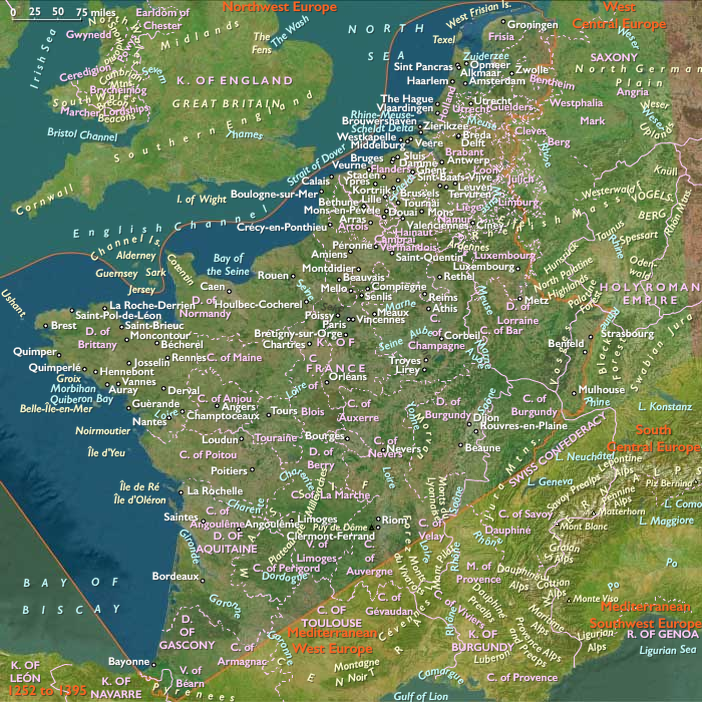
Amid the escalating Anglo-French War (1294–1303), King Edward I of England, allied with the Count of Flanders, launched an offensive against France in an effort to reassert English rights in Gascony and Guienne, which had been seized by Philip IV of France. However, Edward’s attempt to coordinate with Flemish forces ended in failure at the Battle of Furnes (Veurne) in 1297.
Edward’s Strategy and Alliance with Flanders
- After Philip IV’s occupation of English Gascon territory (1294–1295), Edward sought continental allies to counter France’s growing power.
- In 1297, he allied with Guy of Dampierre, Count of Flanders, who had his own grievances against Philip IV due to the French king’s direct interference in Flemish affairs.
- Edward planned to cross the English Channel and link up with the Flemish army, hoping to launch a joint offensive against French forces.
The Battle of Furnes (1297): English-Flemish Coordination Fails
- As Edward crossed into Flanders, French troops under Robert II of Artois moved quickly to intercept his forces before he could join the Flemish army.
- In August 1297, at Furnes (modern-day Veurne, Belgium), the French army successfully blocked Edward's advance, disrupting the planned coordination with the Flemish troops.
- The engagement forced Edward to halt his campaign, undermining his efforts to reclaim Gascony through military means.
Consequences of the Failed Campaign
- Edward’s ambitions in France stalled, forcing him to reconsider his war strategy.
- The French victory at Furnes solidified Philip IV’s position in Flanders, weakening Flemish resistance to French rule.
- The war dragged on until 1303, leading both sides to eventually negotiate a settlement, with Edward ultimately recovering Gascony in exchange for reaffirming his vassalage to the French king.
Legacy
The defeat at Furnes exposed the logistical difficulties of English military campaigns on the continent and highlighted France’s superior ability to project power in Flanders. This Anglo-French conflict foreshadowed the tensions that would erupt into the Hundred Years’ War (1337–1453).
Locations
People
Groups
- Flemish people
- Flanders, County of
- French people (Latins)
- France, (Capetian) Kingdom of
- Anglo-Normans
- England, (Plantagenet, Angevin) Kingdom of
Topics
Commodoties
Subjects
Regions

Subregions
Years: 1297 - 1297
Locations
People
Groups
- Flemish people
- Flanders, County of
- French people (Latins)
- France, (Capetian) Kingdom of
- Anglo-Normans
- England, (Plantagenet, Angevin) Kingdom of
Topics
Commodoties
Subjects
Regions
Subregions