
Lady Mary returns to the West with …
Years: 1718 - 1718
December
She had had the embassy surgeon, Charles Maitland, in March 1718 inoculate her five-year-old son.
Before starting for the East she had met Alexander Pope, and during her absence he had written her a series of extravagant letters, which appear to have been chiefly exercises in the art of writing gallant epistles.
While Pope may have been fascinated by her wit and elegance, Lady Mary's replies to his letters reveal that she was not equally smitten.
Very few letters pass between them after Lady Mary's return, and various reasons have been suggested for the subsequent estrangement and violent quarrel.
The last of the Istanbul letters to Pope purports to have been written on November 1, 1718, from Dover
It contains a parody on Pope's Epitaph on the Lovers Struck by Lightning.
The manuscript collection of these letters is passed round a considerable circle, and Pope may have been offended at the circulation of this piece of satire
Jealousy of her friendship with Lord Hervey has also been alleged, but Lady Louisa Stuart says Pope had made Lady Mary a declaration of love, which she had received with an outburst of laughter
In any case Lady Mary always professes complete innocence of all cause of offense in public.
Lady Mary writes that nowhere else are women as free as they are in the Ottoman Empire.
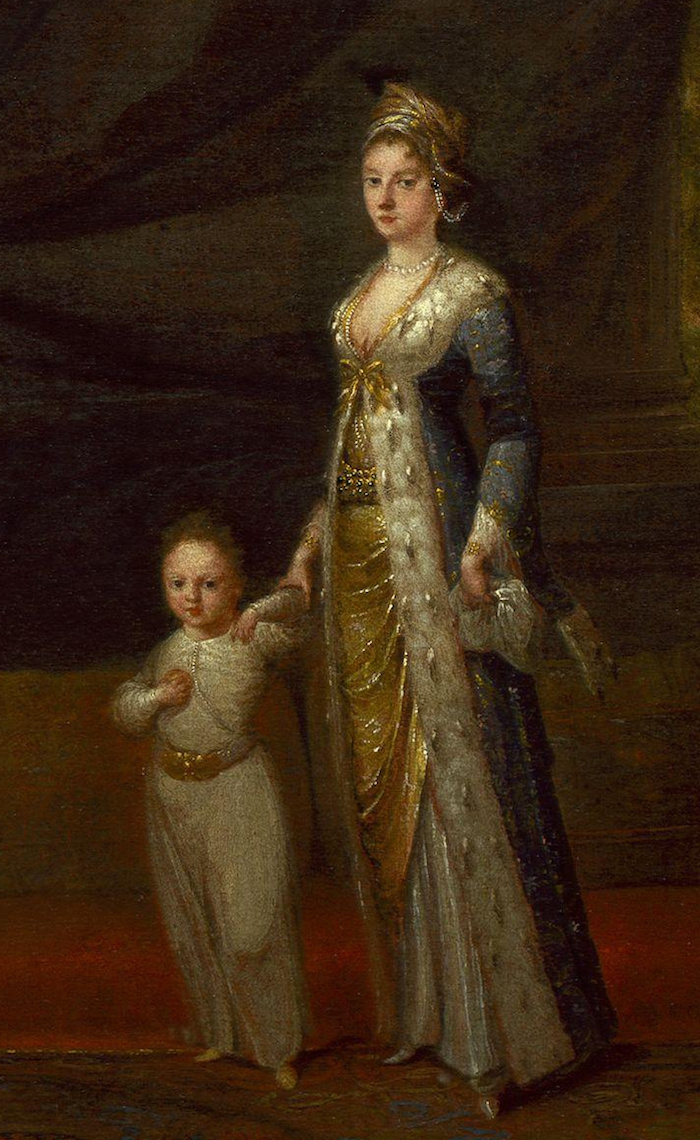
Jean-Baptiste van Mour (1671–1737)Detail of Lady Mary Wortley Montagu with her son, Edward Wortley Montagu, and attendants. Circa 1717; National Portrait Gallery, London
Locations
People
Groups
Topics
Subjects
Regions
Subregions
Years: 1718 - 1718
December
Jean-Baptiste van Mour (1671–1737)Detail of Lady Mary Wortley Montagu with her son, Edward Wortley Montagu, and attendants. Circa 1717; National Portrait Gallery, London
Locations
People
Groups
Topics
Subjects
Regions
Subregions