
Temperate Southern Africa (49,293 – 28,578 …
Years: 49293BCE - 28578BCE
Temperate Southern Africa (49,293 – 28,578 BCE) Upper Pleistocene I — Strandlopers, Rock-Shelter Foragers, and Grassland Hunts
Geographic and Environmental Context
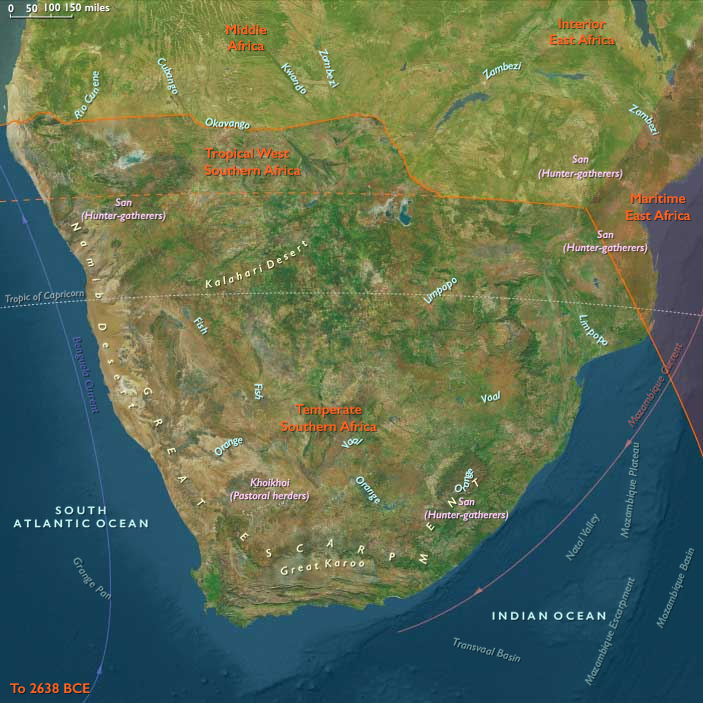
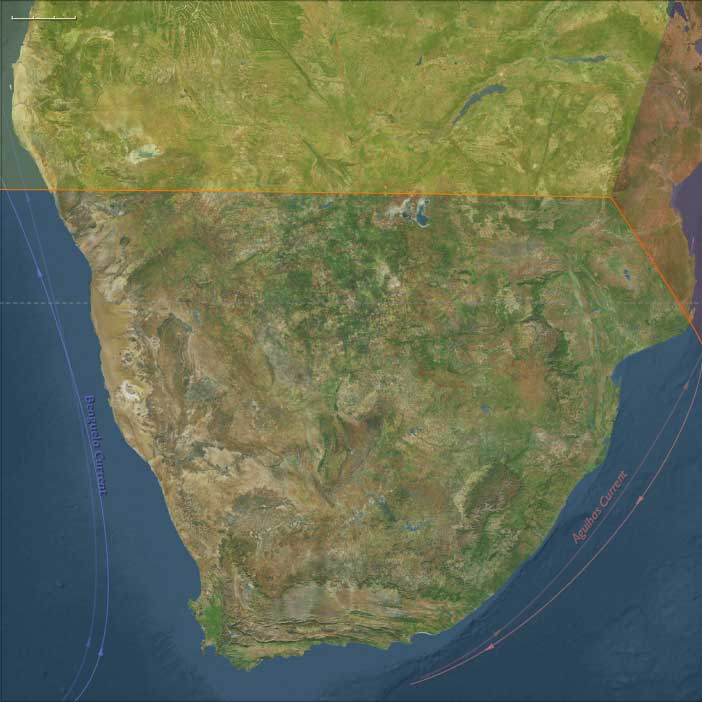
Temperate Southern Africa includes:-
South Africa (Cape littoral, Highveld, Drakensberg, Karoo, Namaqualand).
-
Lesotho and Eswatini.
-
Most of Namibia and Botswana, except the far northern sectors (Caprivi, Etosha, Okavango, Skeleton Coast — those are in Tropical Southern Africa).
-
Southern Zimbabwe and southwestern Mozambique (Maputo–Limpopo region).
Anchors: Cape littoral & fynbos, Drakensberg–Lesotho massif, Highveld grasslands (Witwatersrand, Free State), Namaqualand semi-desert, Kalahari southern margins, Great Karoo, Maputo–Limpopo basins, southern Zimbabwe plateau (Great Zimbabwe heartland).
-
At the Last Glacial Maximum (LGM), sea level ~100 m lower, exposing wide Cape coastal plains.
-
Highveld grasslands spread in cooler, drier climate; Karoo semi-arid.
-
Drakensberg slopes glaciated in places.
Climate & Environmental Shifts
-
Colder, drier; reduced rainfall inland, though fynbos adapted to aridity persisted along the Cape.
-
Larger ungulates roamed exposed coastal plains and grasslands.
Subsistence & Settlement
-
Foragers exploited shellfish, seals, penguins, seabirds along coast.
-
Grassland hunters targeted zebra, wildebeest, and springbok; ostrich eggs for protein and water storage.
-
Rock shelters in Cederberg and Drakensberg served as refugia.
Technology & Material Culture
-
Stone flake and blade industries (Late Middle Stone Age traditions).
-
Bone points, hide scrapers; ochre used decoratively.
-
Ostrich eggshell beads widely produced.
Movement & Interaction Corridors
-
Cape–Karoo–Namaqualand coast as continuous forager highway.
-
Drakensberg passes provided seasonal access to highland hunting grounds.
Cultural & Symbolic Expressions
-
Early rock art motifs may have begun in Cederberg shelters.
-
Ochre symbolic use in burials and body paint.
Environmental Adaptation & Resilience
-
Coast–inland seasonal mobility buffered climatic extremes.
Transition
By 28,578 BCE, foragers of temperate southern Africa had forged coastal–grassland dual lifeways with symbolic depth
Topics
Subjects
Regions
Subregions
Related Events
Showing 10 events out of 69706 total
Years: 49293BCE - 28578BCE
Topics
Subjects
Regions
Subregions