
John A. Macdonald and his government face …
Years: 1867 - 1867
September
John A. Macdonald and his government face immediate problems upon formation of the new country.
Much work remains to do in creating a federal government.
Nova Scotia is already threatening to withdraw from the union; the Intercolonial Railway, which will both conciliate the Maritimes and bind them closer to the rest of Canada, is not yet built.
Anglo-American relations are in a poor state, and Canadian foreign relations are matters handled from London.
The withdrawal of the Americans in 1866 from the Reciprocity Treaty had increased tariffs on Canadian goods in U.S. markets.
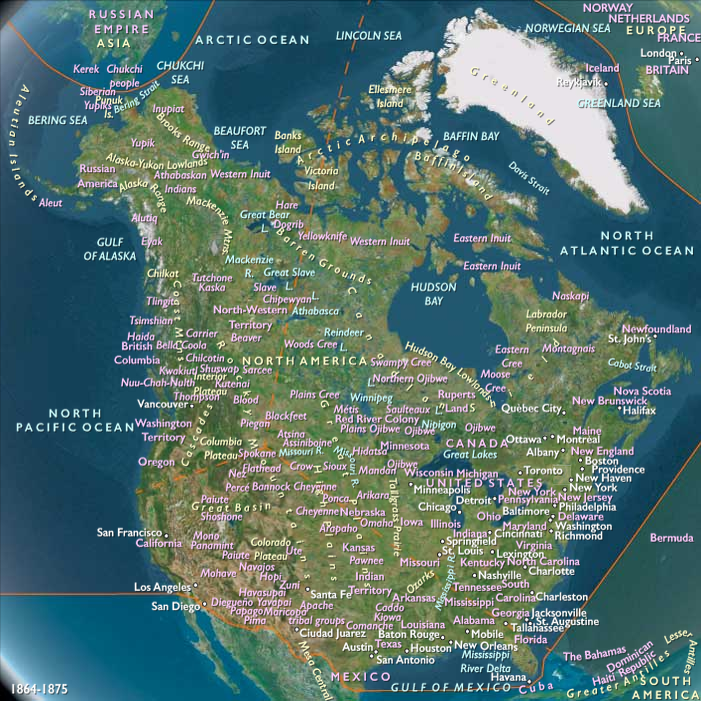
Much of present-day Canada remains outside confederation—in addition to the separate colonies of Prince Edward Island, Newfoundland, and British Columbia, which remain governed by the British, vast areas in the north and west belong to the British and to the Hudson's Bay Company.
American and British opinion is that the experiment of Confederation will quickly unravel, and the nascent nation absorbed by the United States.
The new nation's first general election is held in August 1867; Macdonald's party win easily, with strong support in both large provinces, and a majority from New Brunswick.
Locations
People
Groups
- Newfoundland (British Colony)
- Hudson's Bay Company (HBC)
- Nova Scotia (British Colony)
- British North America
- New Brunswick, British colony of
- Prince Edward Island (British colony)
- United States of America (US, USA) (Washington DC)
- Britain (United Kingdom of Great Britain and Ireland)
- Vancouver Island and British Columbia, United Colonies of
- Canada, Province of
- Ontario (Canadian province)
- Quebec (Canadian province)
- Canada, Dominion of
- New Brunswick (Canadian province)
- Nova Scotia (Canadian province)
Subjects
Regions
Subregions

Years: 1867 - 1867
September
Locations
People
Groups
- Newfoundland (British Colony)
- Hudson's Bay Company (HBC)
- Nova Scotia (British Colony)
- British North America
- New Brunswick, British colony of
- Prince Edward Island (British colony)
- United States of America (US, USA) (Washington DC)
- Britain (United Kingdom of Great Britain and Ireland)
- Vancouver Island and British Columbia, United Colonies of
- Canada, Province of
- Ontario (Canadian province)
- Quebec (Canadian province)
- Canada, Dominion of
- New Brunswick (Canadian province)
- Nova Scotia (Canadian province)
Subjects
Regions
Subregions